No. NAAIN-018
Nanticoke Indian River whirligig bullroarer
United States · Delaware · Sussex County · Indian River Hundred · North America · Eastern Woodlands
Play / practical
Source term: whirligig; bull roarer
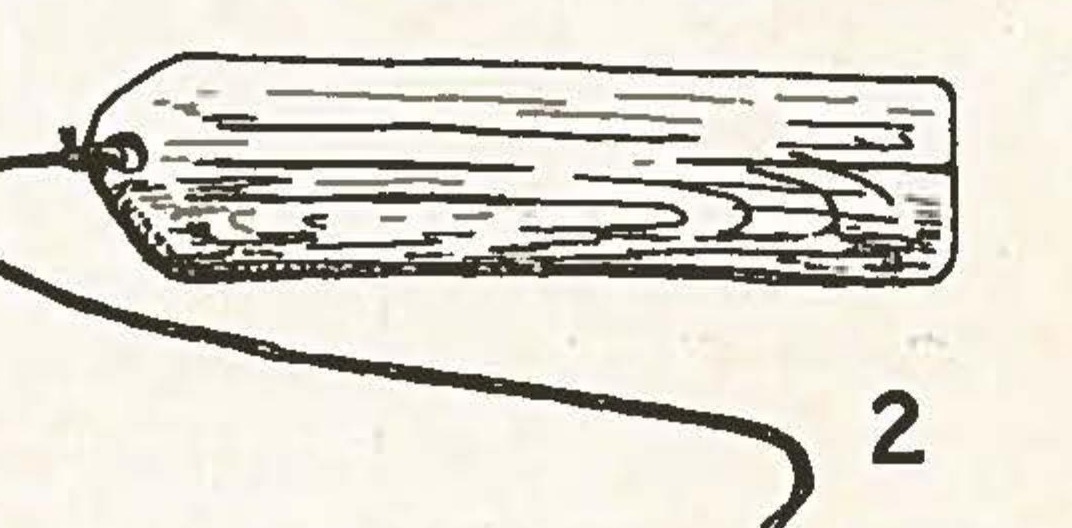
Among the Nanticoke descendants living along Indian River in Sussex County, Delaware, the bull roarer was a children's amusement called the whirligig: an oblong blade of cypress shingle, about eight inches long, with rounded edges and no notching. Frank Speck recorded it in 1942, on recent visits to Indian River; Edgar Morris, a Nanticoke man whose father had been a carpenter and bow-and-arrow maker, made one for Speck's collection of old-fashioned tribal crafts, after which some of the boys in his family whittled their own. Speck kept the whirligig distinct from the see-saw, a separate buzzer or buzz-button made locally from a four-inch disc of yellow pine bark or stiff shoe leather, the older rotater since replaced by a common coat button. Some of the men recalled teasing the little girls by spinning the see-saw against their hair until it tangled so badly that locks had to be cut off.
The bull roarer known as whirligig is familiar to all the older people as an amusement for children, although it is not now seen in their hands.
Speck 1942:22, "Back Again to Indian River, Its People and Their Games," Bulletin of the Archaeological Society of Delaware 3(5)
Particulars
- Object
- Oblong cypress-shingle blade about eight inches long, with rounded edges.
- Function
- Nanticoke children's toy bullroarer / whirligig, explicitly separated in Speck's article from the two-hole buzzer or buzz-button called see-saw.
Source
Frank G. Speck, “Back Again to Indian River, Its People and Their Games,” Bulletin of the Archaeological Society of Delaware 3(5) (May 1942), pp. 20-23, at p. 22