No. CHEVALIER1982-001
Puinave and Maku hidden rhombe
Colombia; Venezuela · Orinoco basin (Guainía–Inírida–upper Orinoco) · South America
Restricted
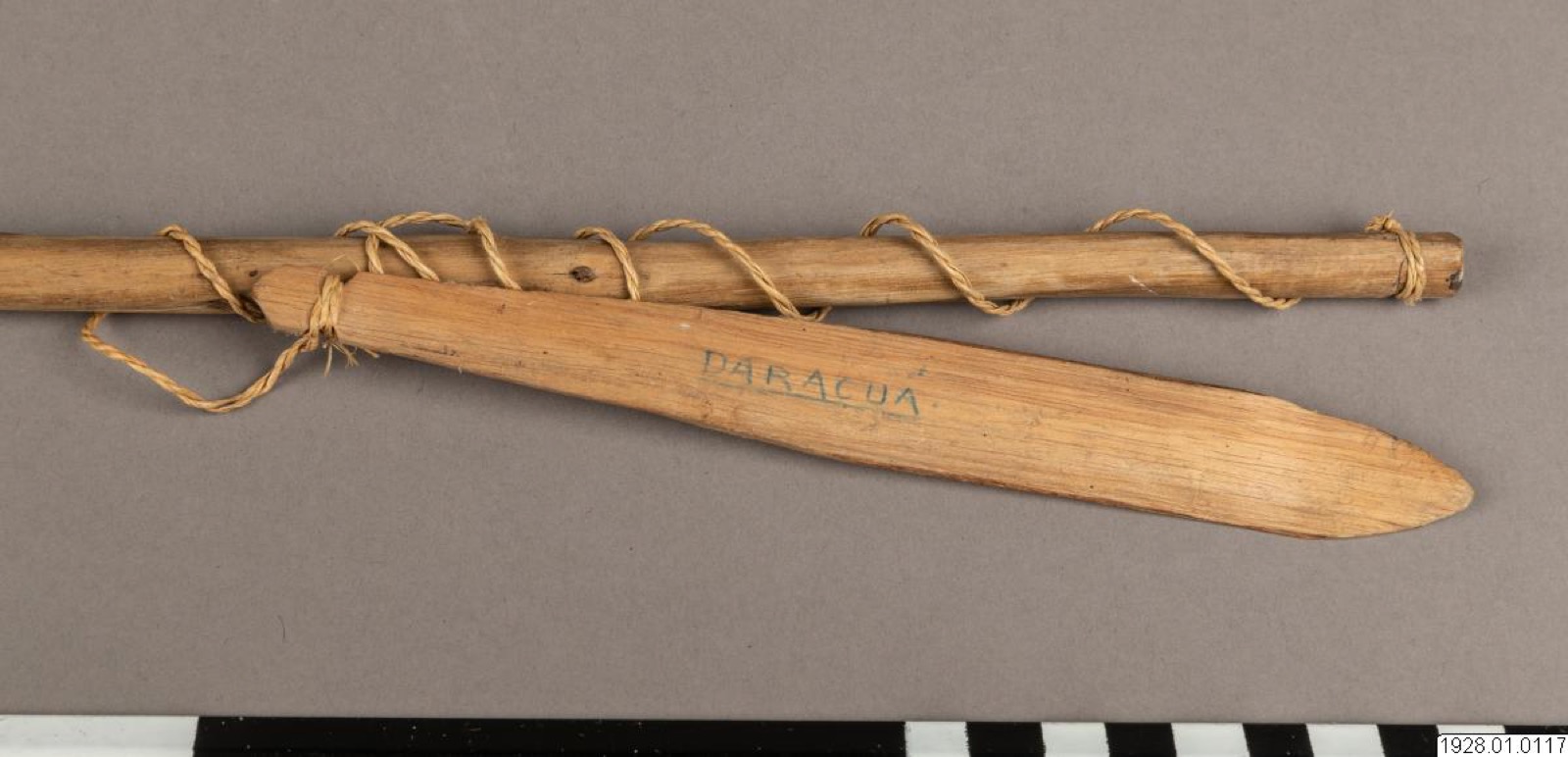
Source term: rhombe; bull-roarer
Along the Orinoco and its tributaries, the Puinave and the forest people long called Maku kept the roarer a men's affair. It was a small wooden board, set spinning at the end of a cord, and men alone handled it, for reasons of ritual; women were forbidden even to look at it. Their Piaroa neighbours, named in the same breath, guarded their own roaring voices the same way.
sa vue est interdite aux femmes (Indiens Piaroa, Maku, Puinave de l'Orénoque)
the sight of it is forbidden to women (Piaroa, Maku and Puinave Indians of the Orinoco)
Jean Chevalier and Alain Gheerbrant, Dictionnaire des symboles (1982), p. 817
Particulars
- Object
- A small wooden board whirled at the end of a cord.
Source
Jean Chevalier and Alain Gheerbrant, Dictionnaire des symboles: mythes, rêves, coutumes, gestes, formes, figures, couleurs, nombres (Paris: Robert Laffont/Jupiter, 1982), p. 817, s.v. Rhombe