No. STEWART1941-007
Pakwi-dokado wimo'to, a children's toy
United States · Southern shores of Walker Lake, Soda Spring Valley and Hawthorne, western Nevada · North America · Great Basin
Play / practical
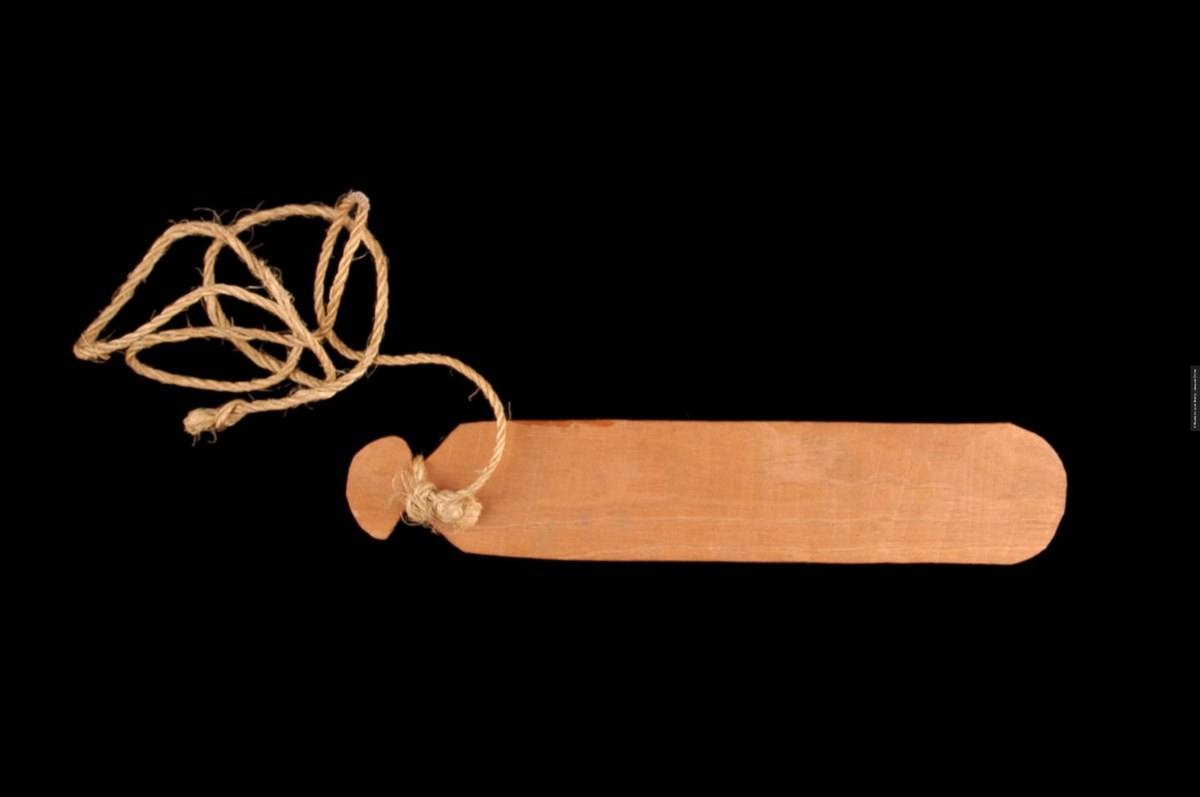
wimo'to
Source term: bull-roarer (wimo'to)
Wimo'to: Stewart's survey-wide Northern Paiute element heading for the bullroarer.
On the south shore of Walker Lake the roarer stopped being a weather instrument. The Pakwi-dokado had the wimo'to and children played with it — and, alone among the Northern Paiute bands, they denied that it was swung to bring the wind. Their denial falls exactly on the line Julian Steward drew across the Great Basin: toy to the south, weather to the north. The boundary is not an accident of silence; it is a flat denial standing where every neighbour affirmed.
Particulars
- Object
- A wooden whirrer; not described further.
- Function
- A children's toy; the wind-making use is explicitly denied.
Source
Omer C. Stewart, 'Culture Element Distributions: XIV, Northern Paiute,' Anthropological Records 4:3 (1941), pp. 364, 401 and 403; Julian H. Steward, 'Culture Element Distributions: XIII, Nevada Shoshoni,' Anthropological Records 4:2 (1941), p. 250