No. FEWKES1898-001
Sikyatki grave paho
United States · Arizona · Tusayan · Navajo County · North America · Southwest
Function not recorded Candidate only
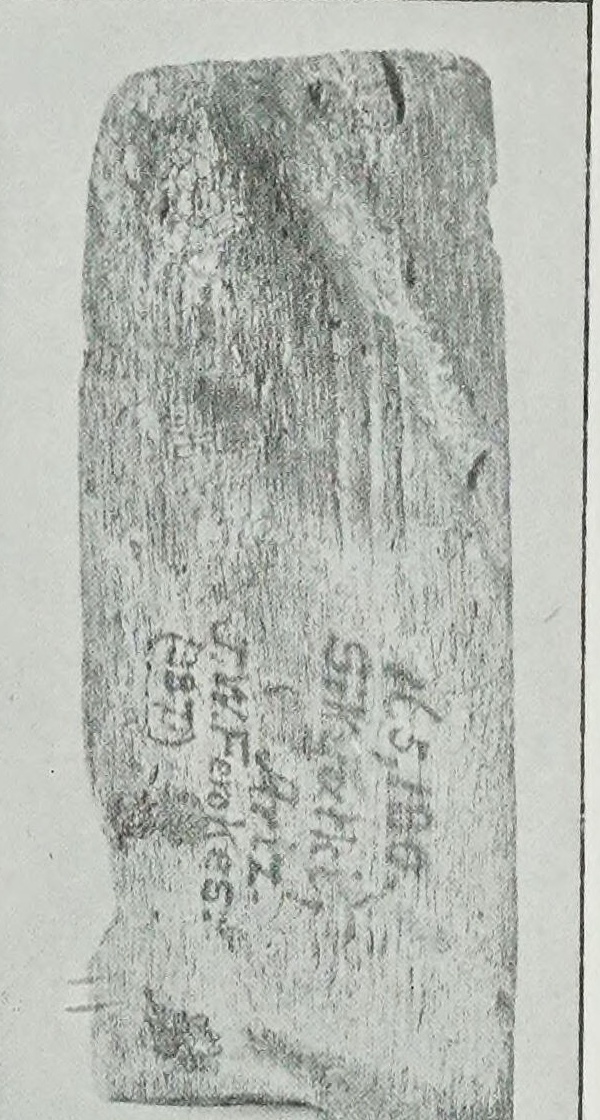
Source term: whizzer or bull-roarer
Somewhere before the Spaniards reached Tusayan, Sikyatki was burned by warriors out of Walpi, and its dead were buried with prayer-sticks. When Jesse Walter Fewkes dug the graves in 1895 he found a run of what he called razor-shape pahos - broad flat blades, one face flat and one rounded, tapering at one end to a tang, pierced at the other as if to hang. He drew two of them, catalogued the lot as prayer-sticks, and then let one sentence out: it is barely possible, he wrote, that this was a whizzer, of the kind Hopi dancers still swung to imitate the wind, carried by the man who plays the warrior. He never said it again. The blade went to Washington in a lot of fifteen fragments and was never measured.
It is barely possible that this may have been a whizzer or bull-roarer, such as are used at the present day to imitate the wind, and commonly carried by the performer in a public dance who personifies the warrior.
Fewkes 1898, 17th Annual Report of the Bureau of American Ethnology, part 2, p. 738
Particulars
- Object
- One of a series of 'peculiar razor-shape' pahos (prayer-sticks) from the Sikyatki graves, figured as plate CLXXV, figure s: a broad flat blade, flat on one side and rounded on the other, narrowing at one end where Fewkes thought it 'was probably continued in a shaft', with a hole punctured at the opposite, wide extremity 'as if for suspension'. Wood. No dimensions were ever published.
- Function
- Not recorded.
Source
J. W. Fewkes, 'Archeological Expedition to Arizona in 1895', Seventeenth Annual Report of the Bureau of American Ethnology, part 2 (1898), pp. 519-744