No. CALIFANO1976-001
Hoyék, Welán's song at the Naikoi
Argentina · Pilcomayo, Gran Chaco (Salta · Formosa) · South America
Sacred / spirit
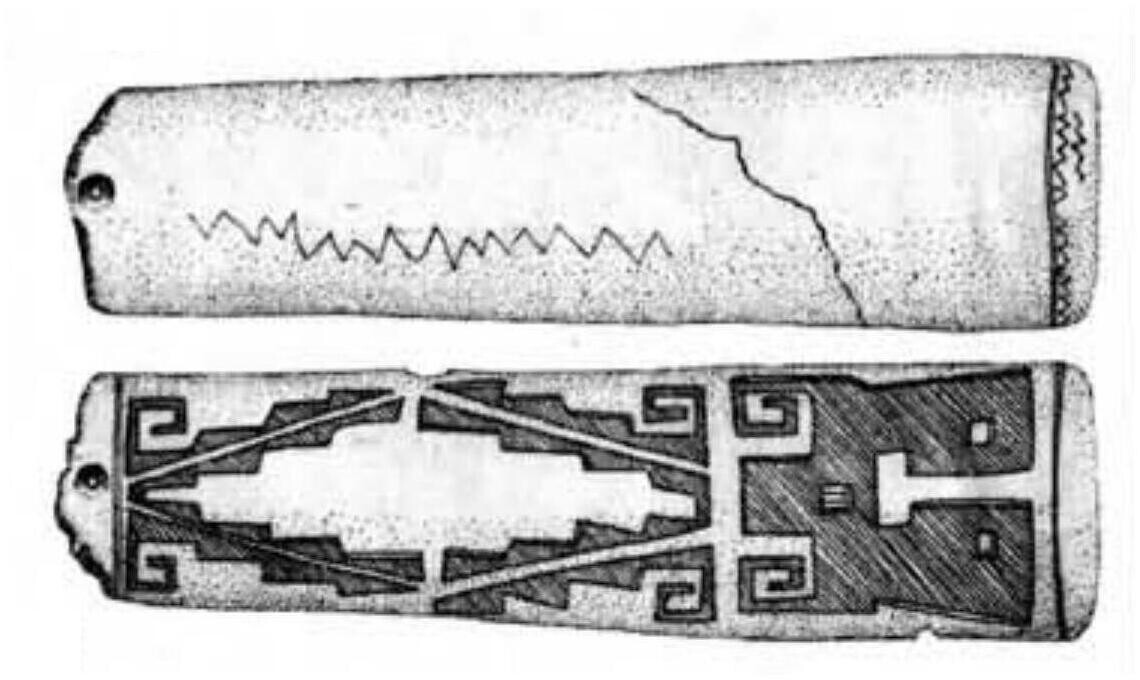
hoyék
Source term: palo zumbador
hoyék: the Wichí name for the whirled board. Naikoi: the shamans' consecration dance for a novice. Welán: the possessing being whose song the roarer repeats. jayawú: shamans.
At dusk the jayawú, the Wichí shamans, plant staffs in a circle around one who is 'sick with Welán', a novice seized by a being who can take human, animal or plant form. To rattles of deer hooves the novice sings and leaps, higher and higher, until collapsing; a helper catches the fallen body and cradles its head, and when the novice comes round it all begins again, through the night and for weeks. Between the leaps the possessed one takes up the hoyék, a board on a cord tied to a stick, and whirls it overhead in an intense roar. The rattles talk with Welán; the roarer repeats his song. Whoever outlasts the possessions comes out of it thin and yellowed, a shaman.
el sujeto lo hace girar encima de la cabeza produciendo un zumbido muy intenso
the subject whirls it above his head, producing a very intense hum
Mario Califano, 'El chamanismo mataco' (1976), p. 27
Particulars
- Object
- A rectangular wooden board about 40 × 10 cm, tied by a 50 cm cord to a handle about 60 cm long.
- Function
- Whirled overhead at intervals by the novice possessed by Welán during the Naikoi, the night-long ceremony that makes a shaman; it repeats Welán's song while the rattles converse with him.
Source
Mario Califano, 'El chamanismo mataco,' Scripta Ethnologica 3(3), parte II (Buenos Aires, 1976), pp. 25–29