No. DRUCKER1937-002
Desert Cahuilla assembly bullroarer (Tuva)
United States · Tuva · Fish Springs, Salton Sink, Southern California · North America
Sacred / spirit
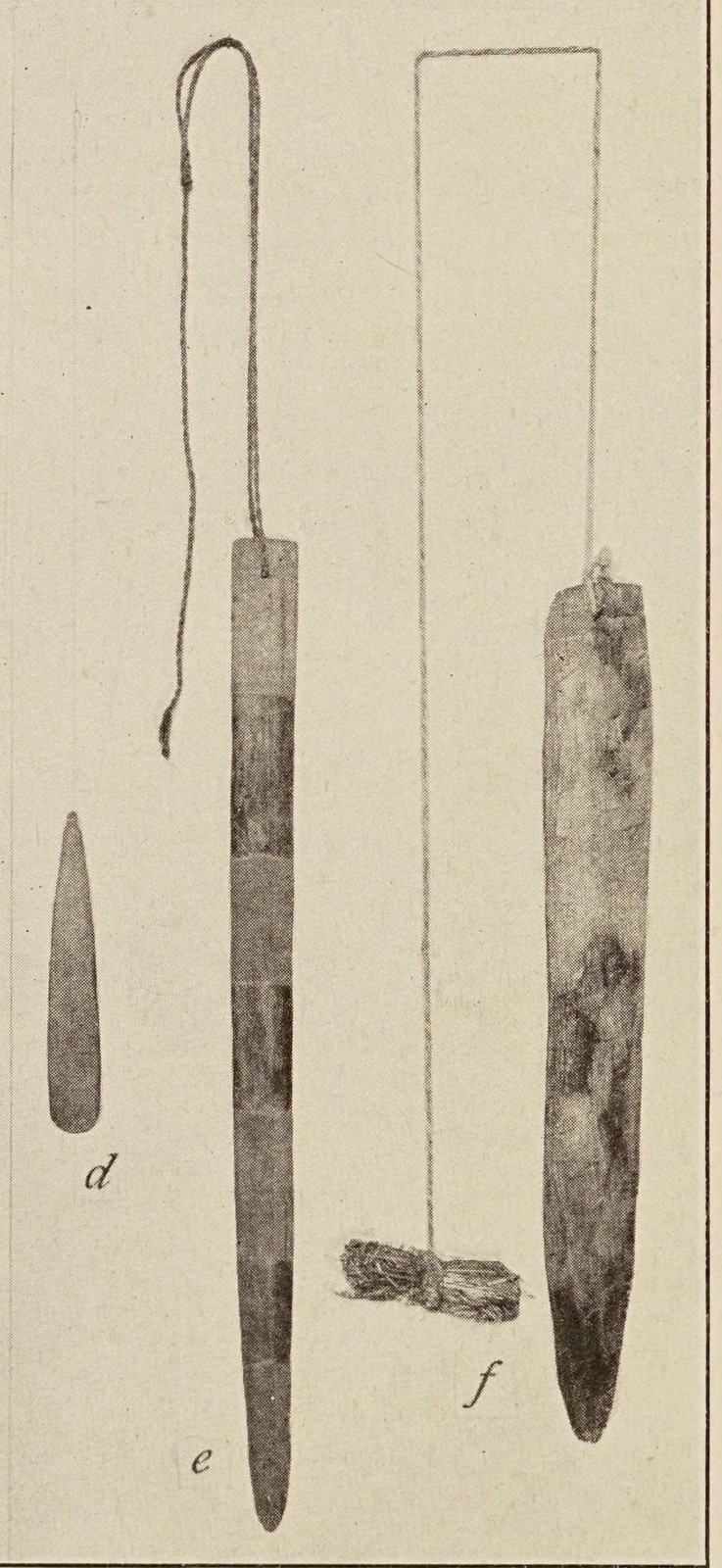
Source term: bull-roarer
Tuva stood at the southern edge of Desert Cahuilla country, near the springs above the Salton Sink, and it was home to the Wontcaktamyahwic clan. There the bullroarer belonged to ceremony alone — whirled to call the people together, and put to no other use. Ramon Razon, a man of the clan itself, gave that account in the mid-1930s; Razon was also the surname of Fig Tree John, the clan's famous old man, and his sons.
Particulars
- Function
- Ceremonial use only; whirled to assemble the people.
Source
Philip Drucker, 'Culture Element Distributions: V, Southern California,' Anthropological Records 1:1 (1937), pp. 5 and 25, items 924 and 926 (informant Ramon Razon, Desert Cahuilla)