No. BOURKE1892-001
Tusayan Walpi snake-dance rhombus
United States · Walpi, Tusayan · Hopi mesas, Arizona · North America
Sacred / spirit

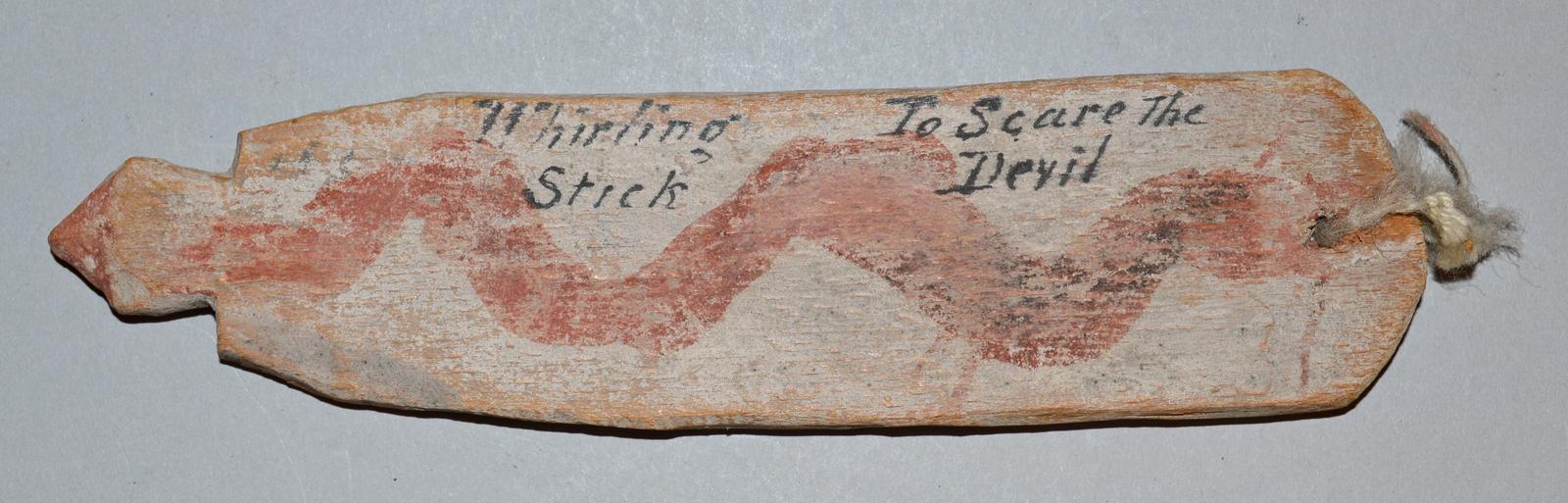
tovokìnpi
bull-roarer
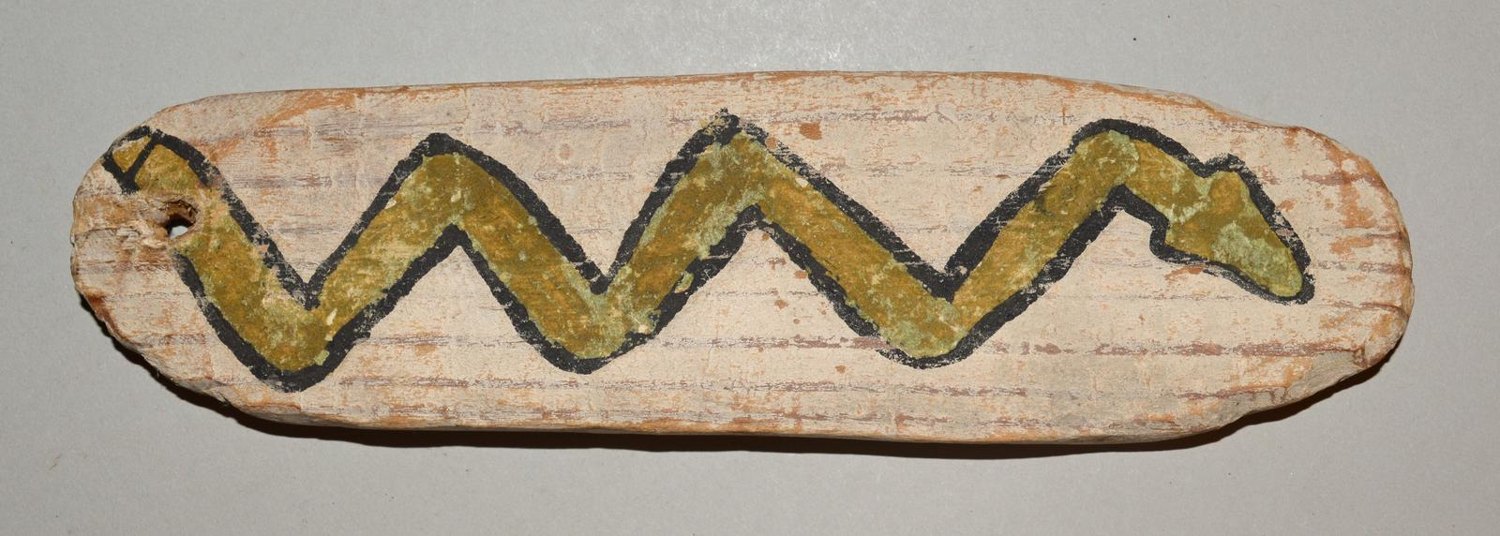
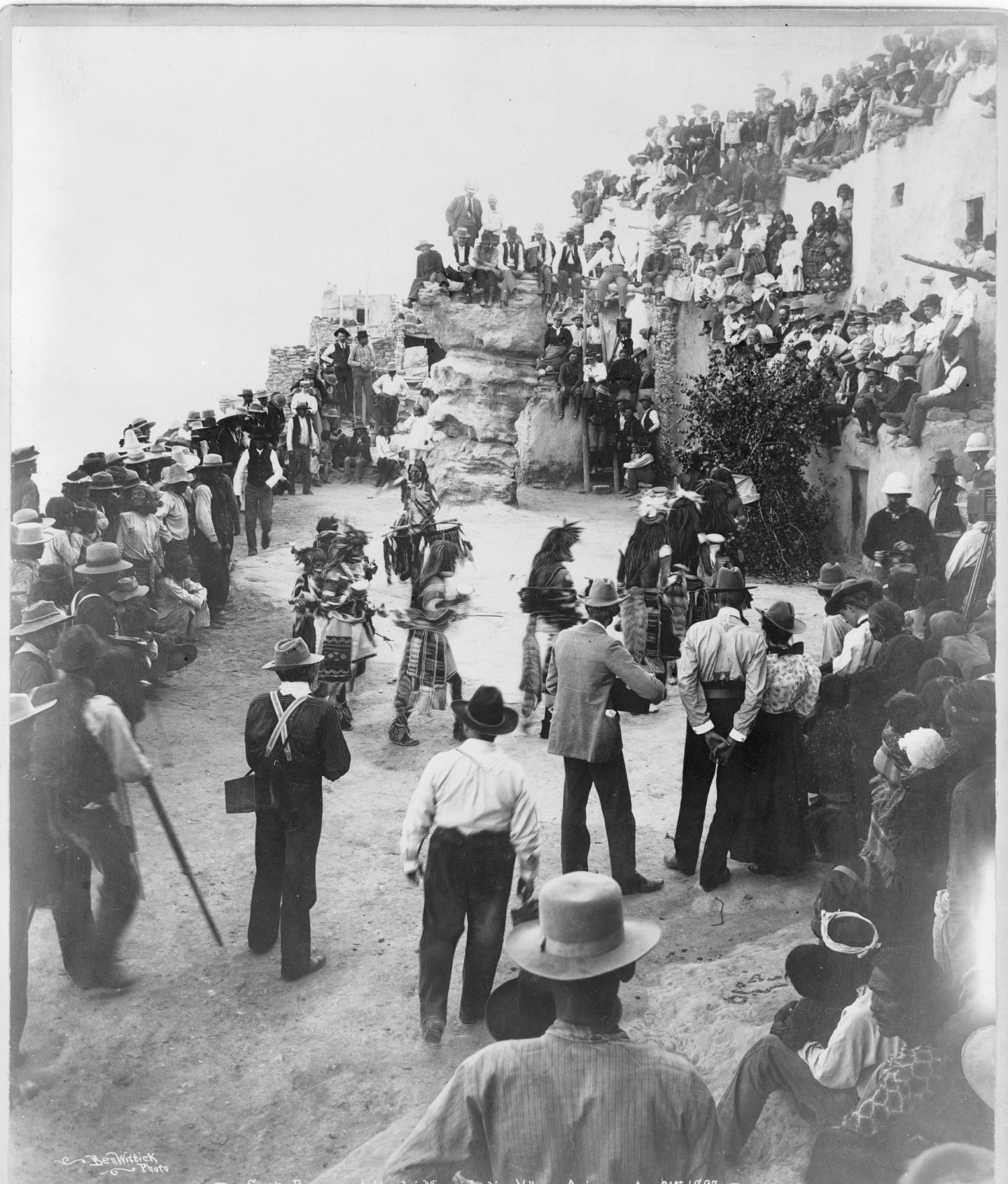
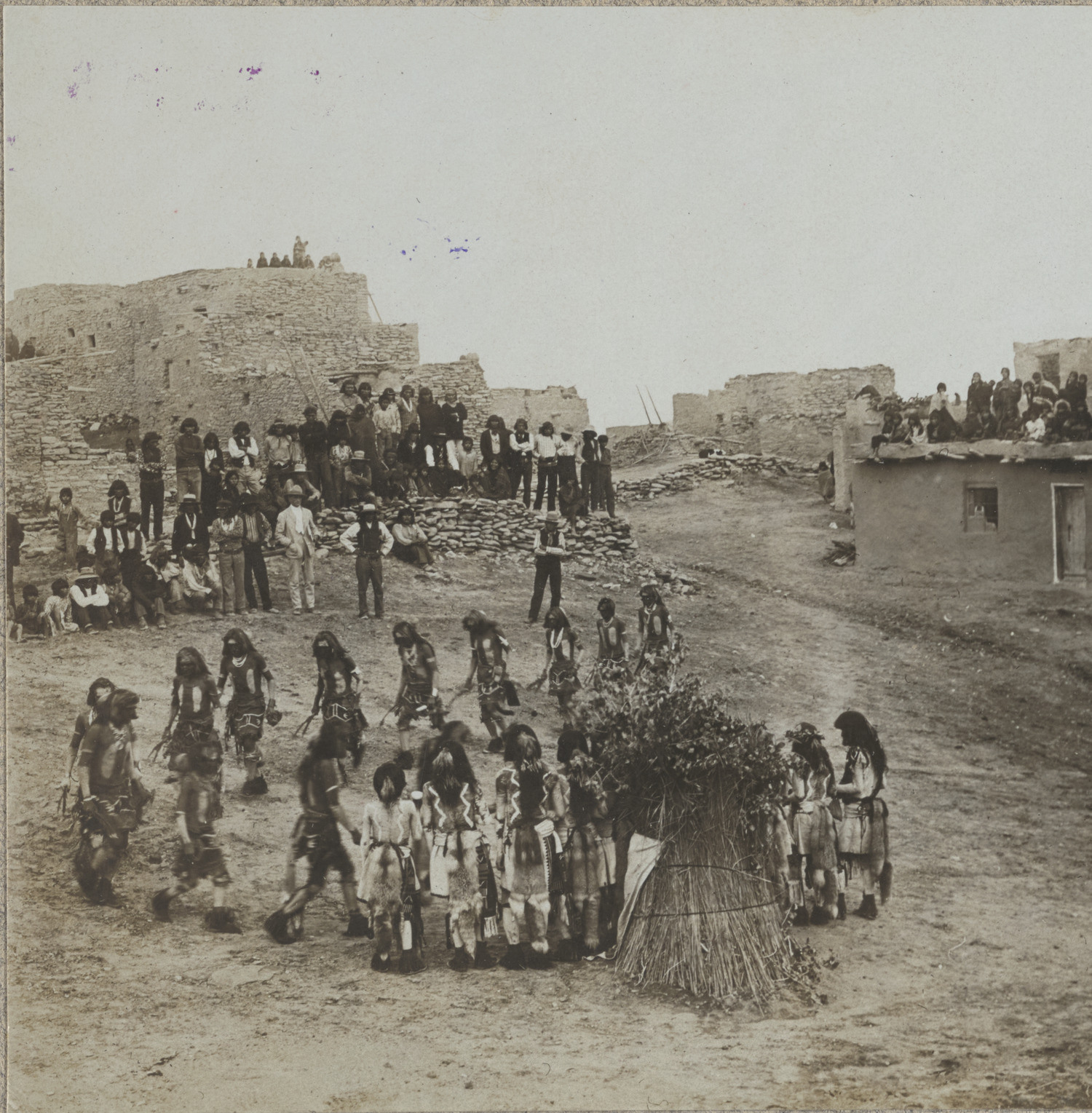
The Walpi Snake Dance re-enacts Tiyo’s journey to the underworld, where Spider Woman guided him into the kiva of the Snake people and he learned the songs and prayers that bring corn and rain. In 1901 a newly initiated boy no more than five stopped in the procession and sounded a flat wooden bullroarer; its “miniature thunder clap” mingled with the Antelope priests’ rain-like rattles. At critical moments a Bow-priesthood warrior sounded the same thunder, calling wind and rain to the crops. The blade itself carried the snake: Bourke saw the Walpi rhombus painted in blue or yellow with a serpent running down its length, the triangular tip serving as the snake's head.
The medicine-men twirled it rapidly, and with a uniform motion, about the head and from front to rear, and succeeded in faithfully imitating the sound of a gust of rain-laden wind. As explained to me by one of the medicine-men, by making this sound they compelled the wind and rain to come to the aid of the crops.
Bourke 1892, The Medicine-Men of the Apache, Ninth Annual Report of the Bureau of Ethnology, p. 476
Particulars
- Object
- Flat wooden Walpi bullroarer on a long cord. Bourke gives the Tusayan form as a long narrow parallelogram capped with an equilateral triangle, with a snake or lightning traced in blue or yellow down the length of the blade and ending in the small triangle, "which did duty as the snake's head". Fewkes saw the pair on the Walpi Antelope altar as flat slats of wood with rain-cloud terraces cut in the end. Sounded by a newly initiated boy and by the Bow-priesthood warrior in the Snake Dance.
- Function
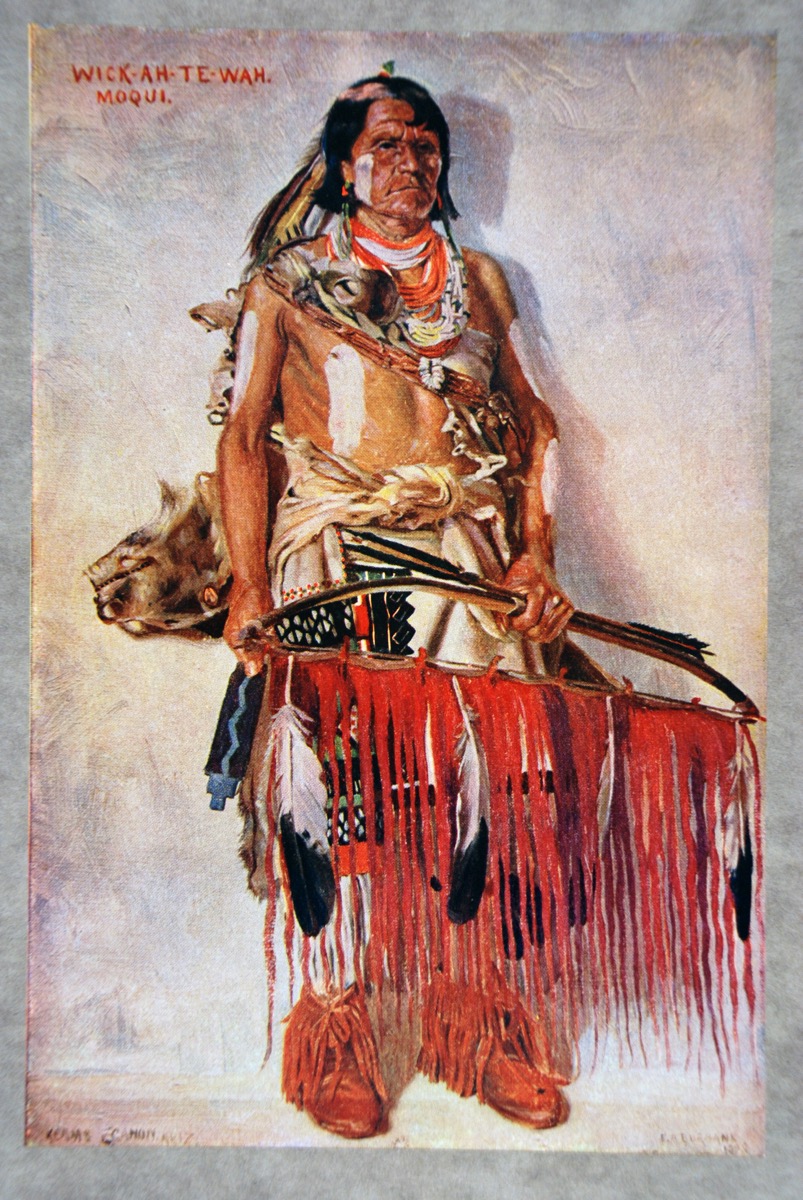
- Twirled by the kalektaka, or Bow-priesthood warrior, trailing the Antelope priests in the Walpi Snake dance, imitating rain-laden wind and the thunder that accompanies the rain, to compel wind and rain to aid the crops
Source
Bourke, 'The Medicine-Men of the Apache,' 9th Annual Report of the Bureau of Ethnology (1892), pp. 476-478; Fewkes, 'Tusayan Snake Ceremonies,' 16th Annual Report (1897), pp. 298, 302-304, and 'Tusayan Flute and Snake Ceremonies,' 19th Annual Report, pt. 2 (1900), pp. 983, 1011; Andrus, 'The Snake Dance at Walpi,' San Francisco Call, 15 Sept. 1901, p. 10