No. MUS2026-345South America
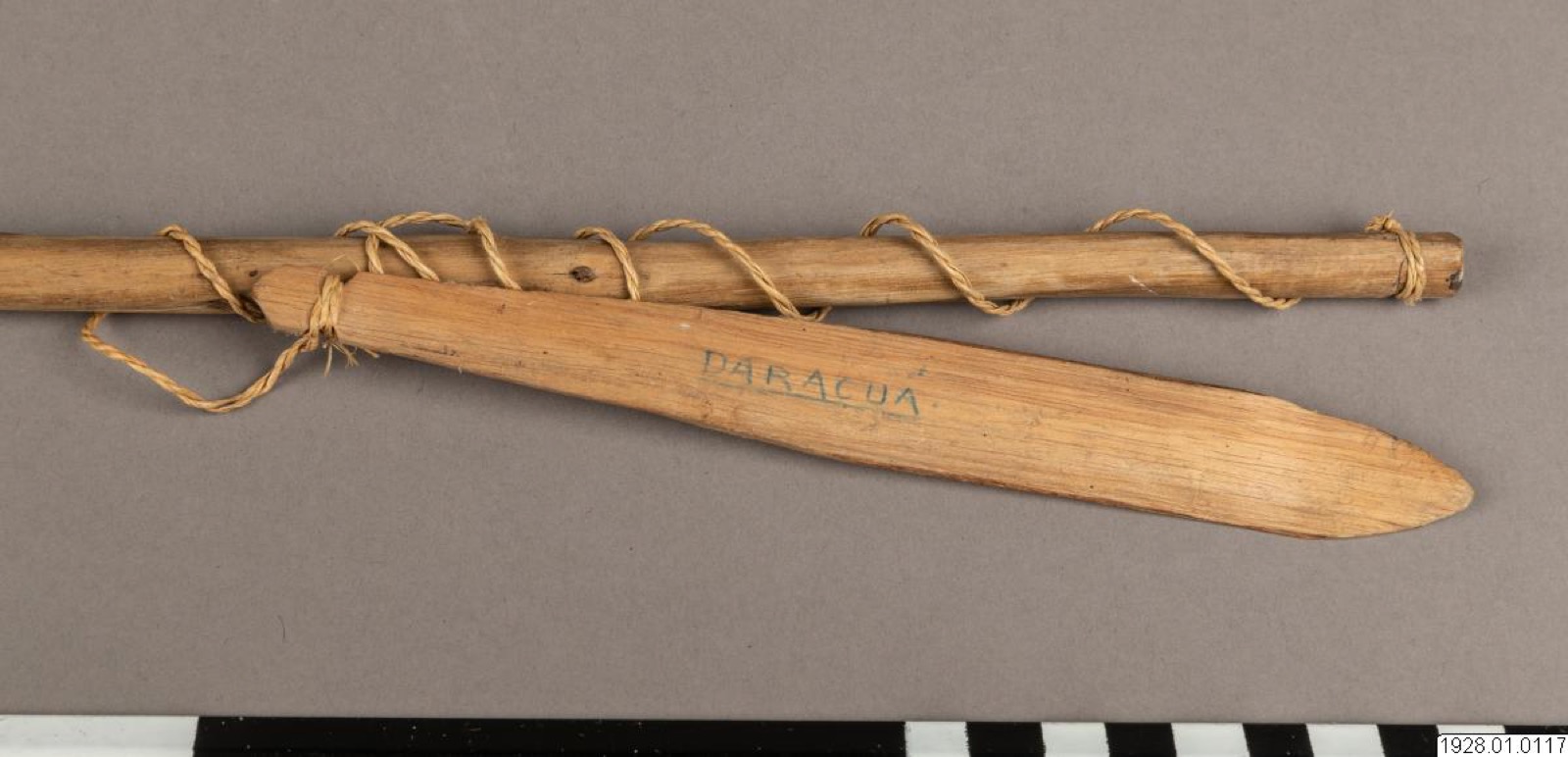
Taracuá toy roarer, handle and all
Brazil · Taracuá, Rio Uaupés · South America · Amazonia
Play / practical
- Snake-linked
- Toy / secular survival
Source term: Vinare
vinare (Swedish): 'bullroarer'.
Taracuá, “the Anthill,” was a Franciscan mission on a bare rock above the Uaupés when Henri Coudreau came through in 1884, deep in the country of the Jurupari cult. The year before, two friars had held up the god's sacred costume before a church full of Indians at Panoré, along the river. The women ran, expecting to die, and the shamans ordered a fast: a month at Panoré, a single day at Taracuá, which was less defiled. From children too frightened to keep the secret, the friars pried out the god's story. When the children ate the uacú fruit he had forbidden during his fast, Jurupari killed them and ate them; the men made him drunk and threw him on the fire, and from his ashes grew the paxiuba palms, his bones, cut into trumpets that speak with his voice. Boys were shown the trumpets at ten or twelve, and beaten. Here the whirled blade was a toy. This one survives whole, eighty-one centimetres in all: the tapered wooden blade with the place-name DARACUA written on it, the twisted cord, and the stick it still winds around.
Particulars
- Object
- An 81 cm assembly preserving the long wooden blade, cord and separate wooden handle.
- Function
- A toy.
Discussed in one essay
 The Palm and the Pleiades
Source
Världskulturmuseet (Museum of World Culture), Gothenburg, object 1928.01.0117; Taracuá, Rio Uaupés; blade, cord and handle; Henri A. Coudreau, La France équinoxiale II (Paris: Challamel, 1887), pp. 147, 183-186, 198
Nearby in the atlas
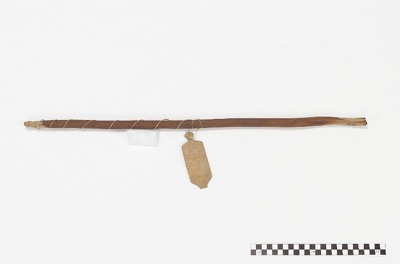 Two complete Baniwa roarer rigsBrazil · Lower Rio Içana, Santana, São Gabriel da Cachoeira, Amazonas · Function not recorded
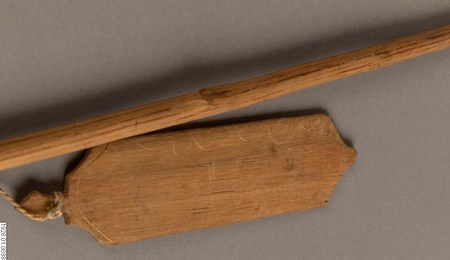 Baniwa bullroarer in Jurupari countryBrazil; Colombia; Venezuela · Northwestern Brazil / Rio Negro · Function not recorded
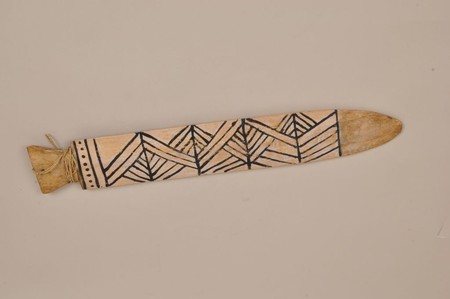 Upper Xingu painted toy bladeBrazil · Upper Xingu River / Mato Grosso · Play / practical
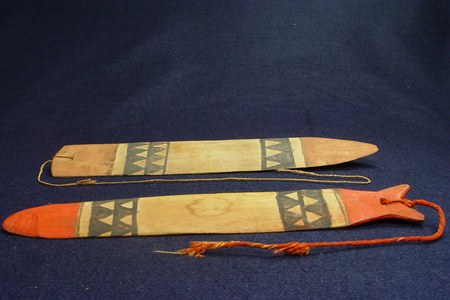 Kuikuro painted roarersBrazil · Upper Xingu, Mato Grosso · Function not recorded
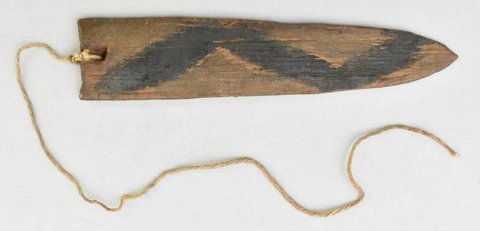 Trumai kuth / huri huri bullroarer, Upper XinguBrazil · Upper Xingu, Mato Grosso · Restricted
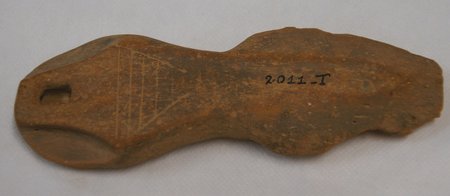 Lagoa das Onças ceramic zumbidorc. 1000–1600 AD · Brazil · Function not recorded