No. WISDOM1940-001
Chortí Maya toy bullroarer (Jocotán–Olopa)
Chiquimula, eastern Guatemala highlands · Mesoamerica · Central America
Play / practical
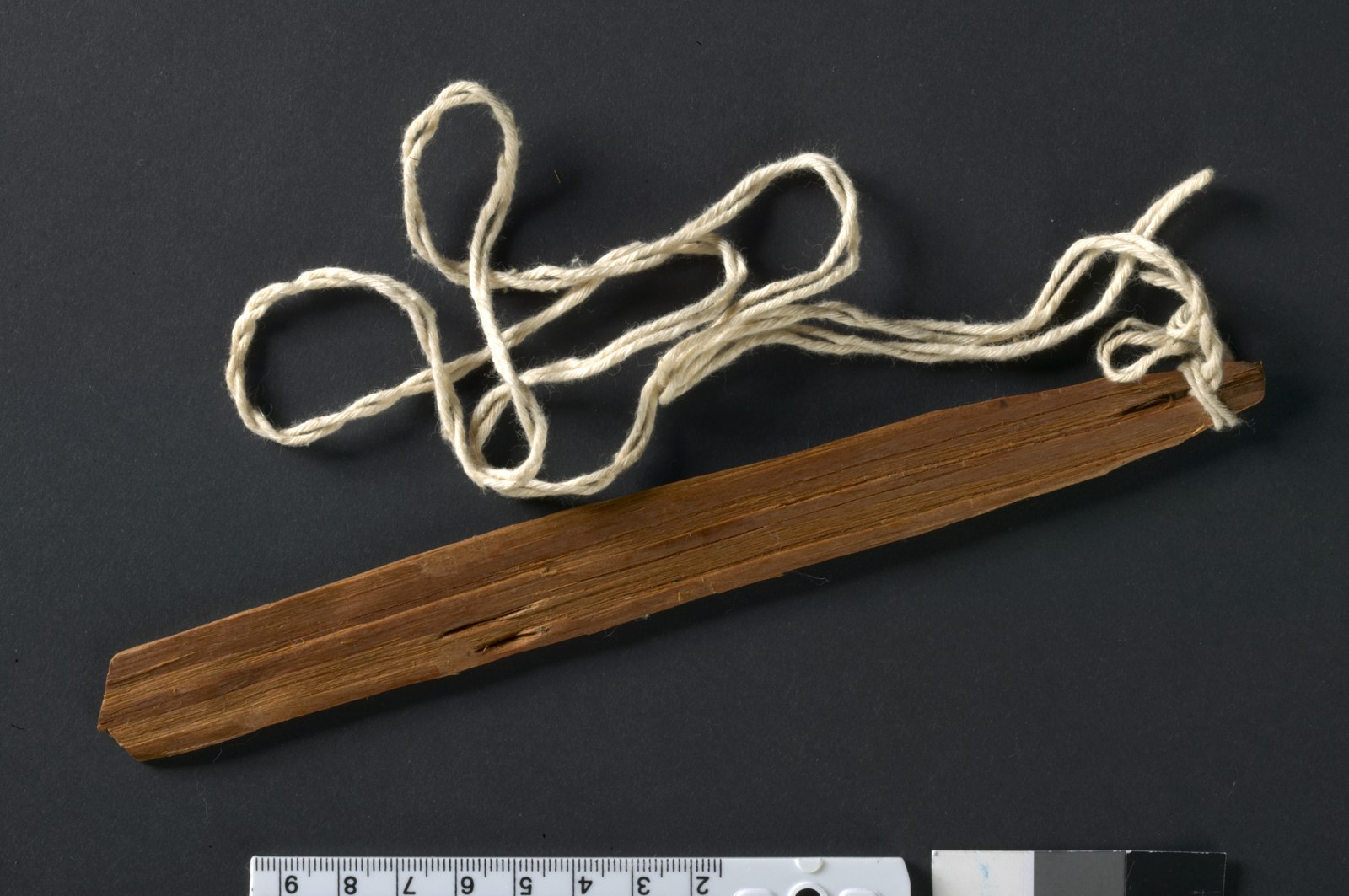
Source term: bull-roarer
Charles Wisdom spent 1932 and 1933 among the Chortí of Jocotán and Olopa, in the dry eastern hills of Guatemala, and when he came to write down what Chortí children played with he made a short list: dolls, bows and arrows, tops, accordions, bull-roarers, and miniature versions of adult things. The roarer he describes is plain — a light piece of wood on the end of an agave cord four or five feet long — and he attached one careful qualification to it. The Chortí knew the thing, he wrote, but they seldom made it. That is a sentence about a moment rather than a custom: the object still present, still nameable, and already passing out of the hands that would have made it.
The bull-roarer, which consists of a light piece of wood attached to the end of an agave cord, four or five feet long, is known to the Indians, but they seldom make it.
Wisdom, The Chorti Indians of Guatemala (1940), p. 297
Particulars
- Object
- A light piece of wood on an agave cord 1.2–1.5 m long.
- Function
- A children's toy, listed with dolls, bows and arrows, tops, accordions and miniature objects. Wisdom adds that the Chortí know it but seldom make it — the object is present in the culture and going out of use, with no ritual role recorded.
Source
Charles Wisdom, The Chorti Indians of Guatemala (Chicago: University of Chicago Press, Publications in Anthropology, Ethnological Series, 1940), pp. 296-297, in the chapter "Individual Life-Cycle". Fieldwork September 1932 to 1933 in the municipios of Jocotan and Olopa, Chiquimula