No. GIFFORD1940-010
It would not sound in public
United States · Little Colorado River · Leupp, Arizona · North America
Restricted
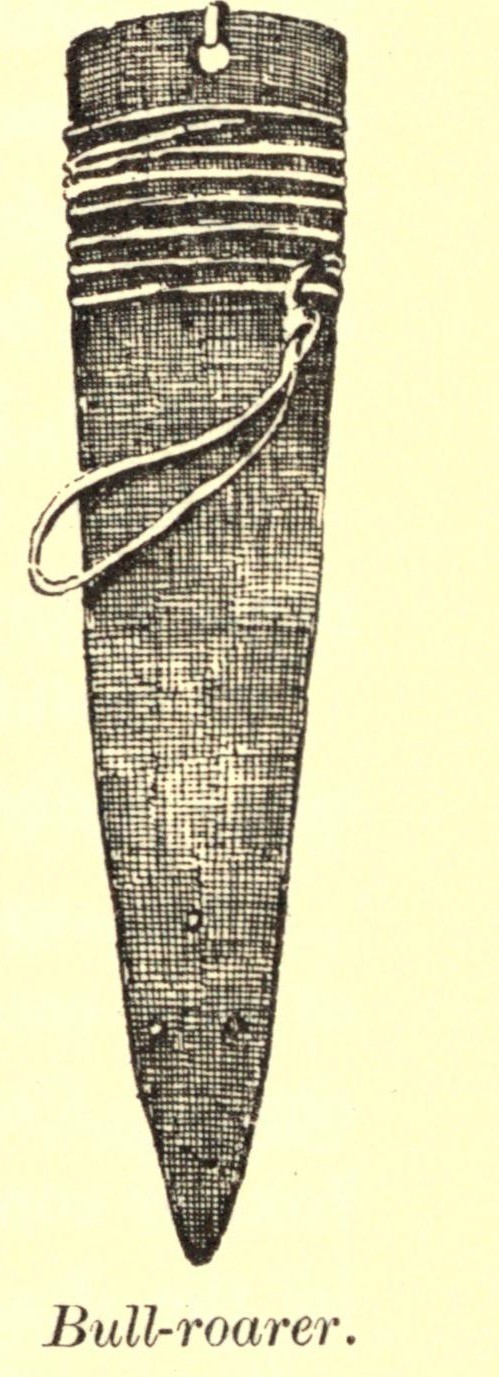
Source term: bull-roarer
The rule enforced itself. Small Man, a blind shaman who gave Gifford the Western Navajo list from the Little Colorado country around Leupp, said the bullroarer there was made of lightning-struck wood for curing and kept out of sight — and that if anyone used it before the public, it would simply refuse to sound. The blade was eight inches by an inch and a half, its edges notched, on a two-foot cord looped at the end with no grip stick to hold. Apache neighbours in the same survey whirled theirs openly at dances. This one was made to be heard and not seen.
Used out of sight. [Among the Western Navajo, it would] not sound if used in public.
Gifford 1940:152
Particulars
- Object
- Blade about 8 by 1.5 inches with notched edges, whirled on a two-foot cord ending in a loop, without a grip stick.
- Function
- Never shown in public: a curing instrument whirled only out of sight, and said to go mute before onlookers.
Source
E. W. Gifford, 'Culture Element Distributions: XII, Apache-Pueblo,' Anthropological Records 4:1 (1940), pp. 2, 58-59 and 151-152