HONIGMANN1954-001 - ethnographic attestation
Kaska stone-knapper's bullroarer
Canada - Dease River, northern British Columbia - North America - Subarctic
Weather / fertility magic
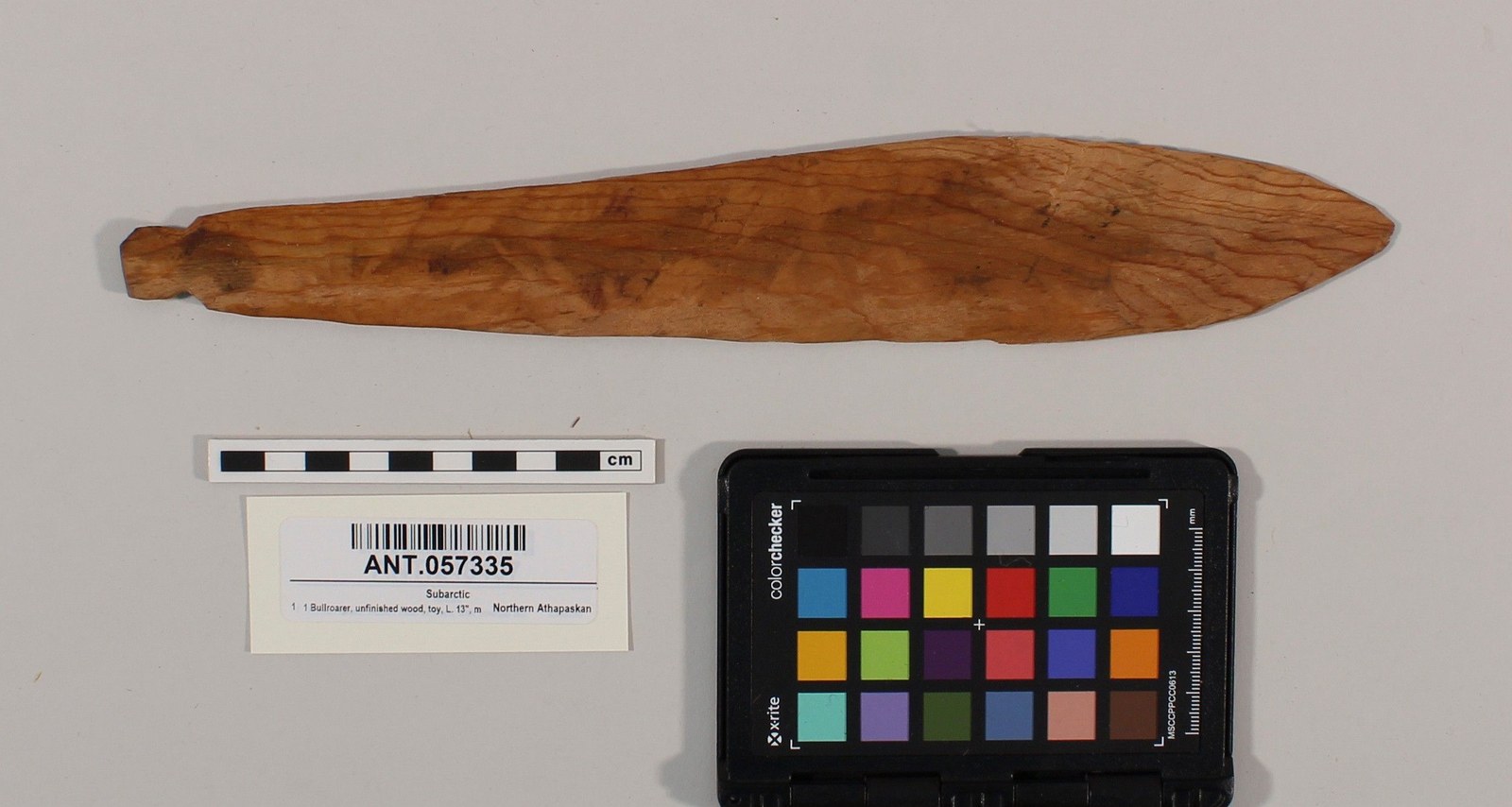
Source term: bull-roarer; bullroarer
Before he began to chip a stone blade, a Dease River Kaska man might swing a bullroarer and sing "thunatis, thunatis," so that his own magical power would aid him in the work. The bullroarer itself held power, and a man swung it to bring milder weather as well. Blades were worked from obsidian and a flintlike stone, then hafted in horn, spruce or birch and sheathed in smoked caribou hide. Children, meanwhile, counted the bullroarer among their toys, beside the buzz toy and the rawhide rattle.
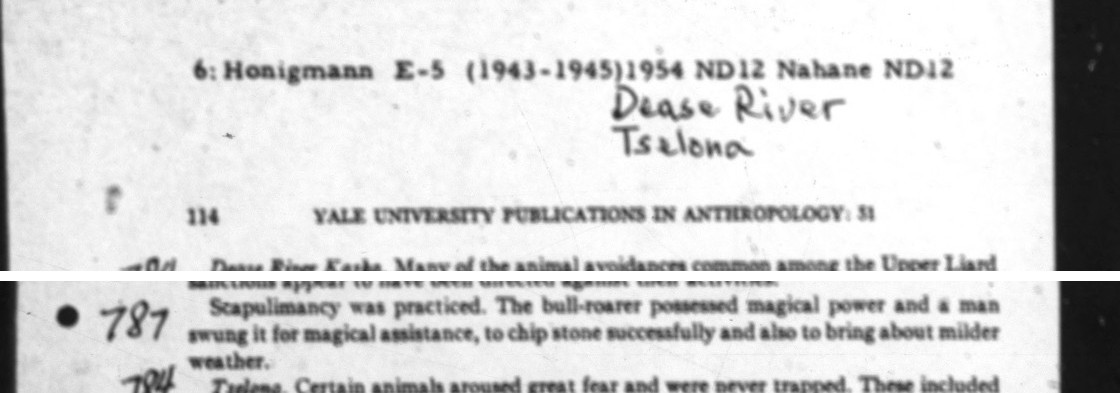
The bull-roarer possessed magical power and a man swung it for magical assistance, to chip stone successfully and also to bring about milder weather.
John J. Honigmann, The Kaska Indians (1954), p. 114
- Object
- Bullroarer; no form, size or material is recorded for the Dease River people.
- Function
- Swung by a man for magical help: before chipping stone, while singing "thunatis, thunatis", and to bring milder weather. Children also had it among their toys.
- Source
- John J. Honigmann, The Kaska Indians: An Ethnographic Reconstruction (Yale University Publications in Anthropology 51; New Haven: Yale University, 1954), pp. 30, 114, 121
- Source location
Page references
p. 30 (knapping charm), p. 114 (magic), p. 121 (toys)
- Source confidence
- medium
- Location note
- Former McDame post on the Dease River, inside the Dease River Kaska range from Dease Lake to Lower Post; Honigmann names no camp.
Regions: The Americas · North America
- Weather magic
- Toy / secular survival