No. GIFFORDKROEBER1937-001
Icheche cure for thunder-sickness
United States · California, Mendocino County, Garcia River near Point Arena · North America
Restricted
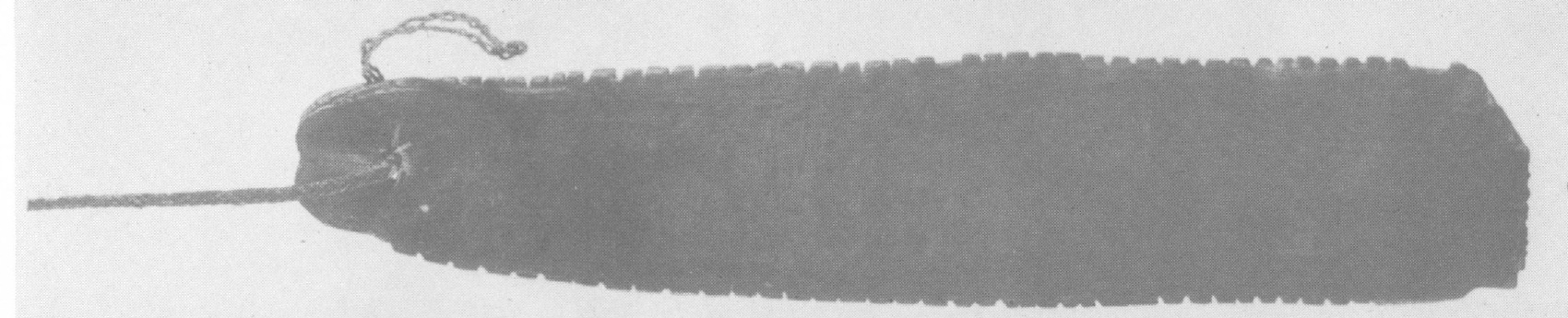
Source term: bull-roarer
Icheche (I'cheche), also Pdahau: the Central Coast Pomo community on the Garcia River; Pda-hau, 'river-mouth', was the older village near the mouth.
At Icheche on the Garcia River, a child who fell sick from hearing thunder was treated with a bullroarer. A man swung it, and women were not allowed to see it. Icheche stood four miles up from the river mouth, near Point Arena, on the coast of the Central Pomo. Its people let their inland kin of Yokaia come down to the shore for sea foods, and once paid shell-bead money to a Yokaia chief for help in a feud. In 1902 old Icheche was abandoned, and its people moved a few hundred yards downhill to the Manchester reservation.
Swung in treating child made sick by hearing thunder.
Gifford and Kroeber, 'Culture Element Distributions: IV—Pomo' (1937), p. 186, n. 543.
Particulars
- Object
- A bull-roarer swung by a man; its form is not described.
- Function
- Swung by a man to treat a child made sick by hearing thunder; women were not allowed to see it.
Source
E. W. Gifford and A. L. Kroeber, 'Culture Element Distributions: IV—Pomo', UC Publications in American Archaeology and Ethnology 37(4) (1937), pp. 121, 145, 186