No. LOUD1929-001
Lovelock Cave horn and wood pendants
United States · Humboldt Valley, Nevada (Great Basin; historic Northern Paiute context) · North America
Function not recorded Candidate only
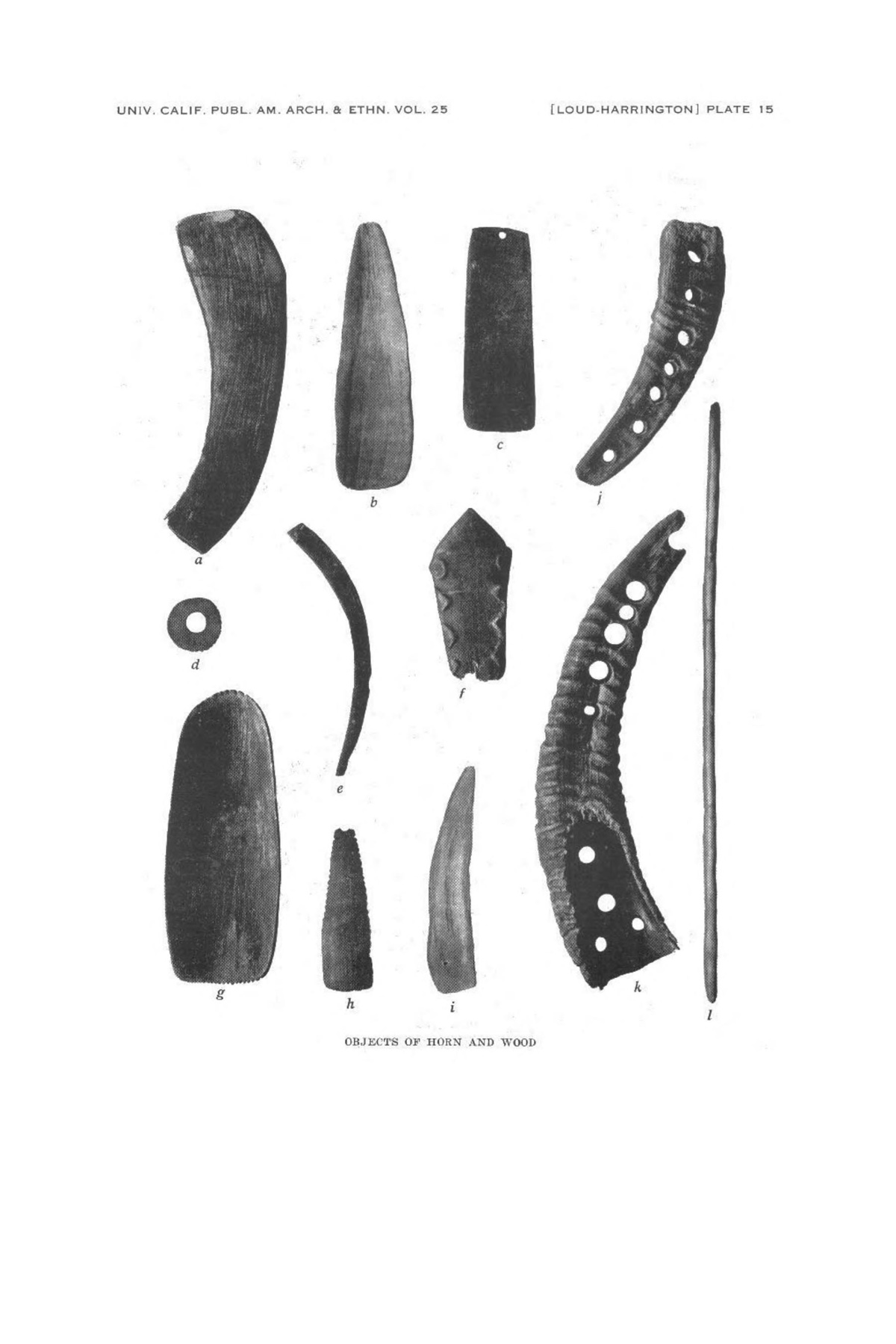
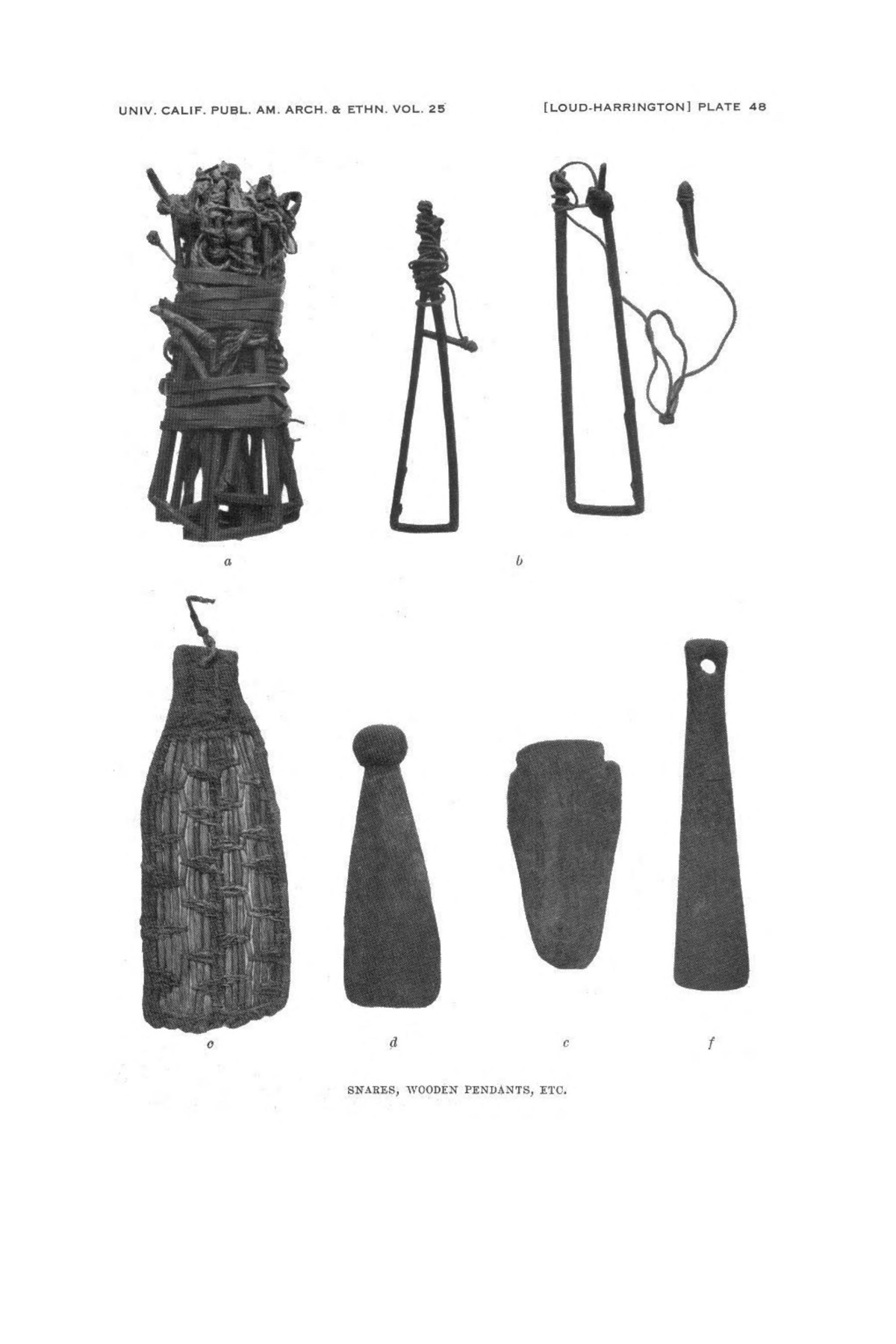
Source term: horn pendant / wooden pendant
Pendant: the object class the 1929 excavators assigned to both pieces; no Indigenous name or ancient function is recorded for either.
At Lovelock Cave, a dry shelter above the old Humboldt Lake bed, horn and wood survived where they usually vanish. One pendant was worked flat from mountain-sheep horn; another, a slip of wood under four inches long, came from the sixth level of the 1924 excavation. Both were published simply as pendants. They belong to an older archaeological record at a place later associated with Northern Paiute communities, but the two finds themselves have no shared date or recorded use.
Too thick and clumsy for use as a spoon, perforation at the narrower end.
Loud and Harrington, Lovelock Cave (1929), p. 51
Particulars
- Object
- Two distinct pendant-class objects from Lovelock Cave. One is mountain-sheep horn, 105 x 38 x 3–5 mm, with one narrow-end perforation and a flat body. The other is wood, 3¾ in. long and ¼ in. thick, with one hole at its narrow end.
Source
L. L. Loud and M. R. Harrington, Lovelock Cave, University of California Publications in American Archaeology and Ethnology 25(1) (1929), pp. 51 and 113, Plates 15c and 48f (catalogue 1-19326 and 13-4929)