No. STEWART1941-005
Kuipa-dokado wimo'to of the Humboldt Sink
United States · Lower Humboldt River and Humboldt Sink, north-central Nevada · North America · Great Basin
Weather / fertility magic
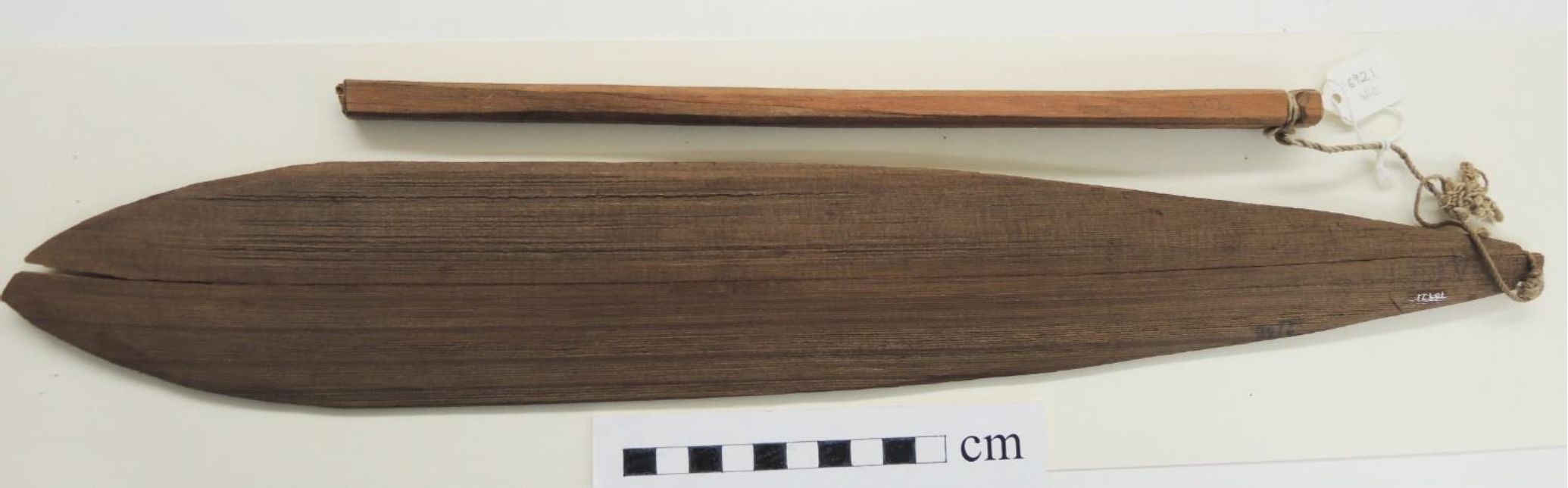
wimo'to
Source term: bull-roarer (wimo'to)
Wimo'to: the Northern Paiute word for the bullroarer.
The ground-squirrel eaters of the Humboldt Sink swung a wooden roarer to bring the wind — the eastern pattern, in which the instrument worked on the weather first. On whether children here were allowed one, the testimony splits both ways.
Particulars
- Object
- A wooden whirrer; not described further.
- Function
- Swung to make the wind blow; also reported as a toy.
Source
Omer C. Stewart, 'Culture Element Distributions: XIV, Northern Paiute,' Anthropological Records 4:3 (1941), pp. 363, 401, 403 and 438