No. INC1978-001
Shipibo-Conibo palo zumbador Yarinacocha
Peru · Yarinacocha · Ucayali · South America · Upper Amazon
Function not recorded
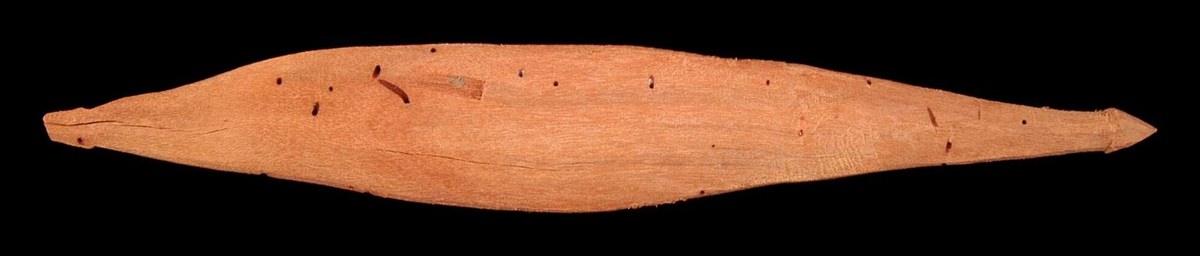
Source term: palo zumbador
palo zumbador: Spanish catalogue term for the cord-whirled free aerophone.
A small wooden blade, grooved or pierced at one end and tied by a long cord to a stick: swept in a circle, it spun on its own axis and filled the air with a hum. This palo zumbador — the 'buzzing stick' — belongs to the Shipibo-Conibo, the riverine designers of the Ucayali, whose healers sing medicine songs said to follow the same maze-like kené patterns they paint on cloth, pottery and skin.
Palo Zumbador. Localizacion Cultural: Shipibo-Conibo. PANO.
Palo Zumbador. Cultural location: Shipibo-Conibo. Pano.
Instituto Nacional de Cultura, Mapa de los instrumentos musicales de uso popular en el Peru (1978), p. 462.
Particulars
- Object
- Small lamina with a terminal groove or hole tied by cord to a stick and whirled in a circle so it turns through the air and hums.
- Function
- Not recorded.
Source
Instituto Nacional de Cultura, Mapa de los instrumentos musicales de uso popular en el Perú (1978), pp. 461-462