No. SA-Z1953-028
Yuracaré boys' bullroarer
Eastern Bolivia · South America
Play / practical
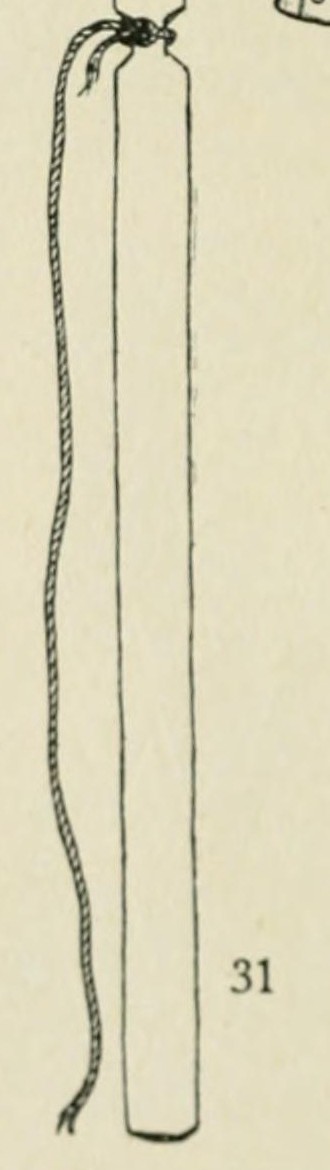
Source term: Schwirrgerät / Schwirrholz / bullroarer
Among the Yuracaré of the eastern Bolivian lowlands, the bullroarer was a children's plaything. Erland Nordenskiöld found it in the boys' hands on his northeastern Bolivia fieldwork, at page 68 of his 1922 account "Indianer und Weisse in Nordostbolivien". Otto Zerries set the Yuracaré alongside two neighboring peoples, the Chacobo and the Guarayú, who likewise whirled the instrument for amusement and for no rite.
In Northeastern Bolivia the bull-roarer is used as a children's toy by the Chacobo (Nordenskiöld 1922, p. 110), Yuracaré (l. c. p. 68) and Guarayu (l. c. p. 168).
Zerries 1953:288 (Revista do Museu Paulista, n.s., vol. VII)
Particulars
- Function
- Bullroarer used as children's toy
Source
Erland Nordenskiöld, Indianer und Weisse in Nordostbolivien (Stuttgart: Strecker und Schröder, 1922), p. 68; Otto Zerries, 'The Bull-roarer among South American Indians,' Revista do Museu Paulista n.s. 7 (1953), p. 288