No. SPIER1923-001
Arrowhead roarer of the fire rite
United States · Hawi · Vallecito Valley, Anza-Borrego desert, San Diego County, California · North America
Restricted
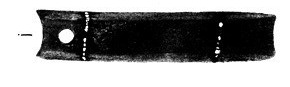
Source term: bull roarer; shaman's wand ('kwotoöt)
au'Etasī'phīs: 'extinguishing the fire', the fire ceremony. hoRLoi': the initiation dance at which jimsonweed is given. Mattiawit: the great snake from whom the rite came; in a separate story his burned body broke into the songs given to the clans (pp. 330–331). 'kwotoöt: the shaman's wand. Xawi': 'tule', the place at Vallecitos. neeix: the gens of the carrier Kwistu'c.
When the jimsonweed had been drunk, the shamans put out the fire. At Xawi', 'tule', in the Vallecito valley, Northern Diegueño shamans initiated Jim McCarty, a grown man from the south, and he remembered what came after. Crowned with owl and raven plumes that nearly hid their faces, the initiated squatted round the blaze. The leader on the north carried a wand that was a bullroarer on a milkweed string; at his cry they all jabbed their wands into the coals and circled the fire. Then he sprang onto the embers, and the rest rubbed and patted them out with their hands and beat them with their plumes. The rite had come from the Shoshoneans to the north, who learned it from the great snake Mattiawit. The roarer came the same way, from Warner's Hot Springs to San Felipe, and a man named Kwistu'c carried it to Vallecitos. It was plain, with a stone arrowhead set into its butt. A black wand that came with it frightened the shamans so much that they hid it.
It was plain and had a stone arrowhead inserted in the butt.
Leslie Spier, Southern Diegueño Customs (1923), p. 323
Particulars
- Object
- A plain shaman's wand used as a bullroarer on a milkweed string, with a stone arrowhead set into its butt.
- Function
- Swung by the principal (northern) shaman in au'Etasī'phīs, 'extinguishing the fire', the night rite after the jimsonweed initiation: initiated shamans jab their wands into the coals, circle the fire, and the leader springs onto the embers while the others put them out with hands and headplumes. The rite was said to come from the Shoshoneans to the north, who received it from the great snake Mattiawit; the blade itself came from the Shoshoneans of Warner's Hot Springs through the Northern Diegueño of San Felipe and was carried to Vallecitos by Kwistu'c of the neeix gens.