No. MUS2026-193
Clavering Island Site D blade
Northeast Greenland · Clavering Island · North America · Arctic
Function not recorded
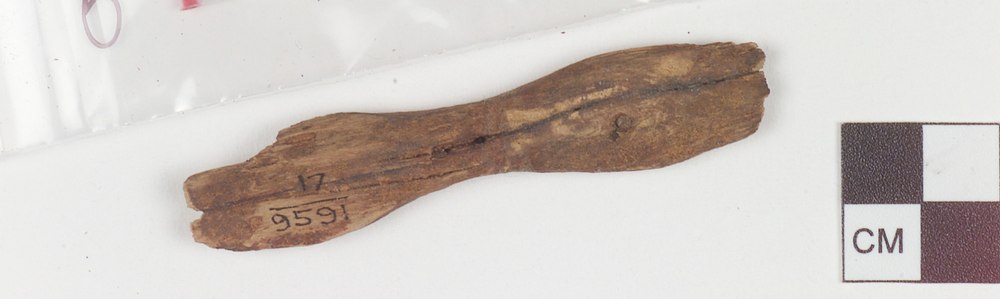
The Ford-Bartlett expedition put Junius Bird ashore on Clavering Island in 1930, and from the frozen ground of the place he labelled Site D came a wooden bullroarer, carved and drilled for its cord — left, probably, by the Tunumiit who lived on this coast some time between 1600 and 1800. It was not alone: another blade came out of a stone-house ruin at Site C nearby. East Greenland's dry cold keeps wood for centuries, and with it the evidence that on the remotest inhabited coast of the Arctic, someone was swinging a roarer.
Particulars
- Object
- Carved, drilled wooden bullroarer, probably AD 1600-1800; excavated at Site D on Clavering Island.
- Function
- Not recorded — an archaeological find.
Source
National Museum of the American Indian, Smithsonian, catalogue no. 17/9591: Bullroarer, wood, carved and drilled; Site D, Clavering Island, Northeast Greenland; excavated by Junius Bird, 1930, Ford-Bartlett East Greenland Expedition