No. NA-S1952-002
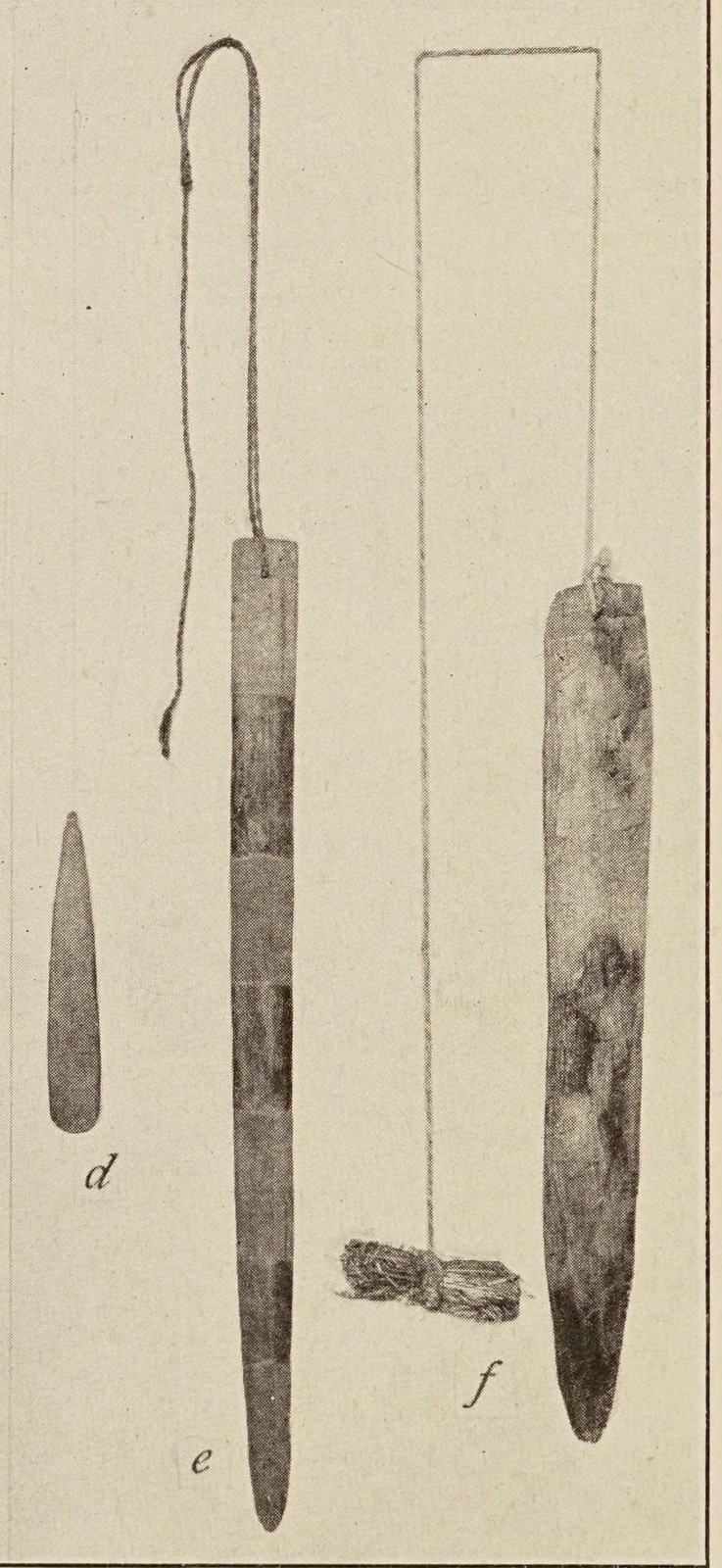
Pomo taboo spirit-voice and curing bullroarer
United States · California · North America
Restricted
Source term: bullroarer
Among the Pomo of California the bullroarer was believed everywhere to be the voice of Thunder man, and the Eastern Pomo called it kalimatoto padok, the "doll of Thunder man." Edwin Loeb, who worked the Pomo country in the 1920s, recorded that when the slabs of wood were heard during the ghost dance, outsiders were told it was the voice of the dead; the instruments were otherwise kept carefully concealed in moss, and their nature was unknown to women and children, who Loeb thought held largely to the belief that the sound was the dead rather than the thunder. The bullroarer was also reckoned a powerful curing agent: it was swung over a man or woman who had been scared by thunder, though it could be turned against any bad sickness such as consumption, the head yomta pointing it to the five directions four times and praying to the four quarters, or calling in two assistants to whirl the instruments around the fire. The bullroarer itself was made by stringing two slabs of cottonwood on a loop of rope a yard or so long, and in the Thunder ceremony four male initiates wielded them in imitation of a storm. Among the neighboring Northern Maidu, Loeb noted, the same object had lost all sacred standing and become a child's toy.
The bull roarer everywhere among the Pomo was believed to be the voice of Thunder man… It was sometimes stated that the bull roarer was the voice of the dead, because it was used in the old ghost ceremony. It is not improbable, and I have heard it so stated, that women and children held largely to the latter opinion.
Loeb 1926, Pomo Folkways:325
Particulars
- Function
- Women and children denied sight; the voice of Thunder man or of the dead; also a shamanic curing instrument.