No. AGINSKY1943-001
Valley Yokuts bullroarer of storm, sickness and play
United States · San Joaquin Valley floor from the San Joaquin River at Friant south through the lower Kings River and Tulare Lake basin to the Kern River and Tejon; Fresno, Kings, Tulare and Kern counties, California · North America
Sacred / spirit
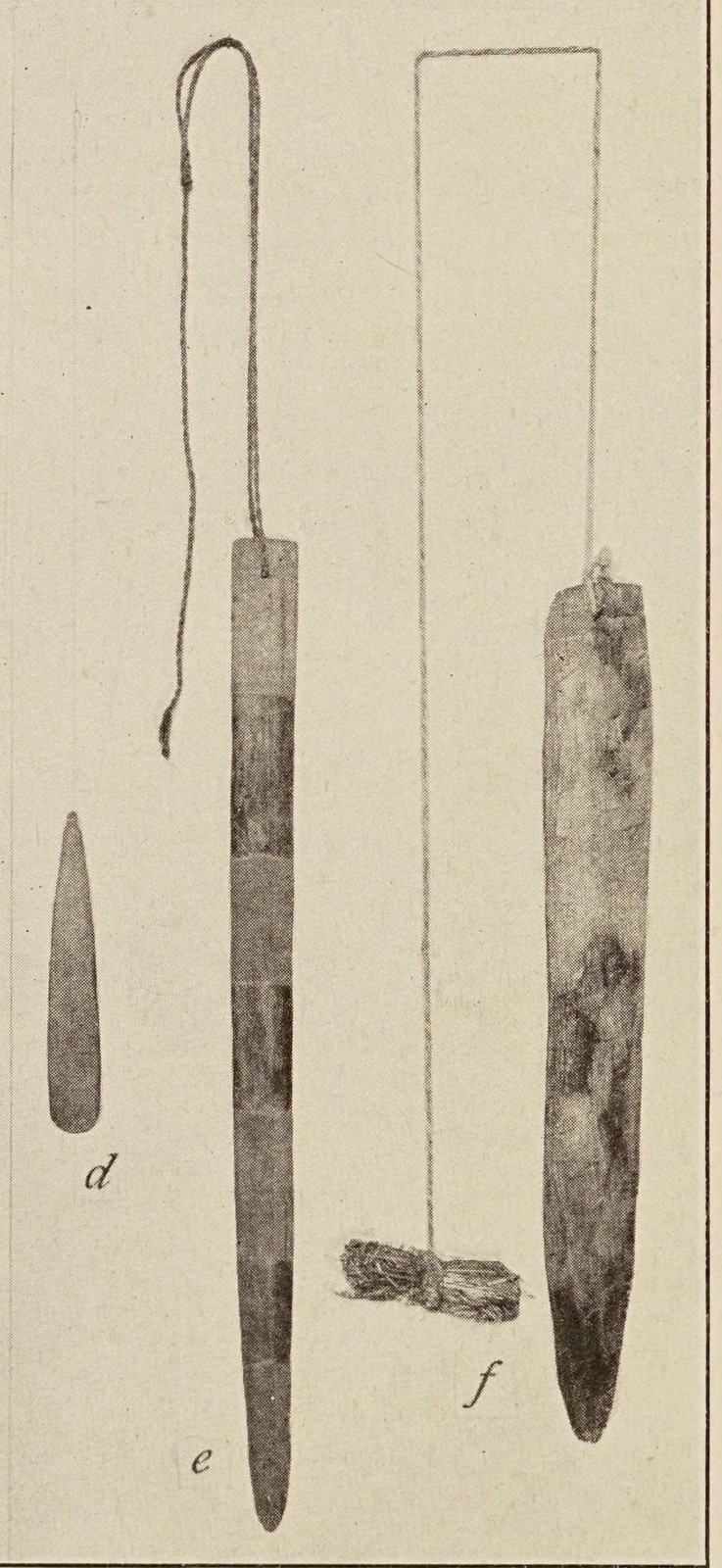
Source term: Bull-roarer
Down on the valley floor, from the San Joaquin at Friant to Tulare Lake and the Kern, the Yokuts bullroarer was as likely to be a doctor's weapon as a toy. At Friant it belonged to the shamans and only men might handle it. Its roar called people to ceremony and raised storms, and it could heal the sick or make the well fall ill; it was swung for the sound as well. South of the lower Kings the Nutunutu used it to make people sick, and played with it too. On the Tulare Lake shore the Chunut kept it for sickness alone. Among the Yauelmani of the Kern River and Tejon it was only a plaything.
Particulars
- Object
- Of wood; at Friant also of horn or bone.
- Function
- Varied by group. Friant: a shaman's instrument, used publicly and privately and handled by men only; it assembled people for ceremony, raised storms, brought health and caused sickness, and was also swung for amusement. Nutunutu: caused sickness and was swung for amusement; not used for storms. Chunut: caused sickness; not a plaything. Yauelmani: a plaything only. Tachi: of wood, its uses uncertain; not used for storms or to assemble people.
Source
B. W. Aginsky, 'Culture Element Distributions: XXIV, Central Sierra,' Anthropological Records 8:4 (1943), p. 394 (Friant: 'Yokuts, of Valley speech division, tribal name not secured, living on San Joaquin River'; informant John Ned Jones, age 74), p. 425 elements 1233-1244 (column Yj). Harold E. Driver, 'Culture Element Distributions: VI, Southern Sierra Nevada,' Anthropological Records 1:2 (1937), p. 59 (columns and informants: Y-Nut Nutunutu, Mary Tip; Y-Tach Tachi, Lucy and Nick Sisco; Y-Chun Chunut, Josie Alonzo; Y-Yaul Yauelmani, Jim Alto with Jose Vera), p. 60 (symbol key), p. 85 elements 1233-1244. A. L. Kroeber, Handbook of the Indians of California, BAE Bulletin 78 (1925), pp. 482-484 (territories), p. 518 (Tachi rain stones; Hopodno of Tejon). A. H. Gayton, Yokuts and Western Mono Ethnography I, Anthropological Records 10:1 (1948), p. 33 (Chunut sickness-sending)