No. BARNETT1937-003
Galice Creek bull-roarer
United States · Galice Creek, Rogue River, Josephine County, Oregon · North America · Northwest Coast
Play / practical
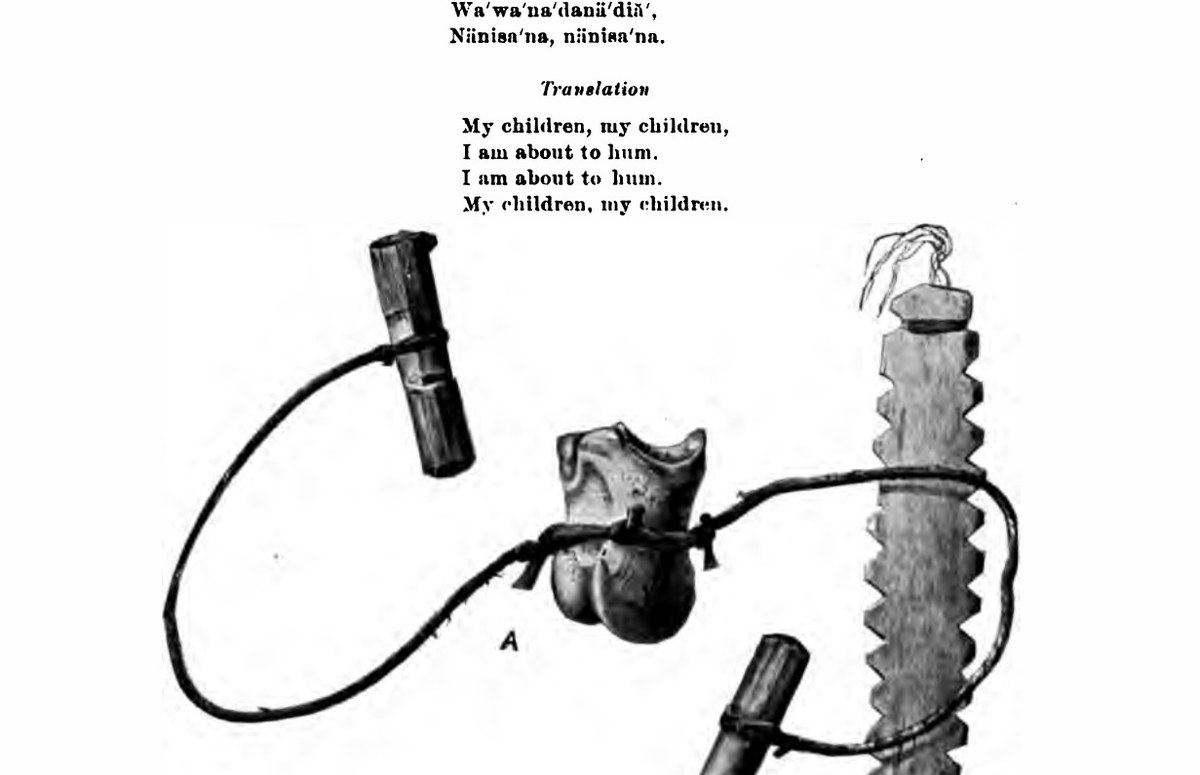
Source term: bull-roarer (boy's plaything)
At Galice Creek, a pocket of Athabaskan speakers on the middle Rogue whose life had become almost wholly Takelma, the bullroarer was a boy's plaything. These were people who counted wolves as friends and allies of men. Kill one and the pack took revenge — on the killer, on one of his kin, or by stealing a child from the village, who would run with the wolves and in time lose all wish to come home. When a girl came of age, men and women danced in a ring around her for ten nights, keeping time with deer-hoof rattles.
Particulars
- Object
- Not described; recorded only as a bull-roarer.
- Function
- A boy's plaything.
Sources
- Homer G. Barnett, 'Culture Element Distributions: VII, Oregon Coast,' University of California Anthropological Records 1:3 (Berkeley, 1937), p. 174, element 746 ('Bull-roarer (boy's plaything)') View · archived
- Philip Drucker, 'The Tolowa and Their Southwest Oregon Kin,' UC-PAAE 36:4 (1937), pp. 283-284 View · archived