No. GIFFORD1940-007
Saguaro thunder roarer of the Vigita
United States · Santa Rosa Valley, Arizona · North America
Sacred / spirit
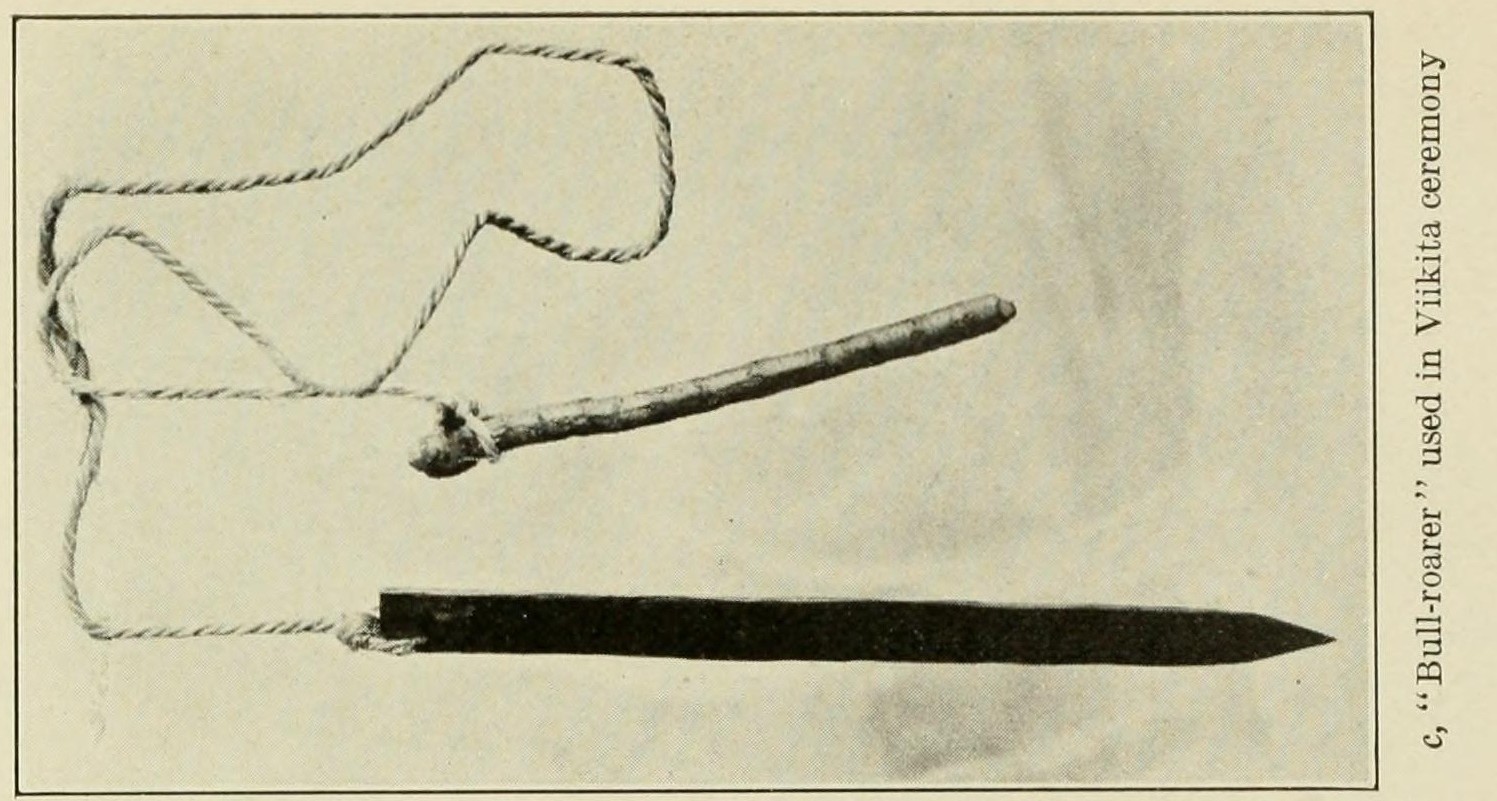
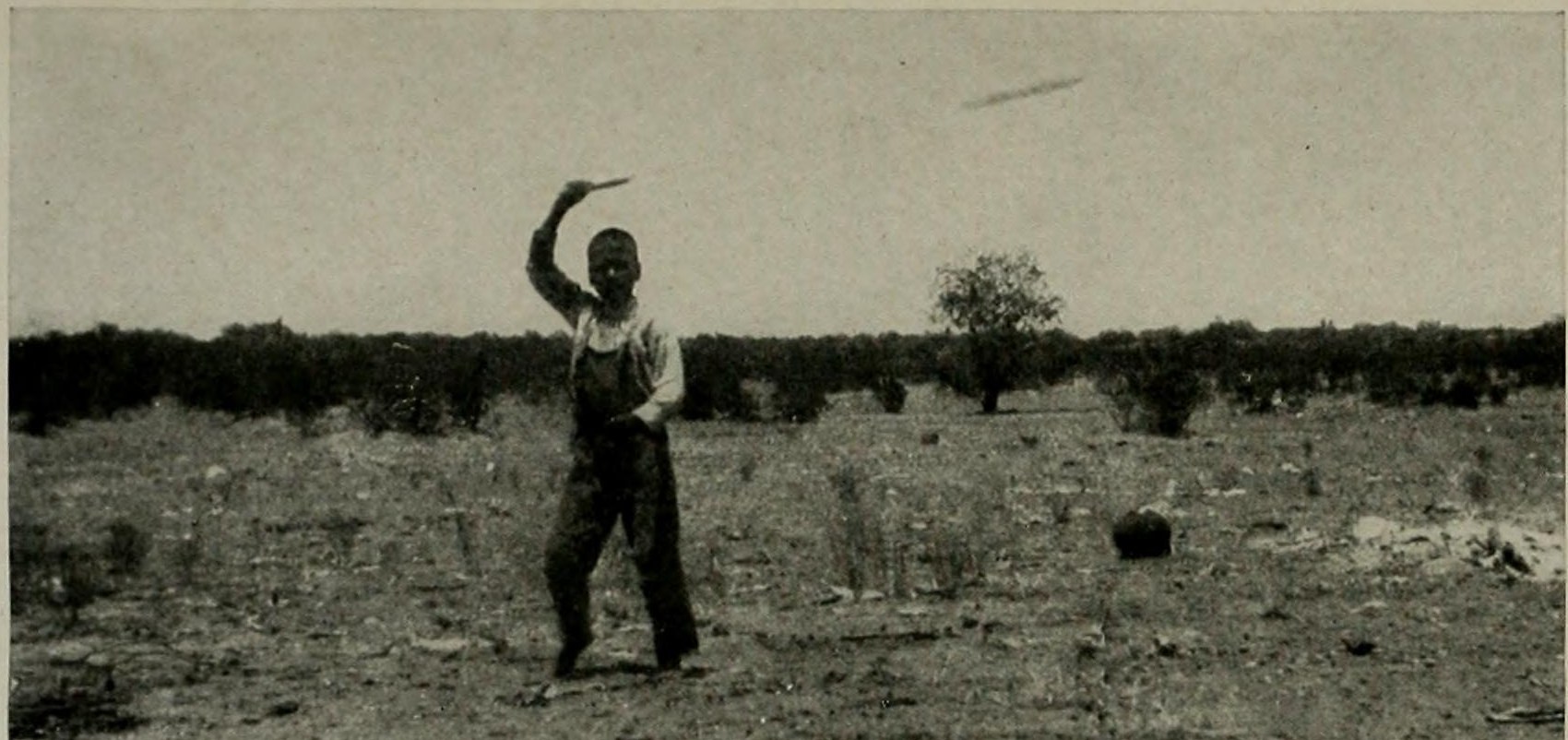
Source term: bull-roarer
The Vigita was the great harvest feast of the Tohono O’odham, held every four years at Santa Rosa in the Arizona desert once the corn, beans, pumpkins and melons were in. Carl Lumholtz, who came through in the summer of 1910, was shown the singers’ outfit. Its bullroarer was two flat pieces of saguaro rib, the smaller held in the hand, joined by a string of native cotton and decorated with signs for lightning, clouds, turtles and grains of corn, “expressing their desire for rain.” The buzz had to be deep, in imitation of the thunder that brings rain; a shrill one would bring lightning only. It called the people together and dismissed them, sounded on the dawn walk from the practising house to the feast ground, and sounded again as the cloud effigy went by — ten feet of white canvas over ocotillo stems, the clowns helping to carry it, balancing the top against the cactus pole they carried. Between times it rode tucked under the singer’s belt at the back, and after the feast it was put away for four years. Ruth Underhill heard the same thing a generation later, and with her comes one more use: a village leader’s summons to the ten days of festival was the swinging of a bullroarer. Purification followed the Vigita, and a person who skipped it could fall sick; no shaman was needed, for an ordinary person swung a blade of saguaro wood, ten inches by two and dotted with red on both faces, over the sufferer. Far to the south, when the salt pilgrims came home from the Gulf, the small boys ran out to meet them with bullroarers that imitated the rain coming in from the ocean.
The buzzing sound produced should be deep, in imitation of the thunder, which brings rain; if the sound is shrill, lightning only will follow.
Carl Lumholtz, New Trails in Mexico (1912), p. 95
Particulars
- Object
- Two flat pieces of saguaro rib, the smaller held in the hand, joined by a string of native cotton and painted with signs for lightning, clouds, turtles and grains of corn.
- Function
- Singers' instrument of the four-yearly Vigita harvest feast at Santa Rosa: painted with rain signs, its deep buzz imitating the thunder that brings rain, it summoned and dismissed the gathering and sounded as the cloud effigies were carried; afterwards swung over anyone sickened by skipping the post-feast purification.
Source
E. W. Gifford, 'Culture Element Distributions: XII, Apache-Pueblo,' Anthropological Records 4:1 (1940), pp. 58-59 and 151-152 and 185; Carl Lumholtz, New Trails in Mexico (New York: Scribner, 1912), pp. 88-96; Ruth Underhill, Papago Indian Religion (Columbia University Press, 1946), pp. 137, 150 and 236