No. SAYLES1941-001
Rustler Hills infant-burial bull-roarer
United States · Trans-Pecos Texas (Rustler Hills, Culberson County) · North America · Southwest
Function not recorded Candidate only
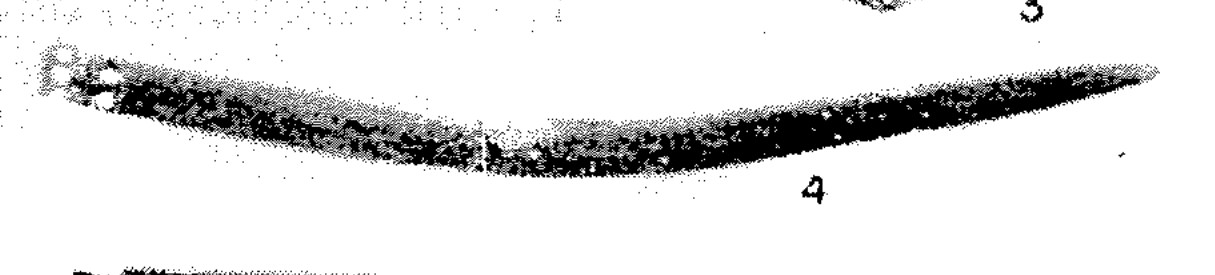
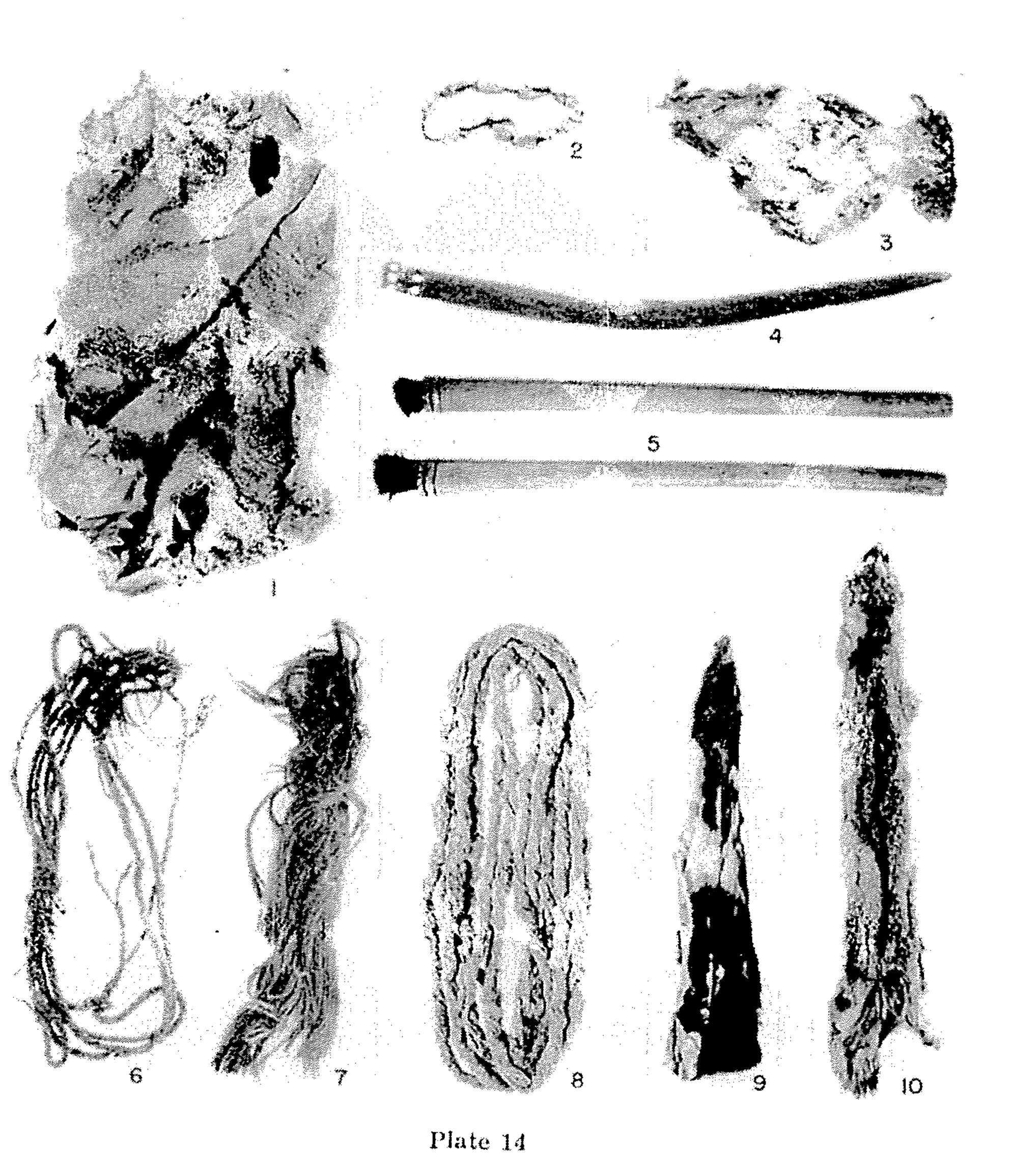
Before about 1100 AD, in a gypsum sink-hole shelter in the Rustler Hills, an infant was buried in a carrying basket: laid on a pad of down over a squirrel skin, wrapped in rabbit fur, and sent off with Pacific olivella shells, two prayer sticks, cotton yarn, a hank of human hair — and a thin curved wooden blade, 42 cm long, snapped in two, the halves laid side by side. E. B. Sayles, excavating for Gila Pueblo, read the blade as a bull-roarer and counted it, with the shells and the cotton, among the grave's ties to the Southwest.
Thin piece of wood slightly curved, pointed at one end, squared at the other, with five perforations; all edges bevelled; rich brown color. Length, 42 cm.
Sayles 1941, p. 82 (Plate 14 caption)
Particulars
- Object
- Thin curved wooden blade, 42 cm, pointed at one end and squared at the other, all edges bevelled, rich brown, with five perforations; recovered snapped in two, the halves laid side by side in the burial; no cord survives.
- Function
- A grave offering in an infant's basket burial made before c. 1100 AD, among the costly objects Sayles read as a mourning sacrifice.
Source
E. B. Sayles, 'Infant Burial in Carrying Basket', Bulletin of the Texas Archeological and Paleontological Society 13 (1941), pp. 77-87; object at p. 82 (Plate 14 caption, no. 4), burial inventory p. 80, western-connections discussion p. 85