No. DRUCKER1950-005
Kweeha bullroarer
Canada · Fort Rupert, northeastern Vancouver Island · North America · Northwest Coast
Play / practical
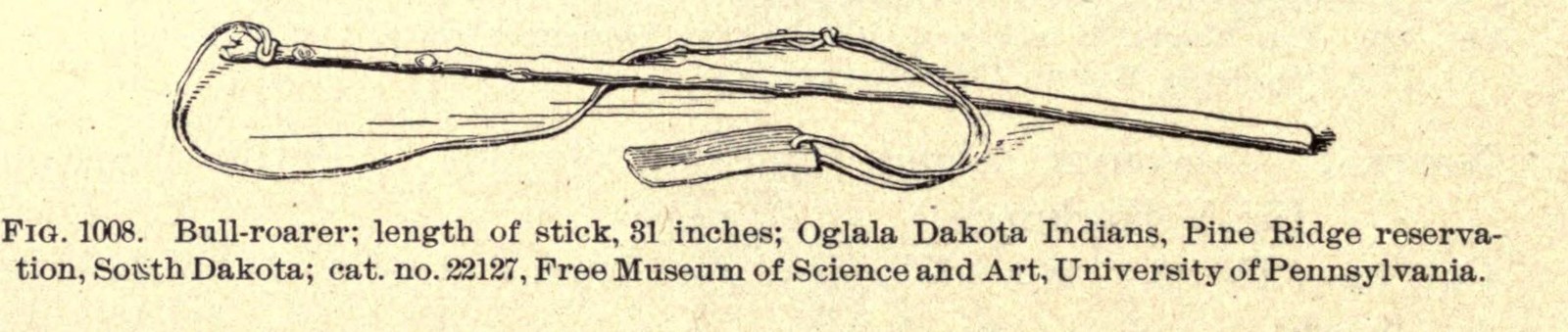
Source term: bullroarer
Among the Kweeha, one of the four Kwaguʼł tribes drawn together at Fort Rupert by the fur trade, the bullroarer was a handled slat kept as a toy. That is remarkable for where it was: Fort Rupert was the great ceremonial village of the coast, home of the tsetseka, the winter season in which the hamatsa and the other dancing societies take possession of the houses — and the bullroarer had no part in any of it. Across the island at Quatsino Sound the same instrument was the voice of a spirit coming to fetch a novice; here it was a plaything.
Particulars
- Object
- A wooden slat swung on a cord fastened to a handle, the standard form all along this coast. Neither dimensions nor material recorded.
- Function
- A toy; no ceremonial use recorded.
Source
Philip Drucker, 'Culture Element Distributions: XXVI, Northwest Coast,' University of California Anthropological Records 9:3 (Berkeley, 1950), p. 199, elements 854-857, with notes p. 268