No. NAEXP-003
Omaha gahoota and horse thieves
United States · Nebraska (Omaha territory) · North America · Plains
Play / practical
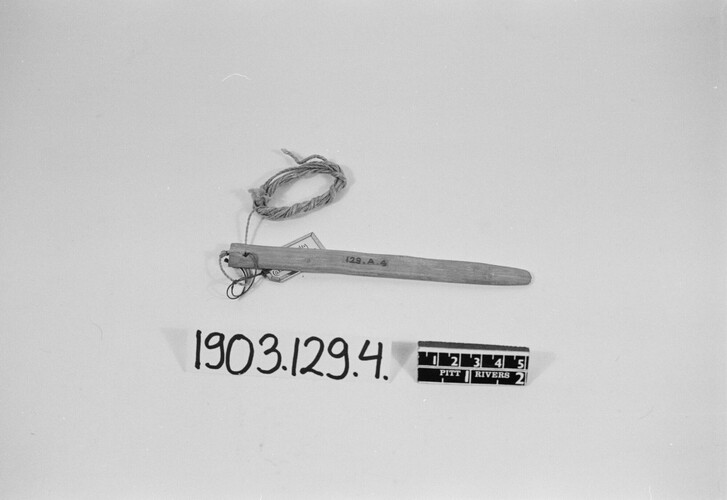
gahoota
Source term: bull-roarer
gahoota: the Omaha name Francis La Flesche gave Culin for the boys' whip-mounted bullroarer; La Flesche said he did not know its meaning.
Two Omaha brothers set out to steal horses and win rank by giving them away. At the enemy camp they watched a rider come after the herd whirling a bullroarer, “used to drive horses with and called ‘horse scarer’,” and the horses ran back to camp at its sound. The brothers made one of their own and escaped, driving the stolen herd before it. Back home, they gave every horse to the chiefs and were made chiefs themselves; Tecon became the Fire Chief. Omaha boys also played with a gahoota: a six-inch stick, notched at one end and fastened to a whip.
Mr Francis La Flesche described the bull-roarer, as used by Omaha boys as a plaything, under the name of gahoota. It is made of a stick, 6 inches long, with a notch cut at one end, and fastened to the end of a whip. Mr La Flesche did not know the meaning of the name.
Culin 1907, Games of the North American Indians (BAE 24th Annual Report):750
Particulars
- Object
- Stick 6 in. long with a notch at one end, fastened to the end of a whip; swung by boys.
- Function
- Boys' plaything; also used to drive stolen horses in an Omaha tale.