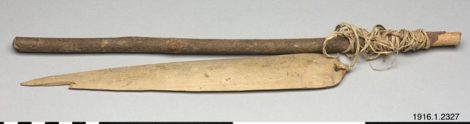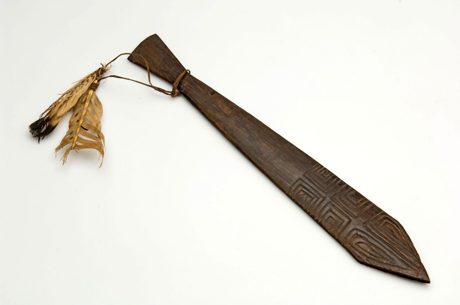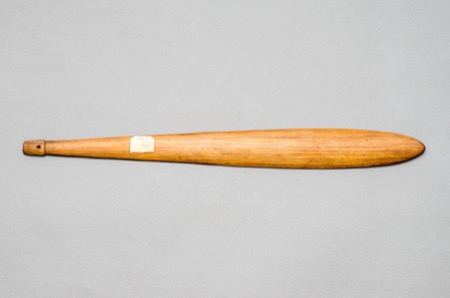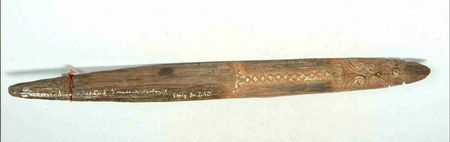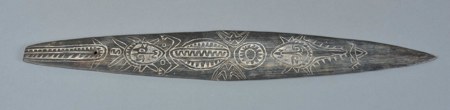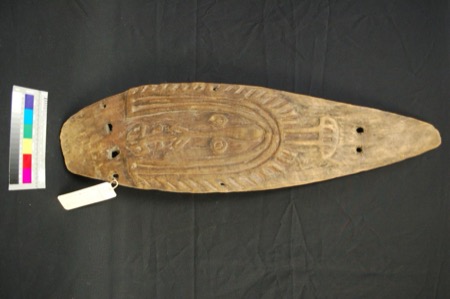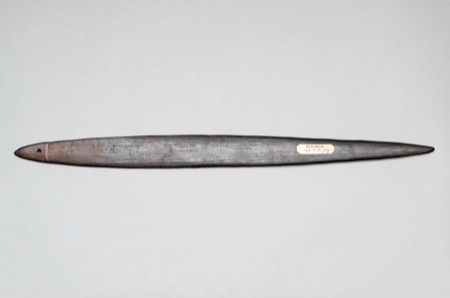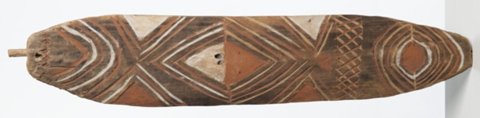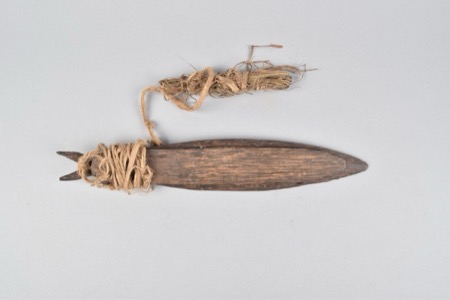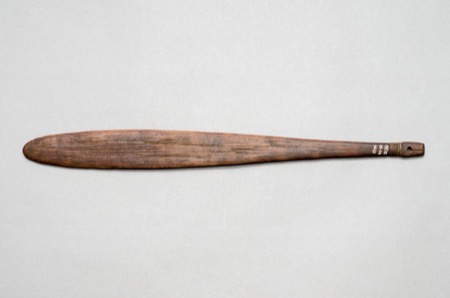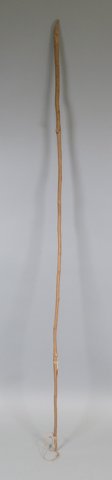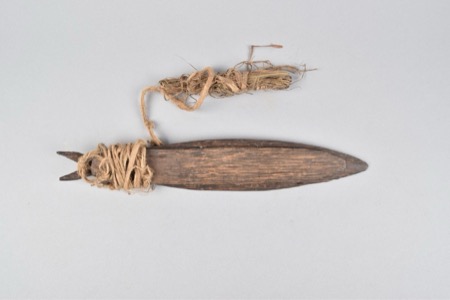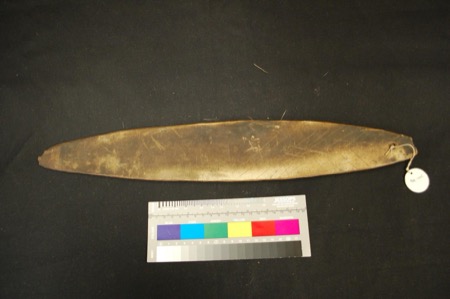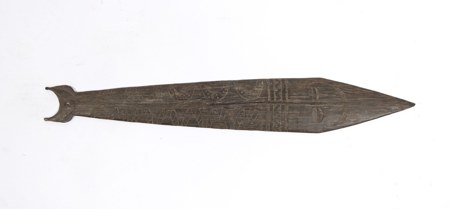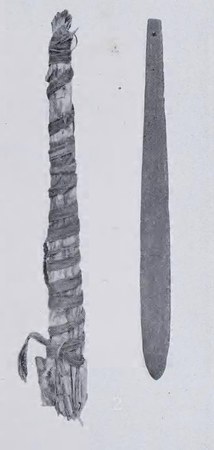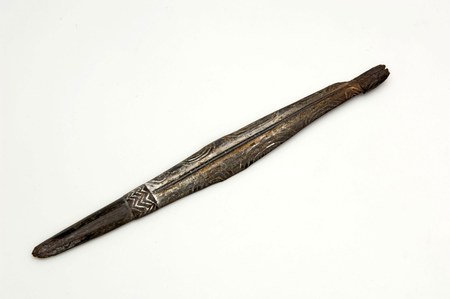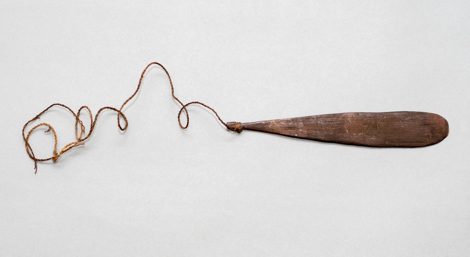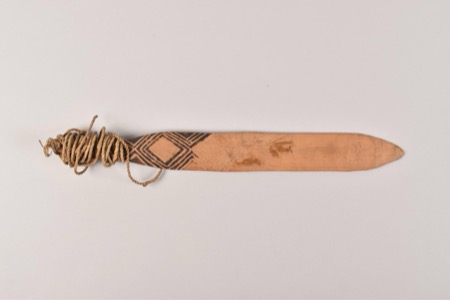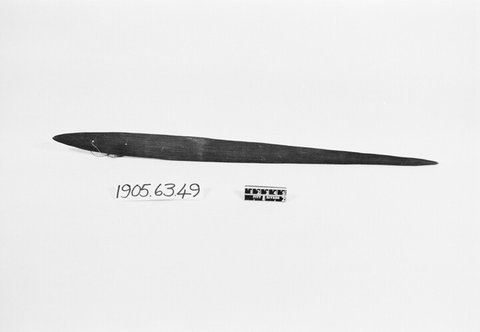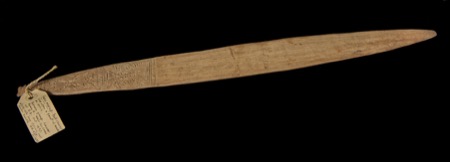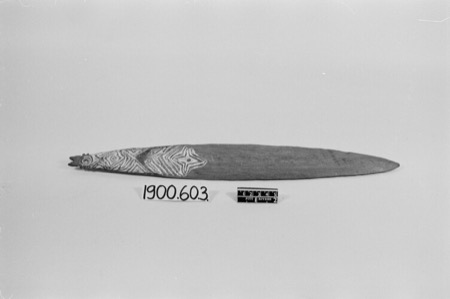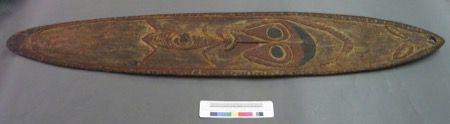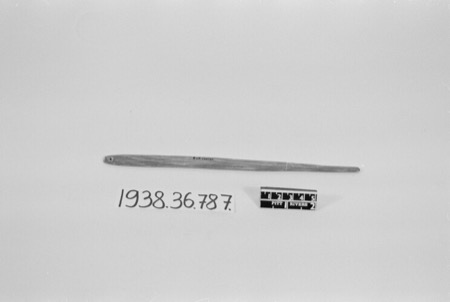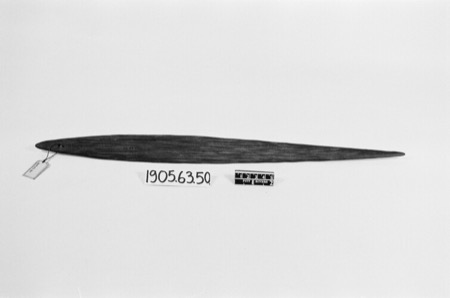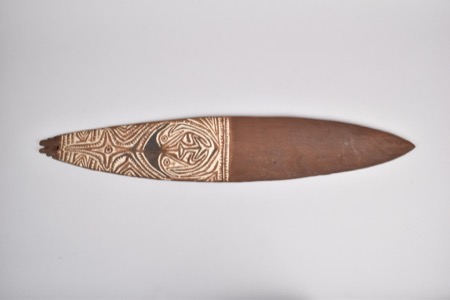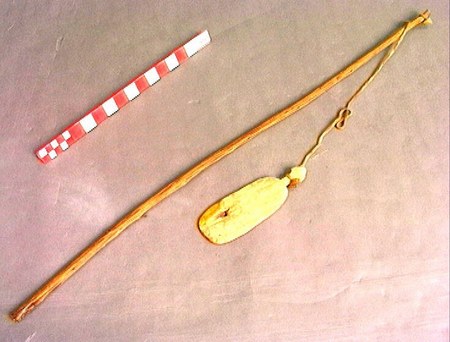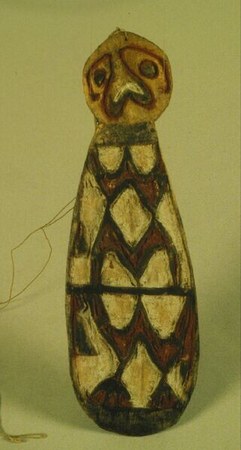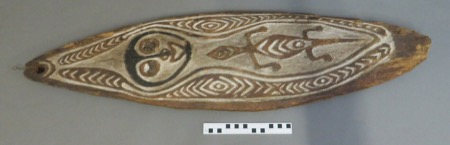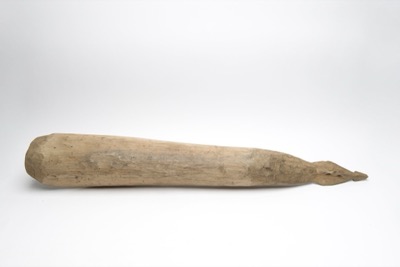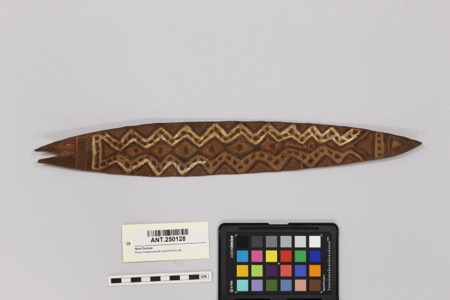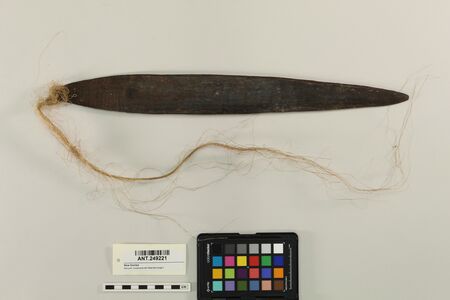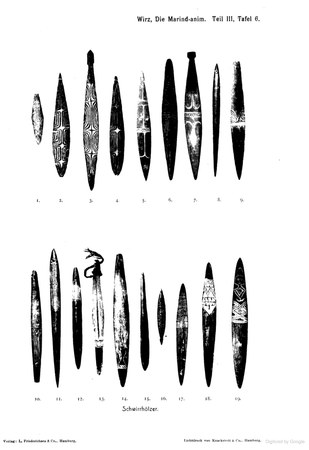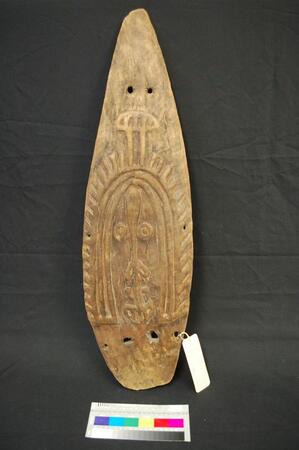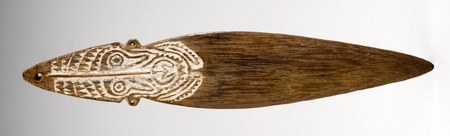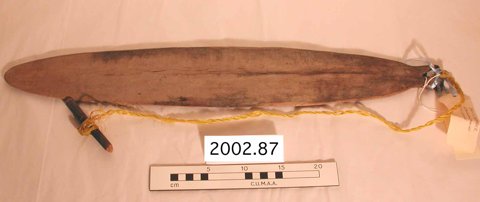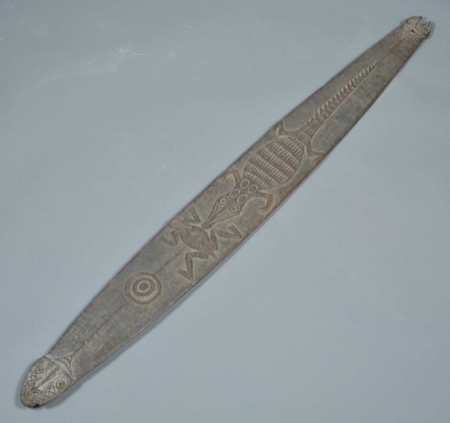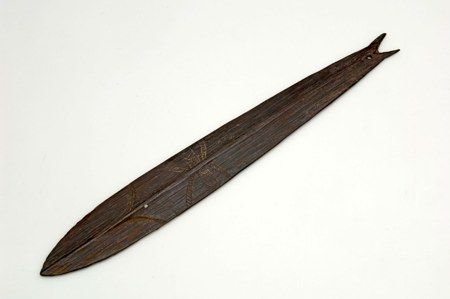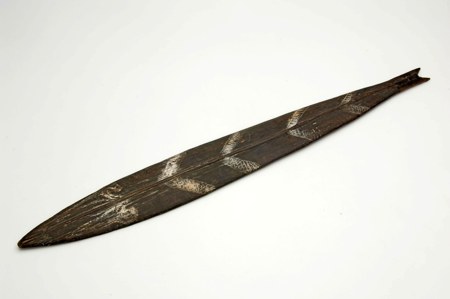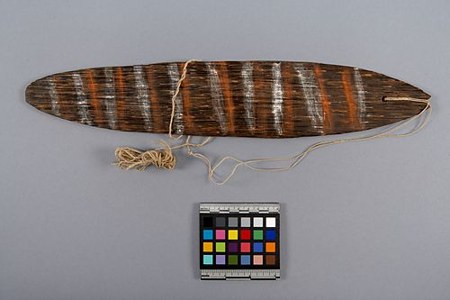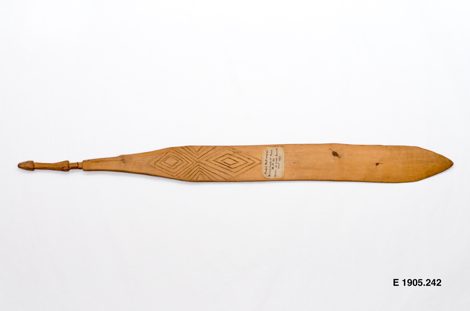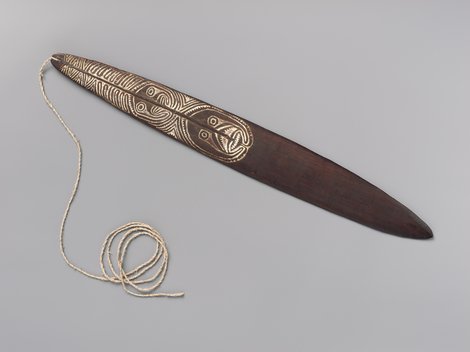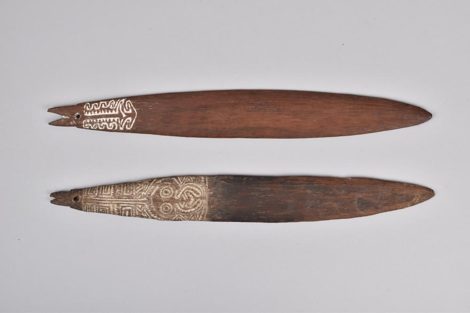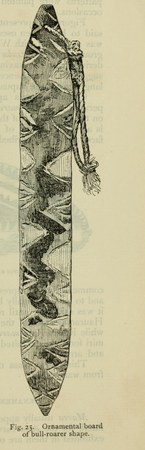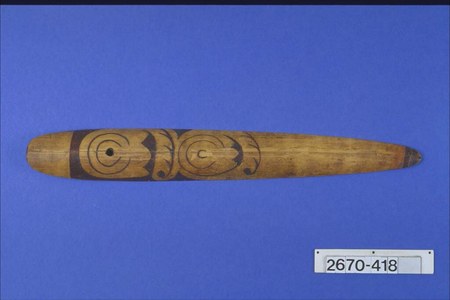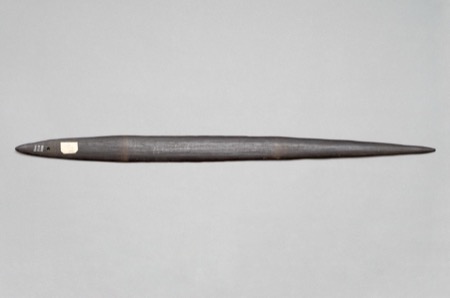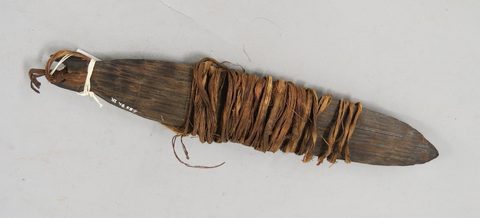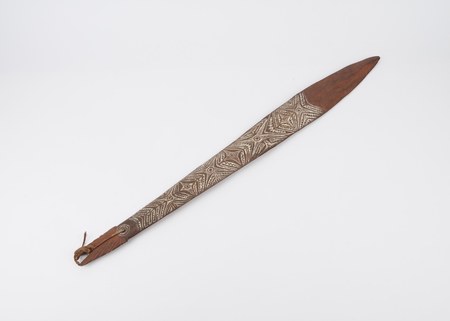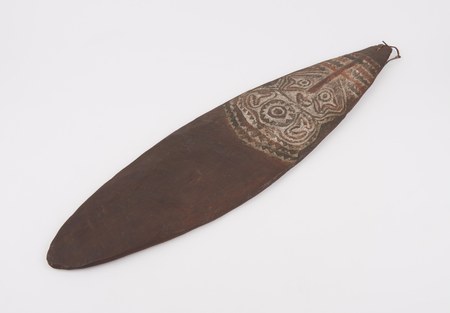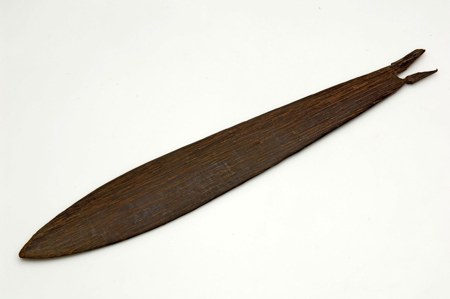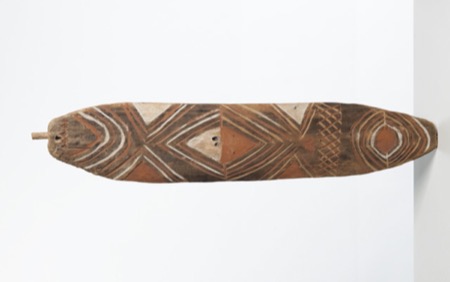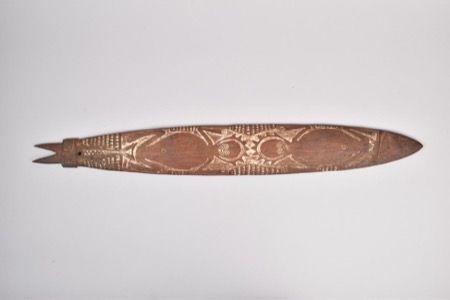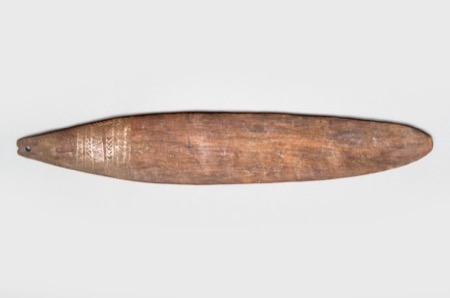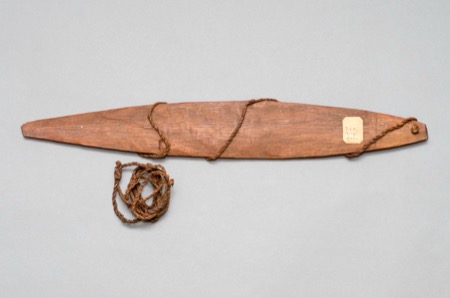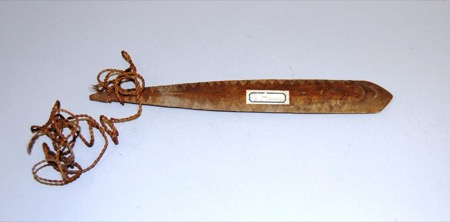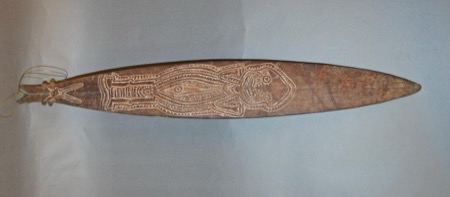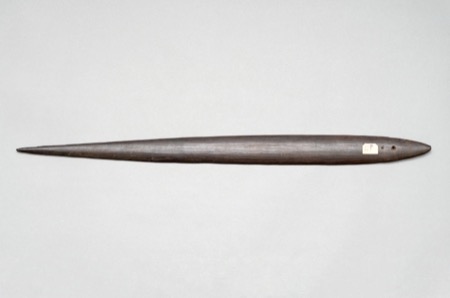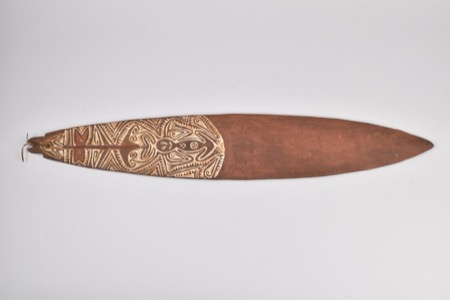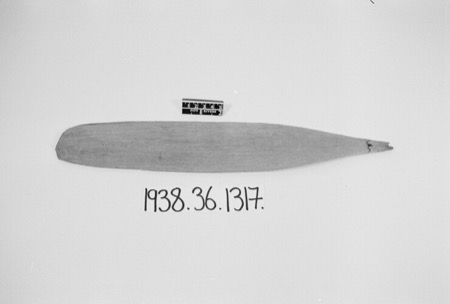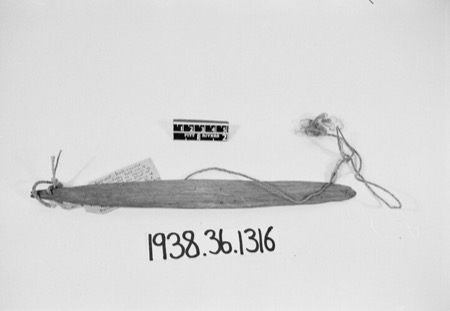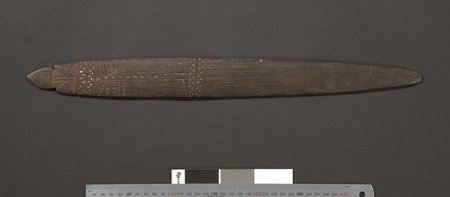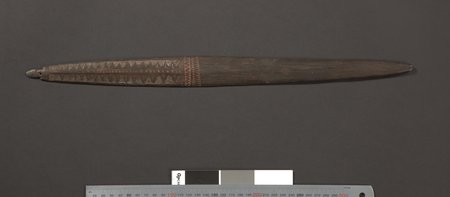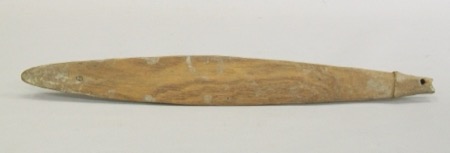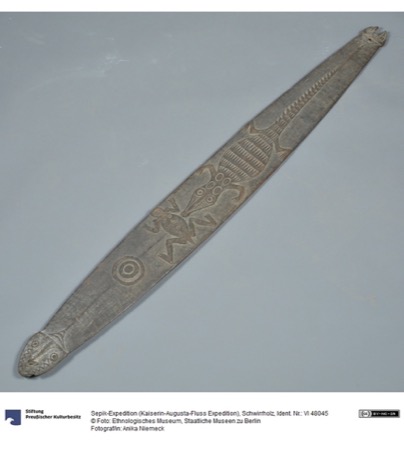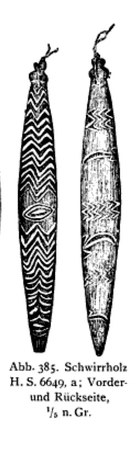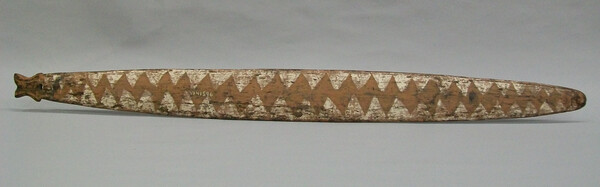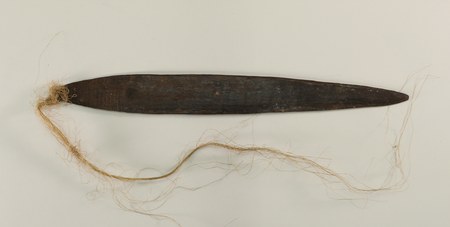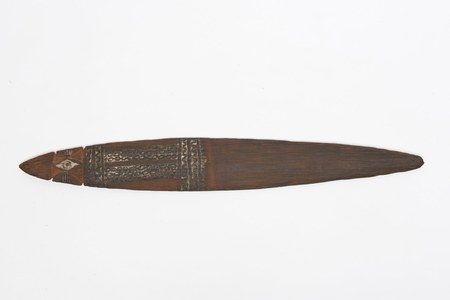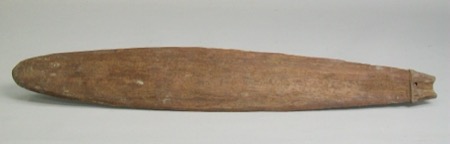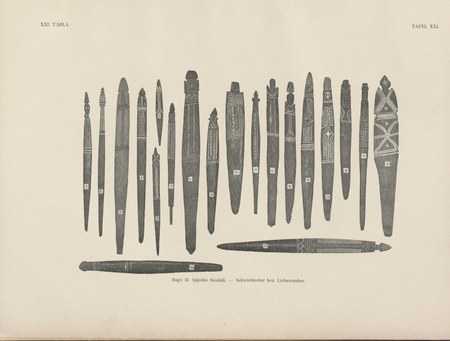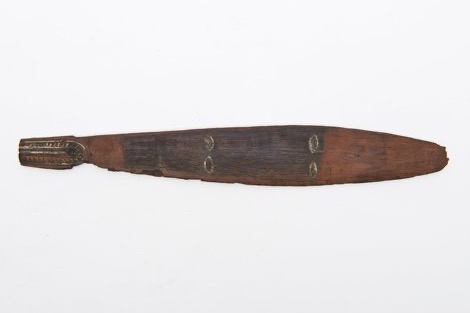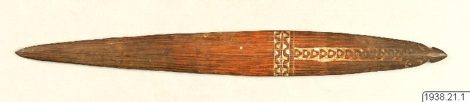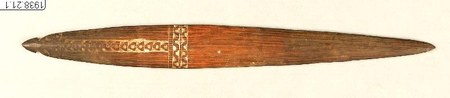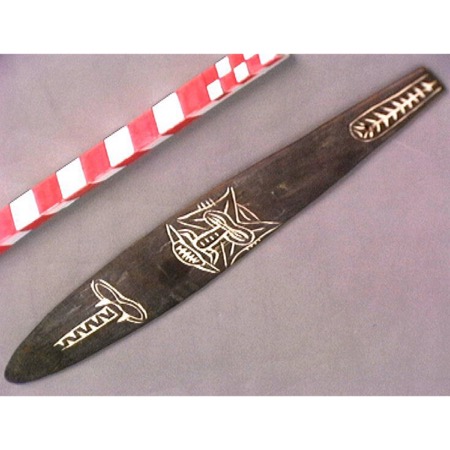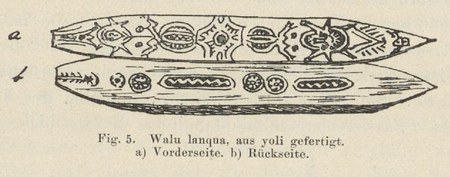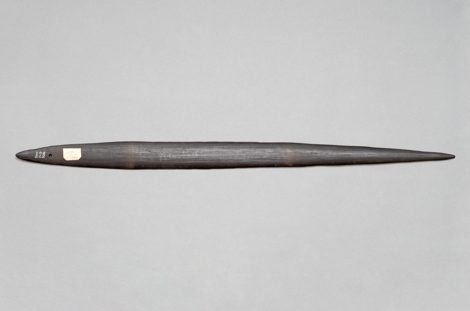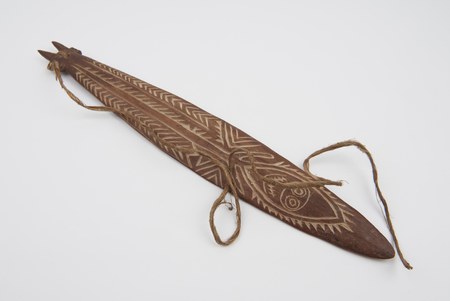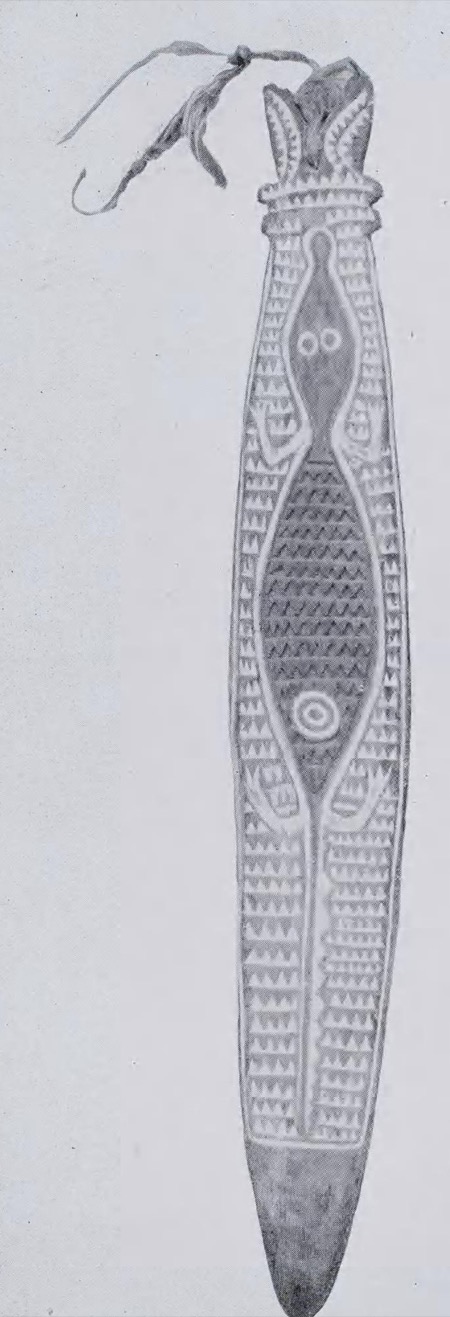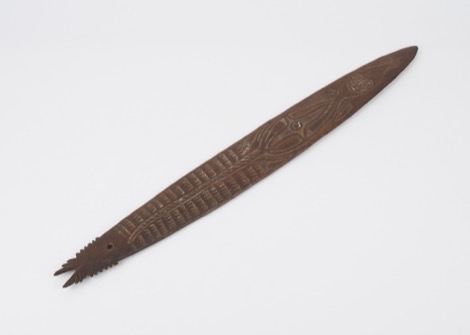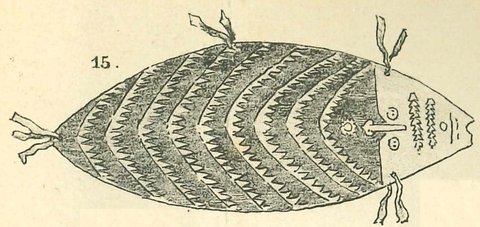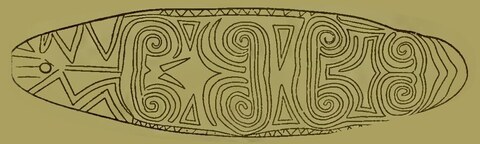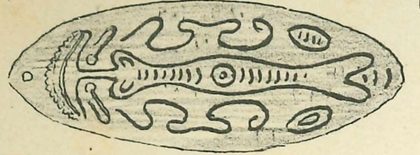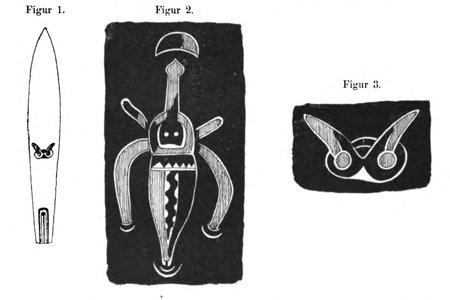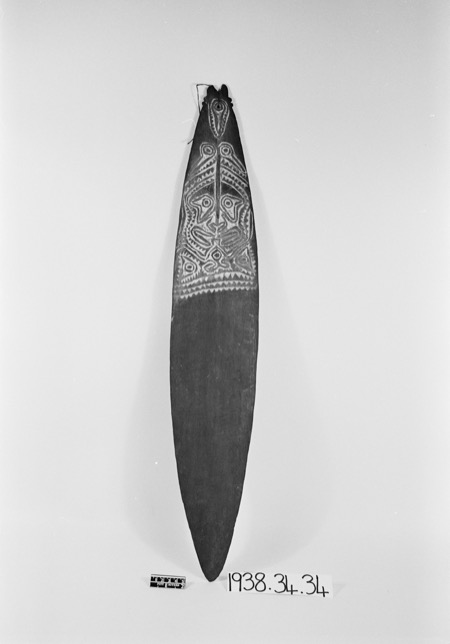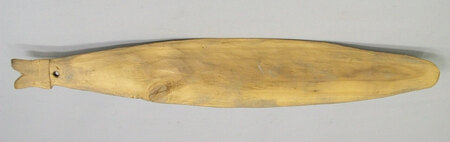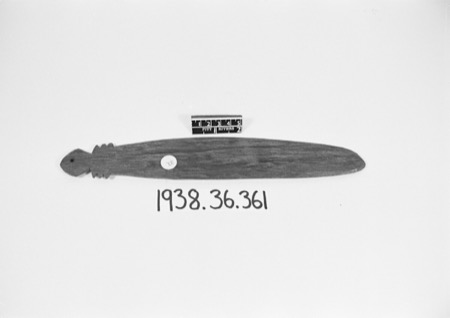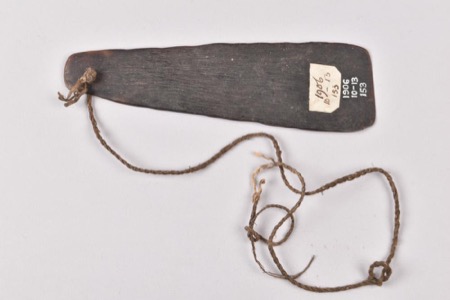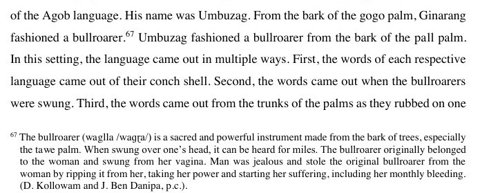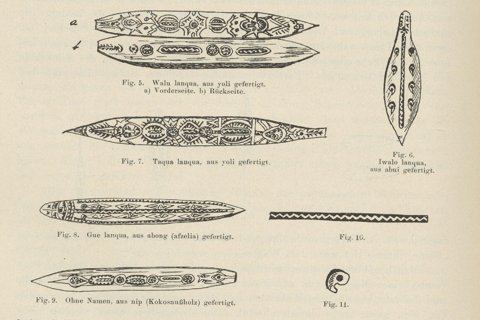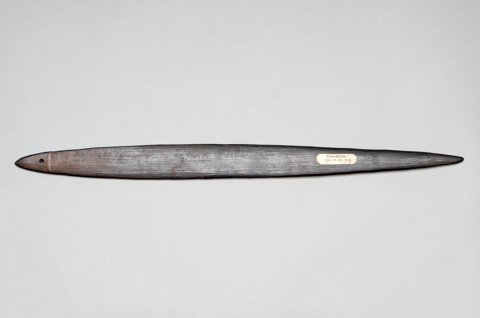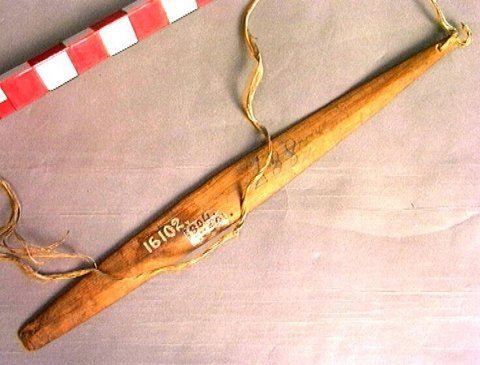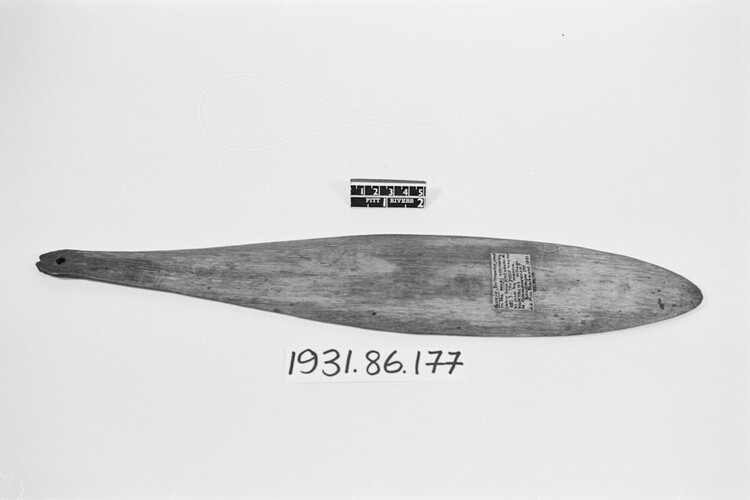
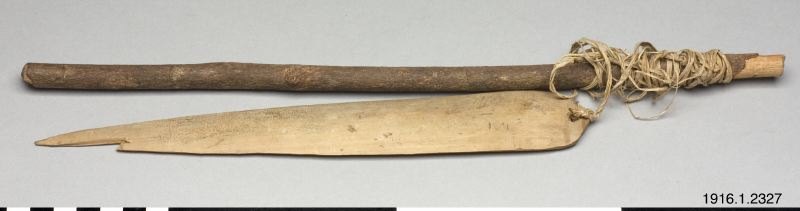

A ghost comes up from the beach after dark; an ogress croons her child to sleep; a creator calls from the forest before the masks appear. Across New Guinea and the island chains eastward, the bullroarer gives an unseen being a voice that people can recognize and answer. That voice helps organize initiation, spectacle, food and authority. Its power takes shape in the relation between those who hear it, those who know it, and those entitled to make it sound. 1, 2, 4
Florida / Nggela, Solomon Islands · Malekula (Nivivbur) · Baining
A being with a name
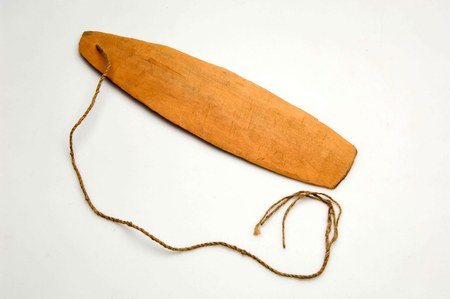
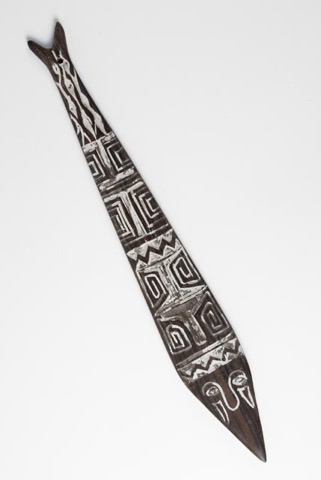
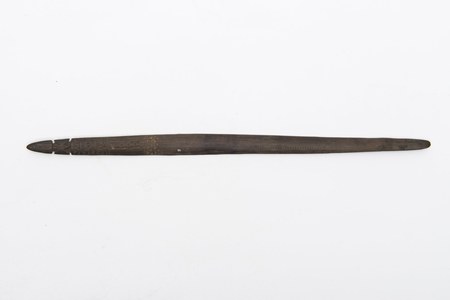
At Belaga on Nggela, the Matambala men leave their beach houses at night with buro bullroarers and bundles of coconut fronds beaten over sticks. Women shut their houses and pass prepared food through small holes in the walls, keeping the visitors’ hands unseen. They ask whether the whistling visitor is Siko, the ancestor from Bugotu on Isabel whose actions the society follows. The sound is one part of his arrival: footsteps, whistles, food and darkness make the ghosts present together. 1
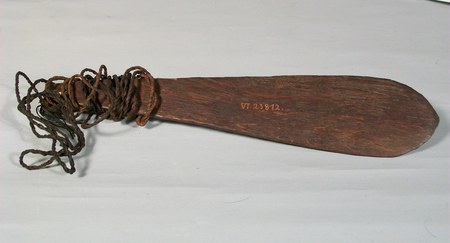
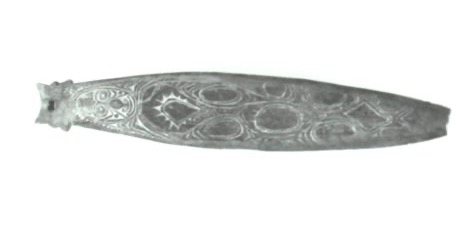
Farther west, on Buka Passage, guev instruments speak for named urar, the returning dead of the wapi initiation. In the Huon Gulf a Bukaua blade can remember the very timbre of one dead man: Wabo’s hangs askew to rasp because his damaged nose had made his speech indistinct. On Malekula, the Nevinbur society hears Nevinbumbaau, wife of Ambat Malondr, crooning Sasndaliep to sleep. Another Malekula account, from Atchin, hears ghostly pigs grunting. The shared act is giving a being a recognizable voice; the being itself remains particular to its people. 6, 7, 2, 3
Buka · Bukaua (Bukawa), Huon Gulf · Malekula (Nivivbur) · Atchin community
The house holds a whole world
The guarded instrument lives among other ways of making spirits appear. In an Ambrym men’s house, half-finished masks hang in the smoky roof beside old faces and long-nosed masks wrapped in cloth gathered from spider webs. Behind the house are hollow trunks into which men howl through bamboo tubes, and coconut shells partly filled with water for gurgling sounds. The bullroarer joins that collection as the dangerous demon’s voice, keeping women and uninitiated people away from the society’s assemblies. A man selling one wraps the little instrument into an enormous parcel. 5
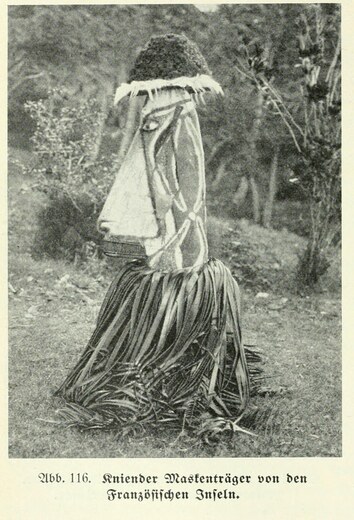
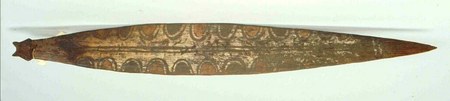
At the mainland end of this world, Purari men keep imunu viki, “crying imunu,” in the ravi ceremonial house with the great cane-and-wicker kaiamunu. On New Britain, Uramot Baining hear Rigenmucha’s commands in the salecha; the masks are called its children, brought into existence by that voice. The final initiation dance begins with bullroarers, bamboo trumpets and grass flutes sounding from the bush. Masked dancers enter the firelight, and their children carry long snakes around their arms and bodies. Kames and Barap explain the snakes, blood and sexual emblems as powers of fertility: the new initiates appear before the community as people ready to found families. 8, 4
Namau (Purari Delta), Baroi River · Baining · Uramot Baining, Gazelle Peninsula
Learning to make the voice
At Baining initiation, fathers cover their sons’ eyes and lead them between two rows of painted men holding bullroarers. The instruments suddenly howl. When the boys can look, they see familiar men and learn to produce the sound themselves. Disclosure carries a duty to preserve it: a novice who tells women faces death. Knowing the human action does not empty the voice of meaning. Laufer’s Baining account explains the instrument as the representation of Rigenmucha’s command, remembered through the rites the ancestors handed down. 4
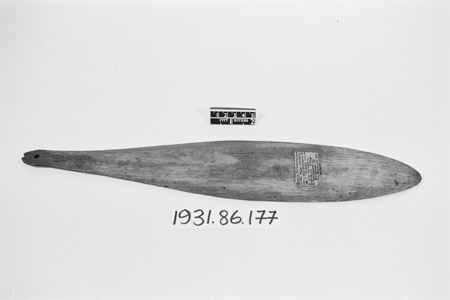
Lambumbu on Malekula turns revelation into a longer ordeal. After incision, each novice runs between whipping men in a dark seclusion house while hidden bullroarers sound around him. The large “Mother” hums continuously as it circles at head height; the small “Child,” tethered to a stout stake, gives a shrill whirr in quick swoops. Boys are told of a returning fighter and a ghost that will slit their ears. Women are expected to hear a ghost drawn by the wounds’ blood. The instruments’ nature is shown to the boys on the last day of seclusion, when they acquire knowledge withheld from both audiences before. 2
The first owners and the right to keep it
Origin stories repeatedly begin with a woman hearing something new in ordinary work. Laufer’s Uramot Baining telling has a woman discover a whirring chip while splitting firewood; she makes it sound and frightens men, until one discovers her device, kills her and takes it. His Kilenge informant Lavatu gives another telling, locating the inventors among women of the Siassi Islands across the water. Discovery, appropriation and a threatened secret link the stories, while their different places and people remain part of each account. 4
The bush Kaliai give the seizure names and consequences. Kewak makes the instrument Arku; her brother Kowdock captures it, renames it Varku and kills her. In some tellings the ripples of her drowning become the sea’s first waves. Women receive the breasts men once had, and men the beards women once wore. The instrument’s change of ownership helps remake bodies and social power. On west New Britain, Barriai and Kilenge access has a practical price too: one pig admits a man to see the bullroarer, a second admits him to the cylindrical-mask dance. 9, 10
A signal that opens the spectacle
At Ghulu in the Vitu Islands, Kakaparagha takes eleven days. Ten days of rehearsals and demonstrations remain in the men’s enclosure; the public Miri performance begins with two bullroarer signals. At the second, dancers emerge with bamboo leaves, drums and elaborately carved masks. Kive belongs to the Ranggalingga Ke Poi clan, Kauho to the Bow clan. Initiated women join the dancing. A pig can sponsor the occasion for a boy’s circumcision or the death of an elder; the skill for dreaming new songs passes through maternal uncles. The sound opens a visible performance sustained by particular families, gifts and inherited knowledge. 11
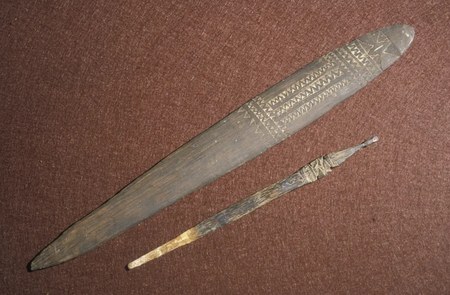
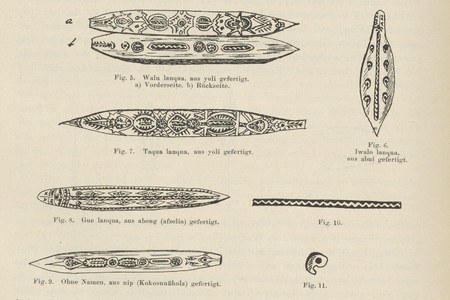
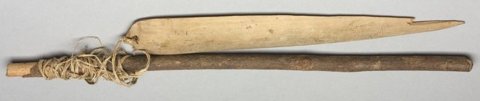
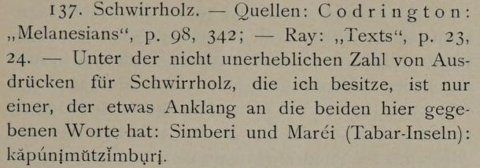
On the Tanga Islands off New Ireland, voices have a vocabulary of size. Tomlulur is about five inches long; tangalop, the common term, about eleven. Burrarumarum is larger than tangalop and swings from a bamboo pole; tom-mis-mis is the largest named type, two and a half feet long. Different sizes and rigs let the same practice sound through different bodies of wood. On Tabar, the name kapunimutzimburi caught Friederici’s ear alongside Barriai tibura and Nggela buro. That observed resemblance runs across the island chain, among a much larger variety of local names. 12, 13
Tanga (Tanga Islands) · Tabar Islanders (Simberi and Marei) · Florida / Nggela, Solomon Islands
Food gives the ceremonies their season
The Matambala cycle begins when canarium nuts ripen. Women and children set baskets along the road; men gather the first fruits, and the next moon brings the sweeping of paths that will be reserved for the society. The buro’s nocturnal visitors receive food prepared since morning. At Karama in the Papuan Gulf, named instruments can settle a grievance in pigs or summon workers for houses and fences. A bukari chief calls his instrument into action, while a paired mai-karu clan keeps and swings it. Ceremony depends on provisions and labour, and the voice can demand both. 1, 14
It can also act directly on the garden. Yabim men whirl the balum while naming the dead so that taro flourishes. At Iasa, Kiwai novices learn to use the madubu in a fenced, tabooed patch of bush; its whirling is expected to secure yams, sweet potatoes and bananas. A Mekeo masked man sounds a sheathed blade to announce a prohibition on coconuts. These particular uses bring crops into the same field of audible power as ancestors and initiation, giving sound a part in growing food and controlling its collection. 15, 16, 17
Mourning, rain and an afternoon’s play
The voice can work in the open. At Mota in the Banks Islands, nanamatea, “death-maker,” is swung to drive a ghost away; at Merlav, worung-tamb, “a wailer,” sounds the night after a death. On Vanua Lava children call their toy mala, “pig,” for its noise; Maewo has tal-viv, “whirring string,” and Araga tavire bua, “a bit of bamboo.” The familiar toy is too well known to serve as the hidden voice of Banks Islands mysteries. Their societies sound a different apparatus, a palm-leaf fan-stalk rubbed on a stone, from the secluded salagoro at dawn. 1
Mota, Banks Islands · Merlav / Merelava, Banks Islands · Vanua Lava, Banks Islands · Maewo (Aoba), New Hebrides · Araga (Pentecost Island), New Hebrides
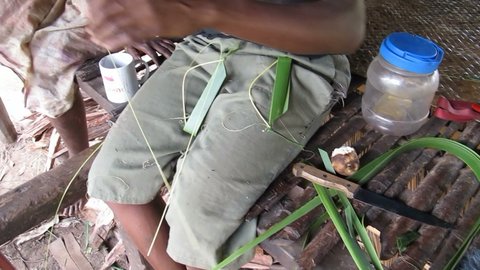
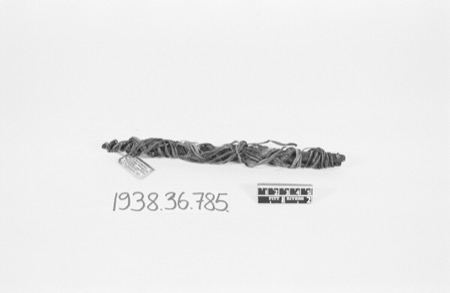
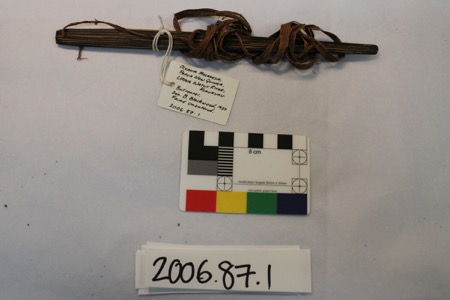
On Merelava in 2005, Philip Gan, Gresline and Colinette sound three naborbor for entertainment, made from coconut leaflets and their stems. That use belongs beside the older mourning account. At Matahenua on Bellona, a Polynesian community within the Solomon island chain, a ghaimenga-wood blade hangs on hibiscus-bast cord; the Rennell–Bellona name hakatangikugu accompanies a different purpose, summoning rain. Across this larger world, a whirling instrument can be an inherited ceremonial voice, a means of addressing the dead or weather, or a thing children make. Its local owners and occasions give the sound its work. 18, 19
Merlav / Merelava, Banks Islands · Bellonese (Mungiki), Matahenua
Names that carry the tradition
| People | Name | Meaning or use |
|---|---|---|
| Nggela | buro | Bullroarer sounded by the Matambala 1 |
| Uramot Baining | salecha | Representation of Rigenmucha’s commanding voice 4 |
| Lambumbu | s’nen; natn | Mother and Child, contrasting sounding instruments 2 |
| Tanga | tangalop | Common bullroarer name, about eleven inches long 12 |
| Mota | nanamatea | Death-maker, sounded to drive a ghost away 1 |
| Merlav / Merelava | worung-tamb; naborbor | Historical mourning name; later entertainment name 1 18 |