No. OLKKONEN2007-001
Burum-Mindik esöŋ bullroarer
Papua New Guinea · Burum and Mindik valleys, inland southern Huon Peninsula, Morobe Province · Oceania · Sahul
Restricted
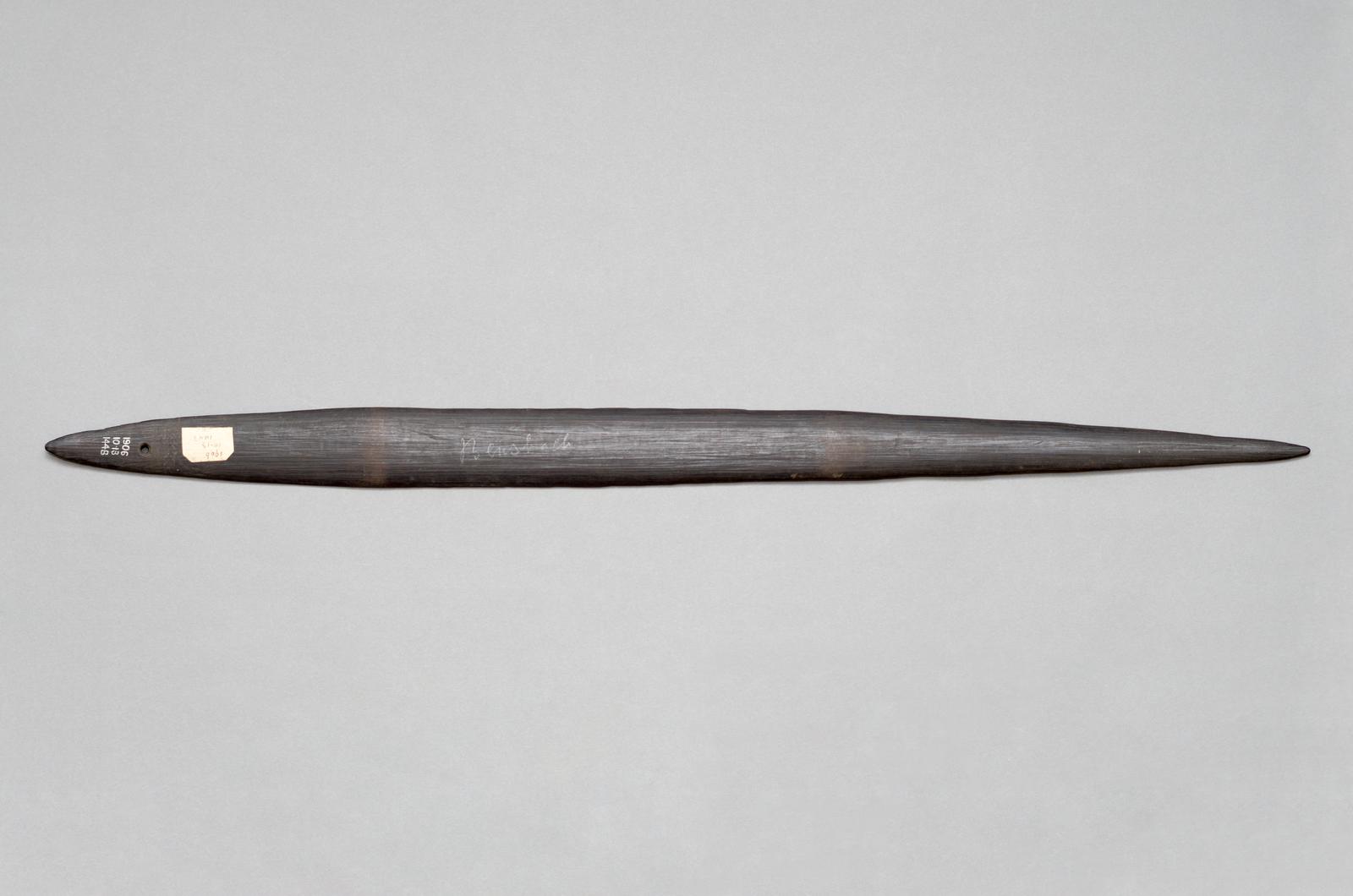
esöŋ (cult, spirit, and bullroarer; Siawari asa); köwawöŋ / muwum-muwum
Source term: bull-roarer
esöŋ (Siawari asa) = 'ancestral cult, circumcision of boys, ancestral spirit,' also the bullroarer; köwawöŋ (variant muwum-muwum) = 'bullroarer, humming, buzzing'; timbip = 'bamboo pole with which the bull-roarer is whirled.'
One word carried the whole institution among the Burum-Mindik of the inland Huon Peninsula: esöŋ was the ancestral cult, the circumcision it enacted, and the ancestral spirit, swallower of boys — and esöŋ was also the bullroarer, whose sound women and girls, shut out of the cult's ceremonies, had reason to fear. The everyday name was köwawöŋ or, echoing the hum itself, muwum-muwum, and the instrument whirled from a bamboo pole called timbip.
esöŋnöŋ leuam gwahöt eŋgiyök
the ancestral spirit swallowed up the boys
Olkkonen & Olkkonen, Somba-Siawari — English Dictionary (SIL, 2007), p. 29
Particulars
- Object
- Bullroarer (köwawöŋ, or echoically muwum-muwum), whirled from timbip, a bamboo pole.
- Function
- Named for the esöŋ ancestral cult — the spirit said to swallow the boys at circumcision; its sound was feared by women and girls, who were barred from the cult ceremonies.
Source
Soini Olkkonen and Kaija Olkkonen, Somba-Siawari (Burum Mindik) - English Dictionary (SIL, 2007), pp. 29, 90 and 172