No. HAYS1986-001
Baruya bullroarer in initiation
Papua New Guinea · Anga-Eastern Highlands men's cult zone · Oceania · Sahul
Restricted
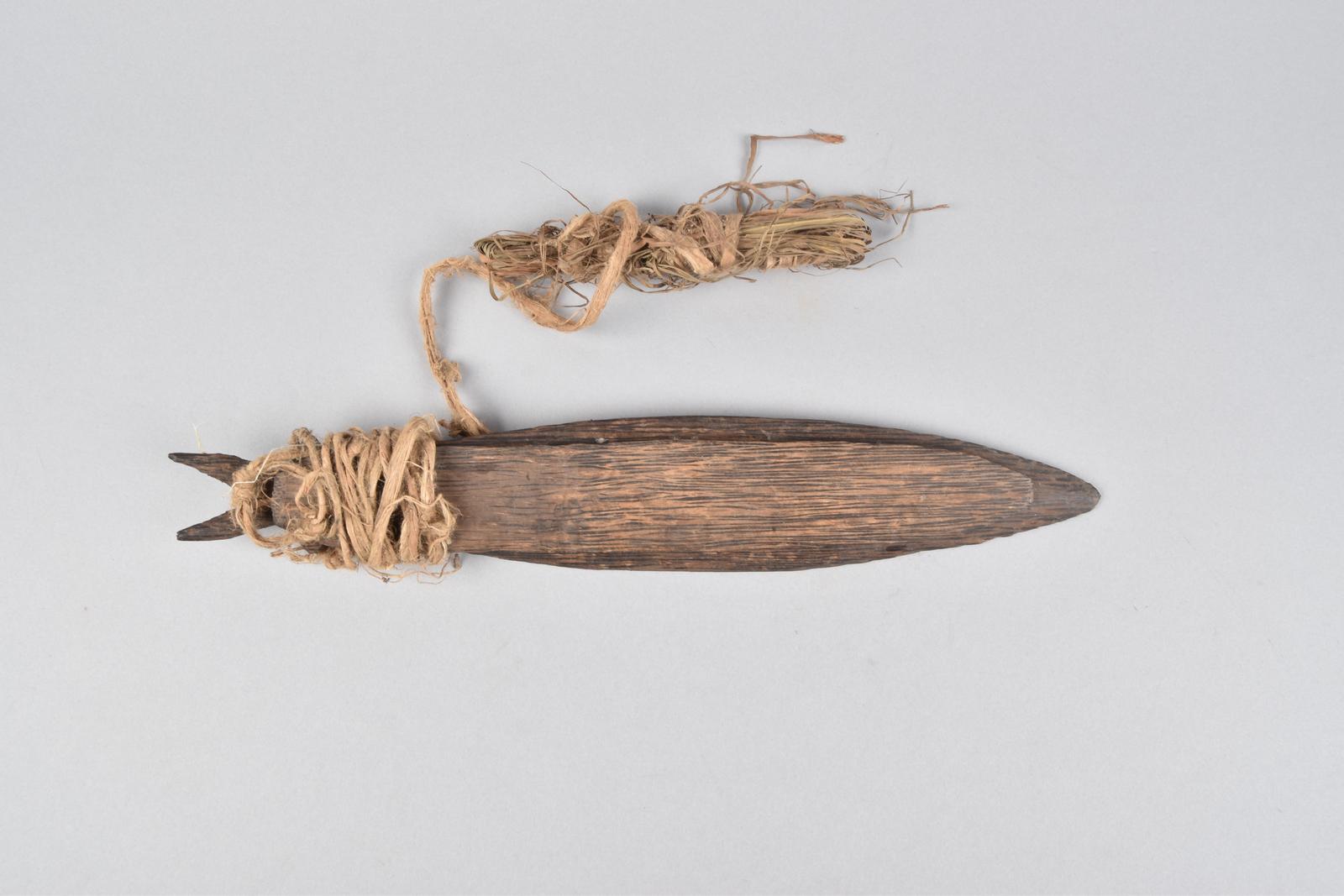
Source term: bullroarer
Among the Baruya of Papua New Guinea's Eastern Highlands, the bullroarer was swung alongside the sacred flutes during the initiation of boys, and the two together were the voices of spirits. Women and children were forbidden even to see the object. Terence Hays entered the Baruya in his 1986 survey of Highland sacred wind instruments, marking the group with both flutes and bullroarer in an initiation context, and drew the spirit-voice line from Maurice Godelier, who began living among the Baruya in 1967. Godelier recorded the secret teaching the instruments concealed: the Baruya hold that women existed before men and owned the first flutes, which the men later took from them. The bullroarers were said to have come from the yimaka, the forest spirits, as "arrows" found stuck in tree trunks, and carried the men's powers of death and war; the flute carried the life-power expropriated from women. A boy who told a woman that it was men, not spirits, who made the sounds faced death.
For the Baruya, together with flutes they conveyed the "voices of spirits that speak to men in the forest when they are initiating the boys" (Godelier 1982: 8)
Hays 1986:439, quoting Godelier 1982:8
Particulars
- Object
- A bullroarer swung alongside the sacred flutes; women and children were forbidden even to see it.
- Function
- Sounded with the flutes in boys' initiation.
Source
Terence E. Hays, Sacred Flutes, Fertility, and Growth in the Papua New Guinea Highlands, Anthropos 81 (1986):435–453, p. 436 table, pp. 439–440; quoting Godelier (1982), p. 8, and citing Fischer (1983)