No. BEAVER1920-001
Hidden voice of the turtle effigy
Papua New Guinea · Parama (Bampton) Island, Fly estuary, Western Province · Oceania · Sahul
Restricted
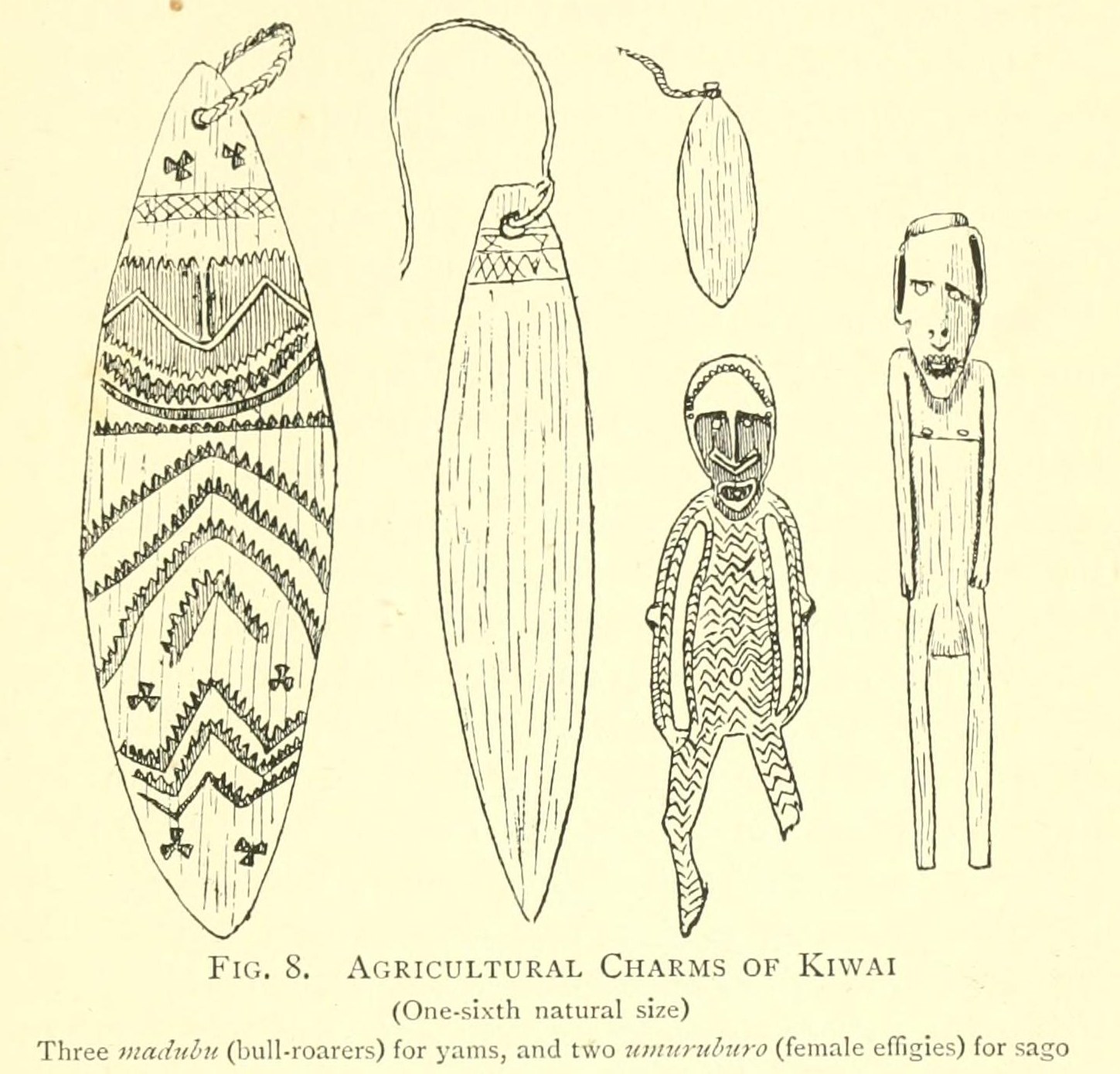
Source term: charm something in the nature of a small bull-roarer
Gebarubi: Beaver's name for the Parama people. kobai: charms placed on the prows of turtle canoes (not the swung charm).
On the night before the turtle canoes went out, a wooden figure of a man was set up in Parama village, and it began to make a noise. The women believed the figure itself was calling; they never saw the small swung charm that gave it its voice. The sound was meant to draw the turtles in. November and December, when turtles float sleeping in pairs on the surface, made one of the seasons of the Parama year, like yam planting and the turn of the monsoon. The canoes put out by day or on moonlit nights with charms called kobai on their prows; a harpooner speared the turtle, leapt onto its back and lashed a rope to a flipper. The Parama, reef people of Bampton Island off the Fly estuary who spoke a language close to Kiwai, guarded their reef fiercely, and much of their lore belonged to the sea.
The women do not see this charm and they believe that the figure itself is making the noise.
W. N. Beaver, Unexplored New Guinea (1920), p. 57
Particulars
- Object
- A small swung charm likened to a bullroarer; its form and name are not recorded.
- Function
- Swung at night before a turtle hunt beside a wooden figure of a man, to attract the turtles; women did not see the charm and believed the figure itself was making the noise.
Source
W. N. Beaver, Unexplored New Guinea (London: Seeley, Service, 1920), pp. 55–57