No. PNG50
Wampar
Papua New Guinea · Morobe · Oceania · Sahul
Function not recorded
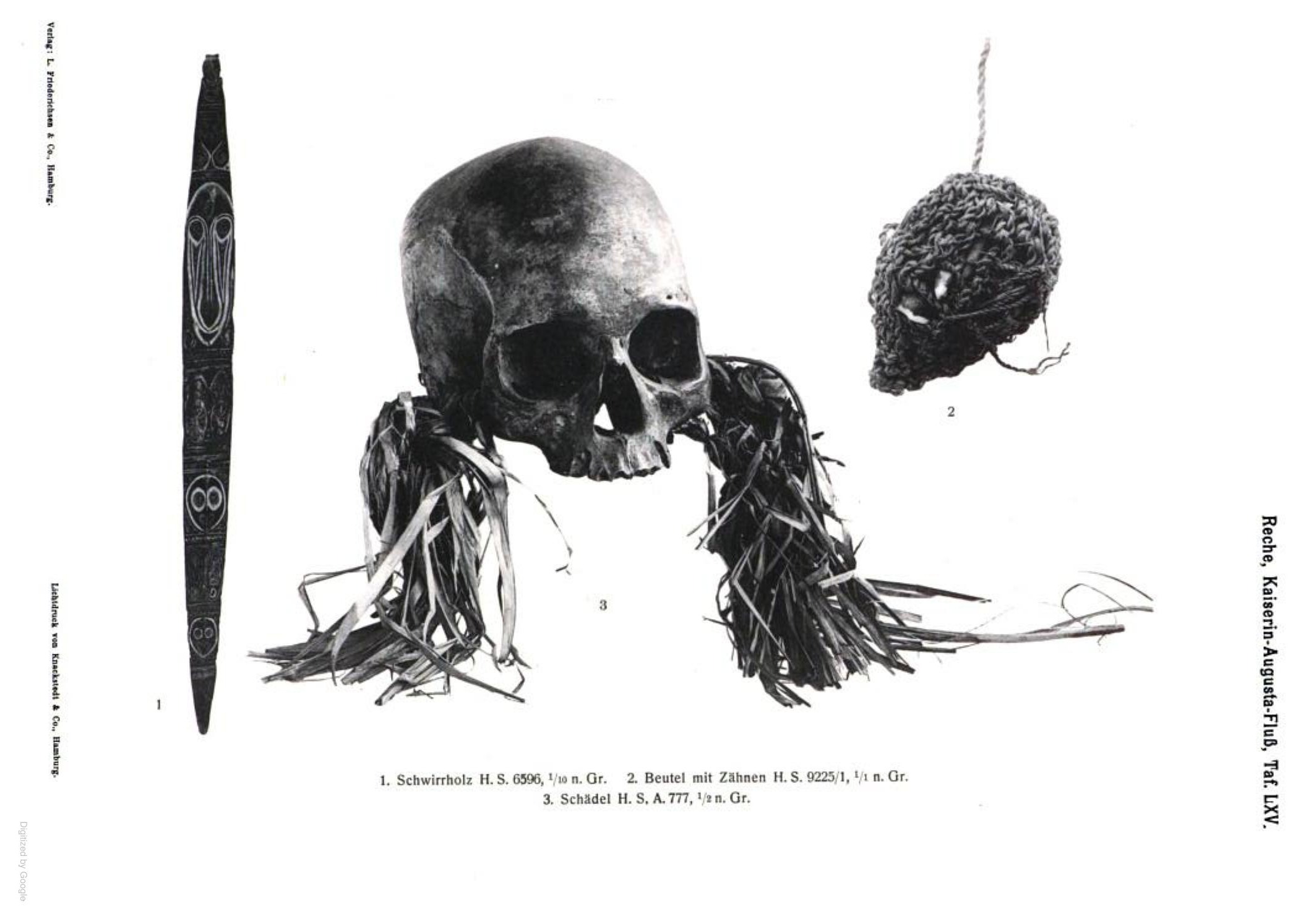
By their own tradition the Wampar came down the Watut River into the middle Markham Valley in the nineteenth century, and the bullroarer was among the instruments of their villages there. Older German sources call them by a coastal name, Lae-Womba. In 1909, under the Lutheran mission's influence, they made peace with the Labu, the Lae people and the Bukawa. Their old religion was a world of ancestor spirits, the mamafe: present everywhere, yet gathered in special places, and reachable through mediums who had contact with them. The Wampar kept elaborate initiation rites until the 1920s, when they were baptized and gave them up.
Mamafe are everywhere, although they are thought to be concentrated in special places.
Bettina Beer, "Wampar," Encyclopedia of World Cultures Supplement (2002)
Particulars
- Function
- Not recorded.
Source
K. A. Gourlay, Sound-Producing Instruments in Traditional Society: A Study of Esoteric Instruments and Their Role in Male-Female Relations (New Guinea Research Bulletin 60; Canberra and Port Moresby, 1975), Table 1, p. 6, entry 50; Bettina Beer, 'Wampar', Encyclopedia of World Cultures Supplement (2002), sections on history, religion and initiation (via Encyclopedia.com); Gourlay 1975, p. 15 and Table 1, entry 54 (Lae-Womba, i.e. Wampar), occurrence from R. Neuhauss, Deutsch Neu-Guinea I (1911), p. 385