No. LAYARD1942-001Oceania
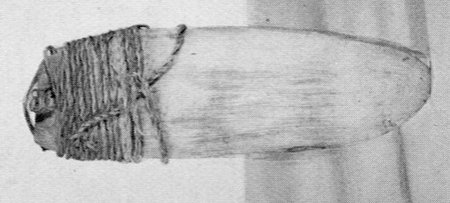
Atchin ghostly-pig bullroarer voice
Vanuatu · Atchin Island · northeast Malekula · Oceania · Melanesia
Restricted
- Spirit voice
- Initiation rite
buhạ ŋur-ŋur
Source term: bull-roarer
buhạ ŋur-ŋur: 'pig's grunting', the bullroarer (Capell & Layard 1980 p. 102). wuno: 'a wood used for making bull-roarers'; wulu wawa: 'inner bark of wawa tree', used for string for bull-roarers (p. 158).
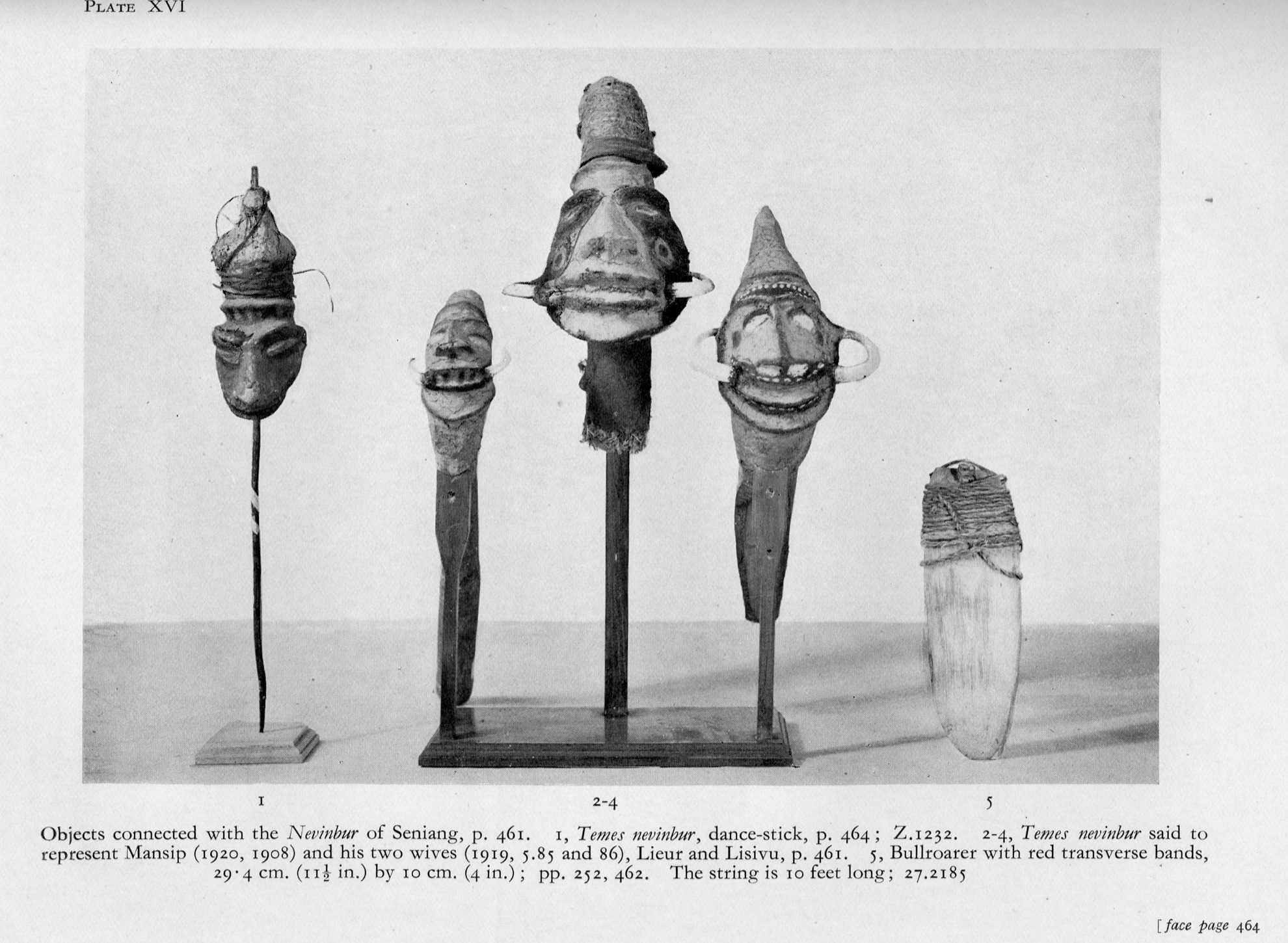
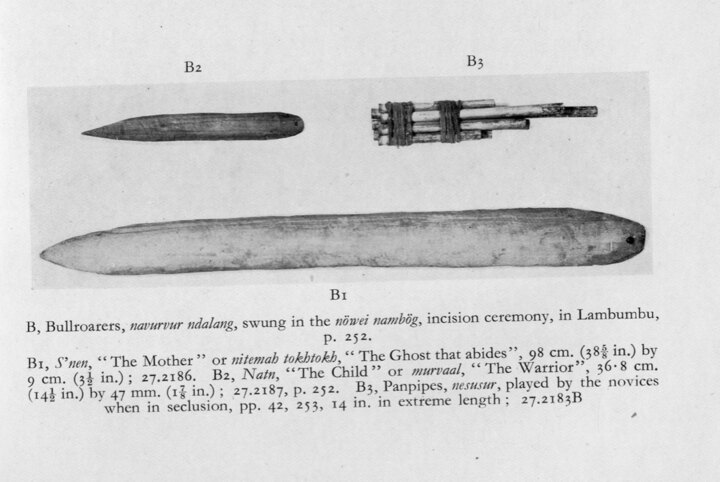
Boys on Atchin went into the initiation lodge and stayed thirty days. They were kept unwashed and covered in dung, ashes and other foul stuff, put through humiliating ordeals, and surrounded by noises they were meant to take for ghosts — initiated men playing the part, whistling softly like birds and flapping wings that were only hands. One sound was no bird. The bull-roarer, on Atchin, was the grunting of ghostly pigs; its very name, buhạ ŋur-ŋur, means "the pig's grunting." It was cut from wuno wood and strung with cord plaited from the inner bark of the wawa tree. Every novice eventually learned to make the noises himself, which is the whole design of the thing: the hoax is what gets handed down.
the bull-roarer which in Atchin is said to represent the grunting of ghostly pigs
John Layard, Stone Men of Malekula (1942), p. 494
Particulars
- Object
- A blade of wuno wood whirled on string plaited from the inner bark of the wawa tree.
- Function
- Said to represent the grunting of ghostly pigs.
Source
John Layard, Stone Men of Malekula: Vao (London: Chatto & Windus, 1942), p. 494; A. Capell and J. Layard, Materials in Atchin, Malekula: Grammar, Vocabulary and Texts (Pacific Linguistics D-20, 1980), pp. 102, 158
Nearby in the atlas
 Big Nambas Nalauen skull processionVanuatu · Northwest Malekula / Big Nambas plateau · Restricted
 Lambumbu and Uerik Malekula sacred bullroarerVanuatu · Central-west Malekula / Lambumbu · Restricted
 Woman-slit-my-ear, the Nevinbur voiceVanuatu · Malekula, Vanuatu · Restricted
- Werewere, the murdered woman's stoneVanuatu · Banks Islands (Torba) · Restricted
 Mewun Nalawan Ambar secret soundVanuatu · Mewun district, south-west Malekula · Restricted
 Naman circumcision bullroarers (Lengaleng)Vanuatu · Central Malekula / Lengaleng · Restricted