No. HAYS1986-002
Auyana bullroarer old-man spirit voice
Papua New Guinea · Anga-Eastern Highlands men's cult zone · Oceania · Sahul
Restricted
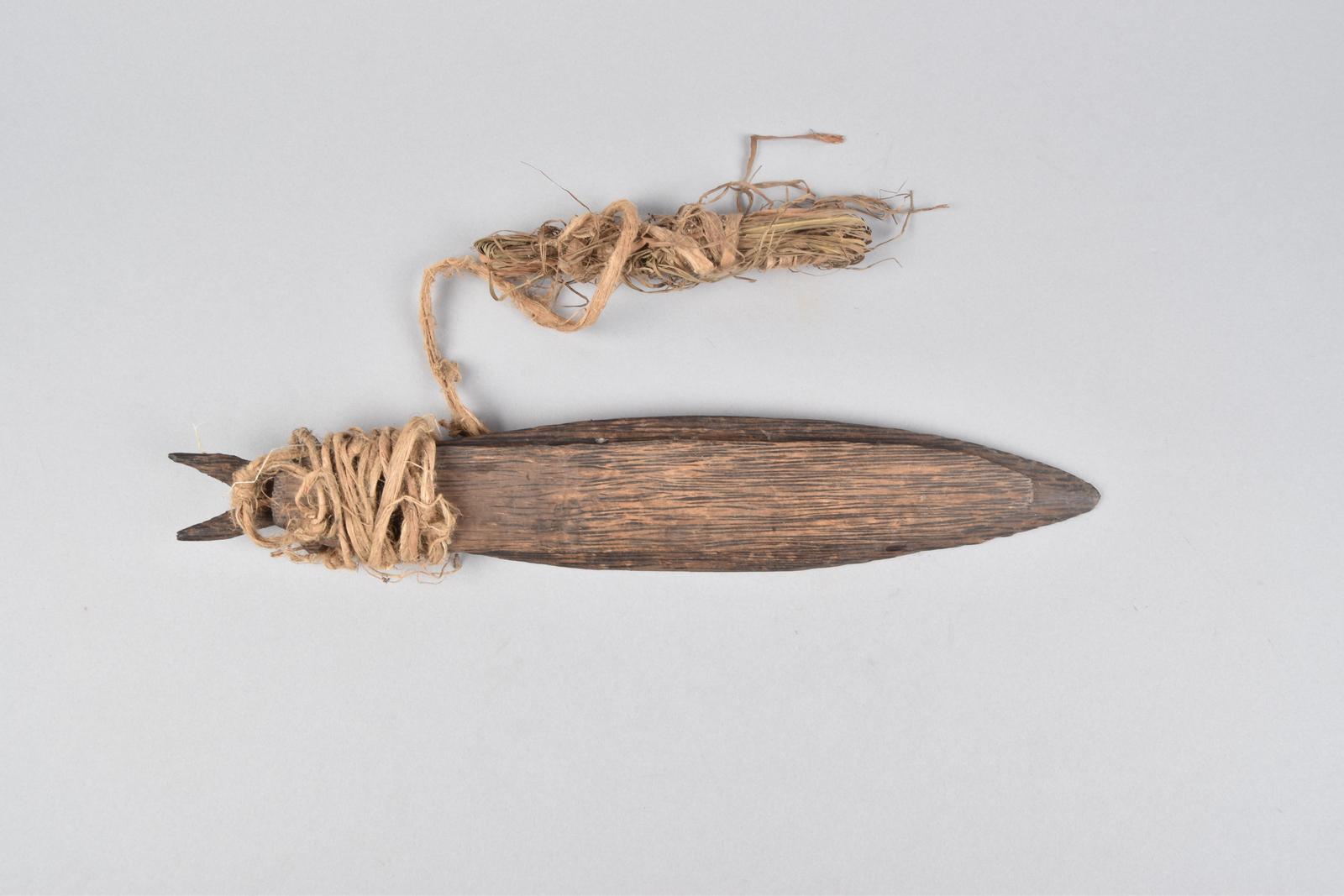
Source term: bullroarer
Among the Auyana of the Eastern Highlands, the bullroarer carried the voice of an "old man" spirit, while the men's paired flutes were heard as a middle-aged woman with a child — a woman who, in the version Sterling Robbins recorded, was made to sound the way she did "because the men were holding her and doing things with her, not good things either." Women and children were kept from ever seeing the instruments: for the Auyana, as for the neighboring Kamano, Gahuku, and Asaro, those who saw the men's sacred instruments "would die" or "would be killed."
the Auyana, whose bullroarers emitted the voice of an "old man" spirit
Hays 1986:440 (Anthropos 81), citing Chenoweth 1976:43 and Robbins 1982:46
Particulars
- Object
- Auyana bullroarers, whose sound was the voice of an old-man spirit.
- Function
- Revealed, with the sacred flutes, to boys of ten to sixteen at their initiation.
Sources
- Terence E. Hays, 'Sacred Flutes, Fertility, and Growth in the Papua New Guinea Highlands,' Anthropos 81 (1986): 435-453, p. 440 View · archived
- Vida Chenoweth, Musical Instruments of Papua New Guinea (Ukarumpa: SIL, 1976), p. 43, cited in Hays (1986), p. 440
- Robbins (1982), p. 46, cited in Hays (1986), p. 440