No. PETTERSON1993-001
Rumu wipúwipū, sounded to frighten children
Papua New Guinea · Kikori and Sirebe rivers, Kikori District, Gulf Province · Oceania · Sahul
Restricted
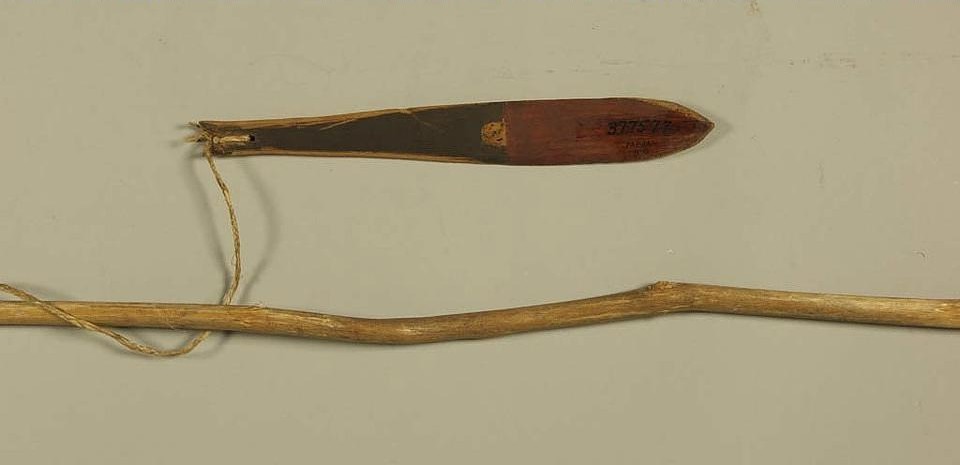
wipúwipū
Source term: bullroarer
wipúwipū: bullroarer. Waramamù: a stinging-nettle game played in initiation, named for a woman whose legend is told to initiates. èrarû-ripiō: a dance of the initiation ceremonies.
During Rumu initiation the wipúwipū was swung to frighten the little children. The rite had other ordeals and pleasures too. Initiates played Waramamù, a game with stinging nettles named for a woman whose legend was told to them; the people danced èrarû-ripiō, skipping about with palm branches and singing; and when it was over, a heap of goods was piled up and shared out. The Rumu live along the Kikori and Sirebe rivers of the Papuan Gulf.
During initiation the bullroarer is sounded to frighten the little children.
Robert G. Petterson, Rumu–English–Motu Dictionary (1993/2007), p. 135
Particulars
- Object
- A bullroarer called wipúwipū; no physical description recorded. Five bullroarers from the Sirebi River, in Rumu country, entered the Hamburg Museum am Rothenbaum in March 1967 (MARKK 67.39:2–4, 7–8).