No. GALIS1954-001Oceania
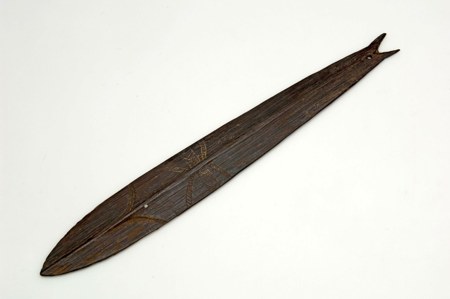
Wap, taught by the serpent mother
Indonesia · Kamtuk country on the Genyem to west Sentani road, and the Nimboran (Grime) plain, Jayapura Regency, Papua · Oceania · New Guinea
Sacred / spirit
- Snake-linked
- Women-linked
- Female-origin myth
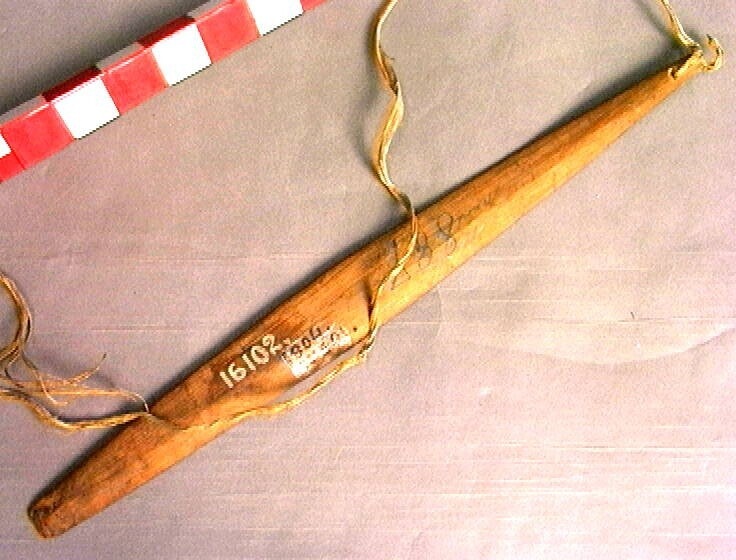
wap
Source term: brom-hout
wap: bullroarer (Dutch brom-hout). Ndjo: the Nimboran primal mother. eram: adat chief; eram-kabi, the feast that installs one. remöku manggum: the rainbow, "little red snake, python". nari-sam: the carved eram headpiece, the coloured body of the serpent Jawa Nèntëmung, set with birds of paradise.
Among the Nimboran and their Kemtuk neighbours west of Lake Sentani, the chiefs' rite, the bullroarer and the flutes all came from one teacher. The Nimboran call her Ndjo, the old woman, the primal mother. She could show herself as a cuscus or as a snake, and in her nature she was both female and male. She gave birth to people and made the earth. Then she taught them sexual intercourse, how to hold the eram, the feast that raises a man to adat chief, how to use the bullroarer, wap, and later the sacred flutes. The Kemtuk sing the chiefs' origin in the Wambi. The serpent-man Jawa Nèntëmung, whose name means penis, spewed out a brother and sister with shining bodies, then raped the sister and forced her brother to do the same to her. Their incest cost them their heavenly radiance, and the serpent decreed that their eldest child would be chief, and his eldest son after him. So few people lived then that the animals sang at the first installation. The chief's carved headpiece is the serpent's coloured body, with birds of paradise rising from it. Here snakes do not die; they only change their skins, and so they rule over life and death. Even the rainbow is a little red snake.
Voorheen vond zulk een kabi plaats in en om het mannenhuis, waarbij op de sacrale fluiten werd geblazen, de oermoeder — oude vrouw — afdaalde in het heiligdom, men casuaris-dansen en travesti-dansen vertoonde, enz.
Formerly such a kabi took place in and around the men's house, where the sacred flutes were blown, the primal mother — the old woman — came down into the sanctuary, and cassowary dances and cross-dressing dances were performed, and so on.
Galis, "Het Eram-feest te Bonggrang" (1954), p. 29
Particulars
- Object
- Bullroarer (Dutch brom-hout).
Discussed in 3 essays
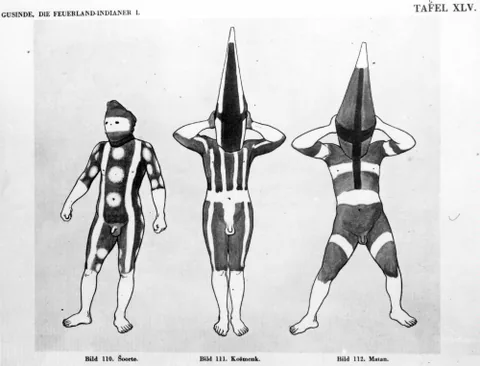 Mother Right
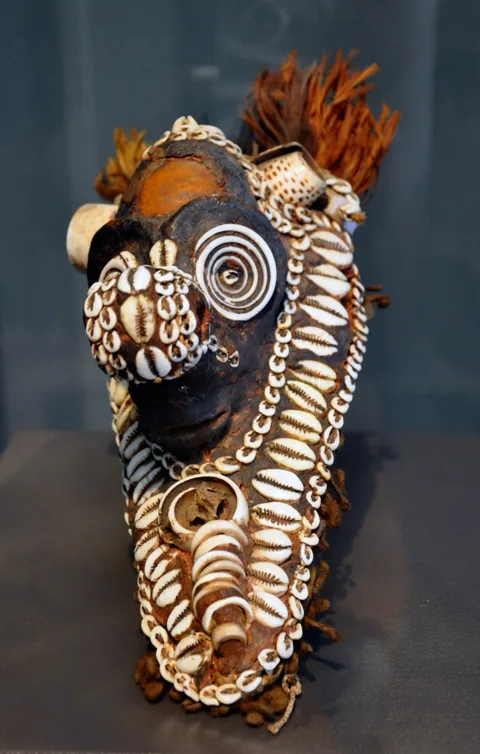 The Bullroarer’s Younger Brothers
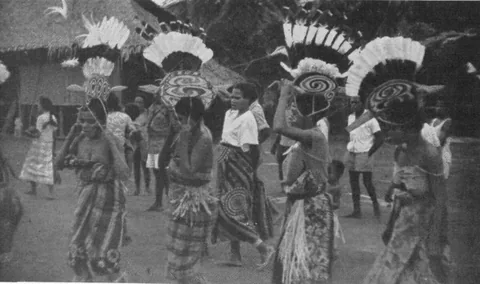 The Mother of All
Source
K. W. Galis, "Het Eram-feest te Bonggrang (met platen)," Bijdragen tot de Taal-, Land- en Volkenkunde 110, no. 1 (1954), pp. 20-37, at pp. 20, 26-29, 33, 35-36
Nearby in the atlas
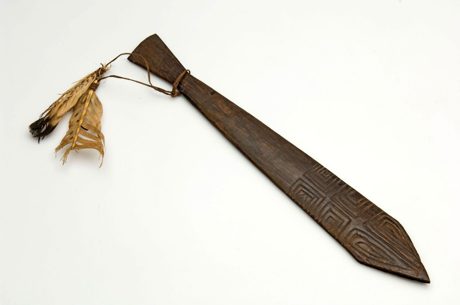 Imo pit of the buried demaIndonesia · Inland Marind country between Domandé and Senégi, Merauke Regency, South Papua · Sacred / spirit
 Two Marind-anim rhombes, blade and discIndonesia · Irian Jaya collection context · Sacred / spirit
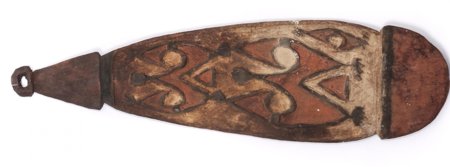 Pokomban, the orphan's arrivalIndonesia · Erma and Sona (Sawa-Erma), inland Asmat, South Papua · Sacred / spirit
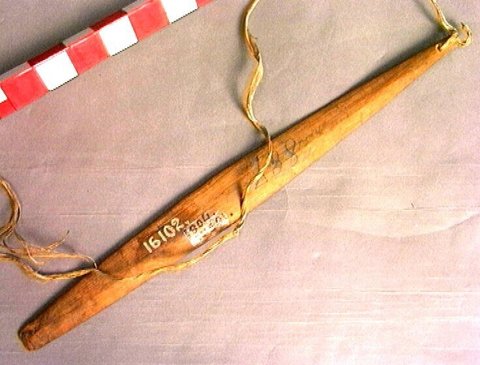 Only a model: Philip Kantoem's bullroarerIndonesia · Hollandia (Jayapura) district, Netherlands New Guinea · Sacred / spirit
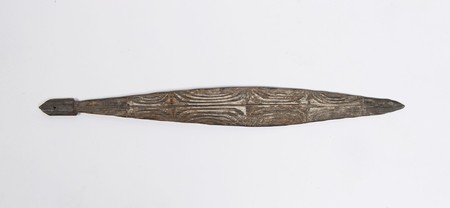 Roarers that chase sickness to seaIndonesia · Western Marind coast, Dutch South New Guinea (Merauke Regency, South Papua) · Sacred / spirit
 Kimam (Kolepom / Frederik-Hendrik Island)Indonesia · Frederik-Hendrik Island (Pulau Yos Sudarso / Kolepom), south coast · Restricted