No. PNG33
Basken
Papua New Guinea · Madang · Oceania · Sahul
Restricted
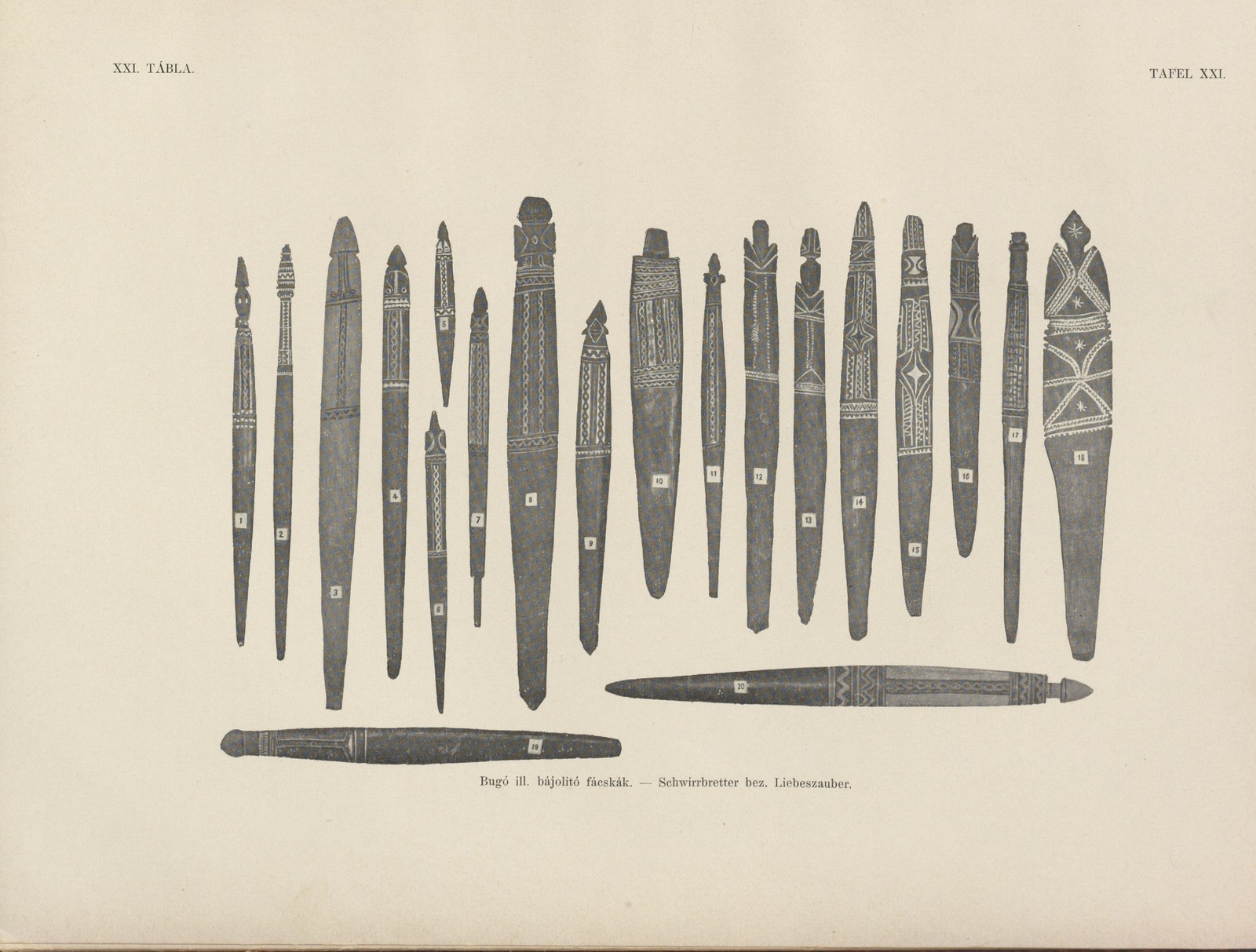
On the north coast of mainland New Guinea, in the villages of the Sumkar district, the bullroarer belonged to the hidden ceremonial life of men, swung with the sacred flutes that only the initiated were meant to hear. Across the societies where such roarers were used, Gourlay found one rule holding without exception: they were "secret" instruments — the preserve of initiated men, kept from women and the uninitiated.
Particulars
- Function
- Used in initiation or subject to restrictions between the sexes.
Source
K. A. Gourlay, Sound-Producing Instruments in Traditional Society: A Study of Esoteric Instruments and Their Role in Male-Female Relations (New Guinea Research Bulletin 60; Canberra and Port Moresby, 1975), p. 3 and Table 1, p. 6, entry 33