No. PNG147
Eklep
Papua New Guinea · West New Britain · Oceania · Sahul
Restricted
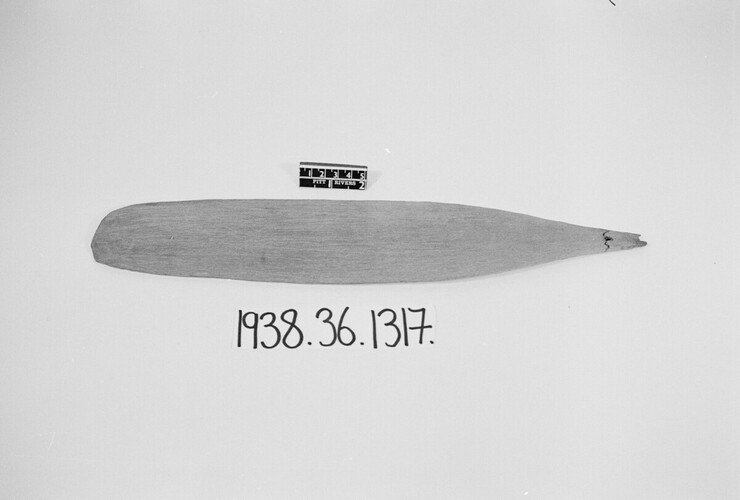
On the south coast of New Britain the bullroarer spoke as a spirit. Swung on a cord from a long rod at the circumcision of boys, its roar was the voice of a being no woman was permitted to see — so Richard Parkinson set it down in 1907. The Eklep, a coastal people of the Arawe stretch, kept such an instrument, and it belonged to their initiations or to the rules that kept the sexes apart.
Particulars
- Function
- Used in initiation or subject to restrictions between the sexes.
Source
K. A. Gourlay, Sound-Producing Instruments in Traditional Society: A Study of Esoteric Instruments and Their Role in Male-Female Relations, New Guinea Research Bulletin 60 (Canberra, 1975), p. 3 and Table 1, p. 9, entry 147; Richard Parkinson, Dreissig Jahre in der Südsee (Stuttgart, 1907), pp. 640–641