No. POUWER2010-001
Pokomban, the orphan's arrival
Indonesia · Erma and Sona (Sawa-Erma), inland Asmat, South Papua · Oceania · New Guinea
Sacred / spirit
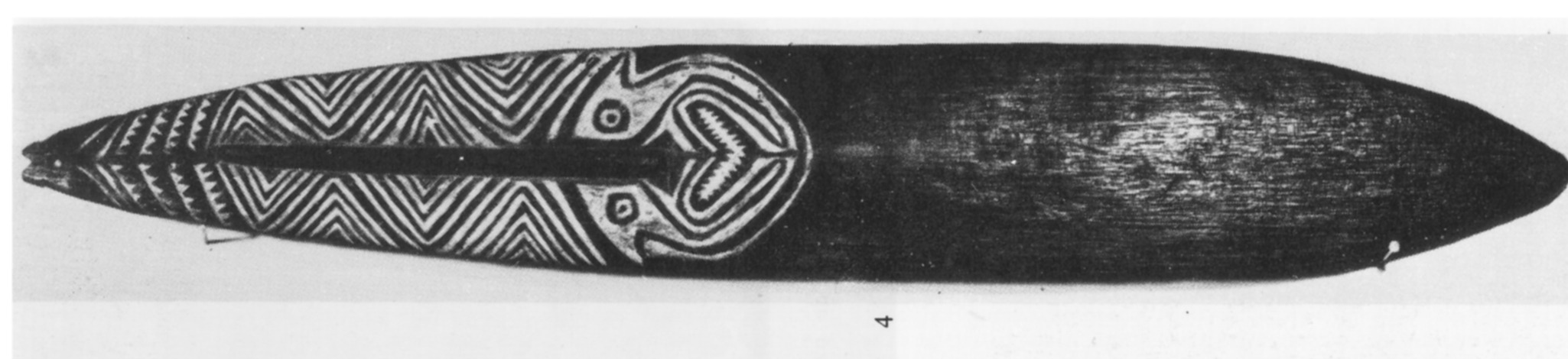
Source term: bullroarers
manimar: "orphan", the profane mask of the orphan-boy (also bunmar). Yipae: the Asmat mortuary masquerade; Pokmbu / Pokomban: its inland name. nat imu / yipae: "mock spirit".
Late one afternoon the whirring of bullroarers came from the woods behind the village: the orphan was coming. By daybreak the manimar stood on the far bank of the river, lumbering under a long, inverted basket mask with a skirt of sago fronds, and was ferried across in a dugout. Children pelted him with seed pods and shouted that he had no father, mother, brothers or sisters here and no right to food, until Juak, who had adopted him, welcomed him with sago. The Asmat say the masquerade began with a starving orphan who wove himself a fibre cloak and hood and leapt out at women coming home with sago, who fled and dropped their food. When the men caught him and heard his story, they made the spirit costume a sacred secret and decreed that every orphan would be adopted by the man who wore it. Never again would a child be abandoned.
Late one afternoon, the whirring sounds of bullroarers were heard from the woods behind the village
Jan Pouwer, Gender, Ritual and Social Formation in West Papua (2010), p. 175, after Alphonse Sowada.
Particulars
- Object
- Bullroarers; their form is not described.
- Function
- Whirled in the woods behind the village to announce the coming of the manimar, the masked orphan-boy, at the start of the Pokomban masquerade, the inland form of the Asmat Yipae ceremony that honours the dead.