No. SARVASY2014-001
Nungon first-harvest bullroarer, Uruwa valley
Papua New Guinea · Uruwa River valley · Kabwum District, Morobe Province · Oceania
Sacred / spirit
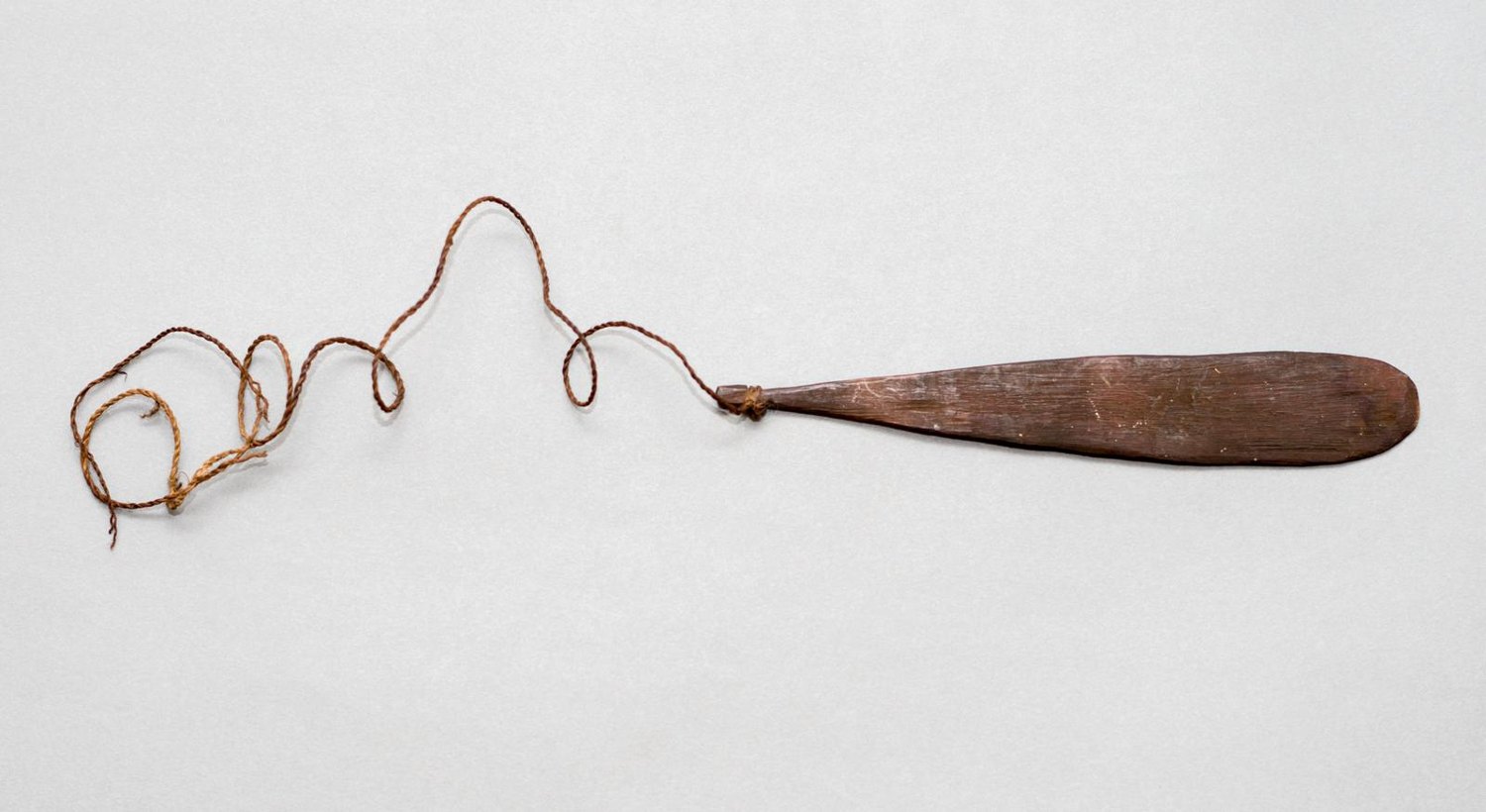
Source term: bullroarer
No Nungon-language term for the instrument is recorded.
In the upper Uruwa valley, on the southern wall of the Saruwaged Range, Nungon men's houses stood in Towet, Worin, and Kotet into the 1950s. Yam and taro plots were planted in strict silence; young men came out of the men's house to bless the first plantings by treading on the earth; initiation meant diving deep into a pool of water. And when the first harvest was eaten — a meal for men and boys, taken in the men's house — a bullroarer sounded over it. The linguist Hannah Sarvasy preserved the memory in a single sentence of her Nungon grammar; no one recorded the instrument's name or its shape.
As elsewhere in Papua New Guinea, a bullroarer would be sounded on the occasion of the eating of the first harvest; this was eaten by men and boys in the men's house.
Hannah Sarvasy, A Grammar of Nungon (2014), p. 25.
Particulars
- Object
- No form or local name recorded; the grammar states only that a bullroarer was sounded.
- Function
- Sounded at the eating of the first harvest — a meal taken by men and boys in the men's house. Yam and taro plots were planted in strict silence; no further ceremonial meaning is recorded.
Source
Hannah Sacha Sarvasy, A Grammar of Nungon, a Papuan Language of Morobe Province, Papua New Guinea (PhD thesis, James Cook University, 2014), p. 25