No. EXH2026-055
Mawai (Waria watershed)
Papua New Guinea · Mawai (Waria watershed) · Oceania
Restricted
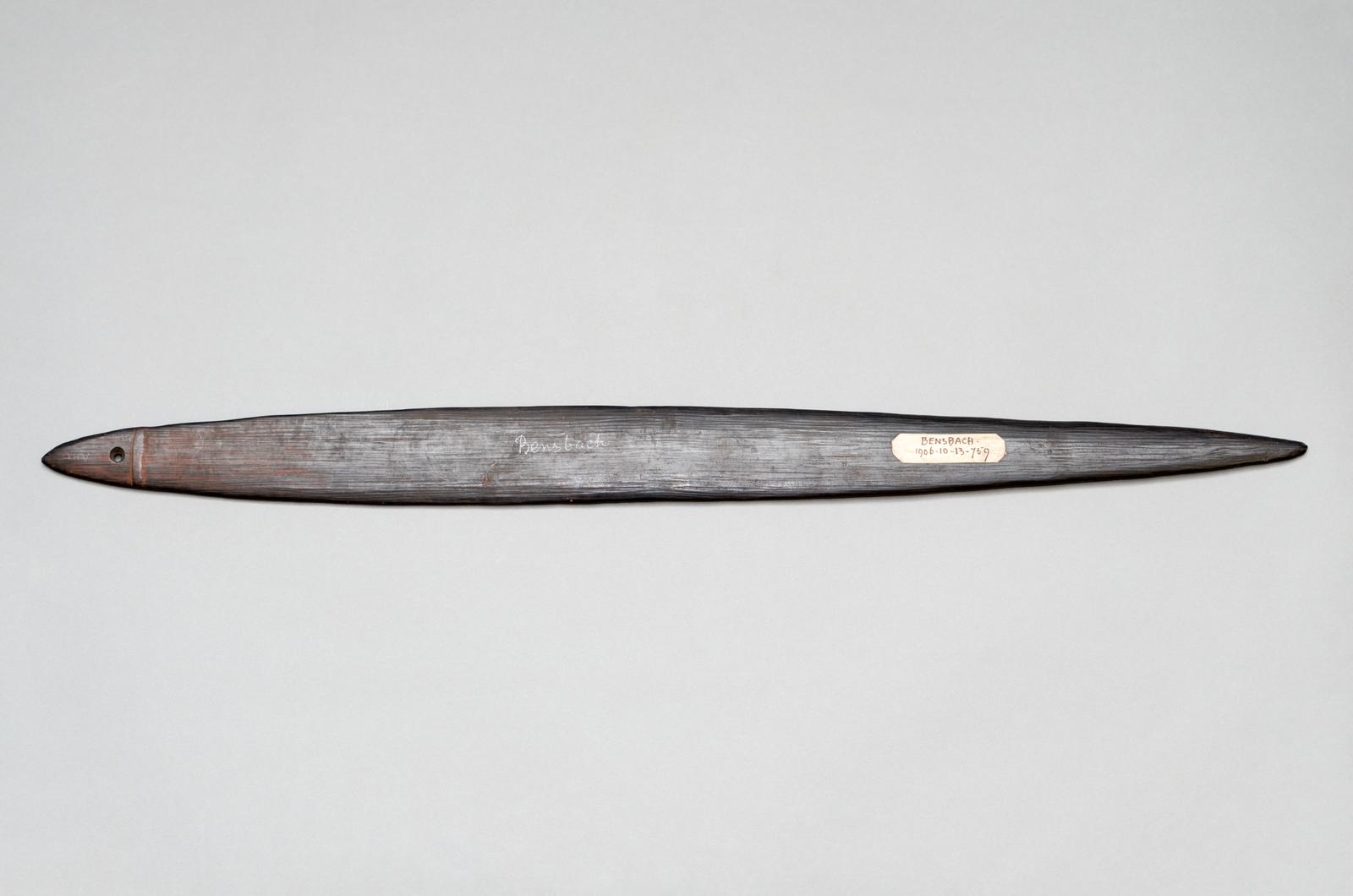
Source term: bullroarer
Break a taboo during the initiation season and the valley heard about it. Among the Mawai of the Waria, in the forested ranges of southeast New Guinea, the bullroarer was swung not to summon a spirit but as the answer to an offence: when any prohibition of the initiation period was violated, the slat was set roaring over the boys' seclusion. The government anthropologist E.W.P. Chinnery recorded the custom in the 1920s; what the sound forbade, and to whom, he left unwritten.
the Mawai bullroarer is sounded for any offence against taboos committed during the initiation period
Gourlay 1975, citing Chinnery ndC:61
Particulars
- Object
- Bullroarer sounded for offences against initiation-period taboos.
- Function
- Sounded for initiation-period taboo offences.
Source
K. A. Gourlay, Sound-Producing Instruments in Traditional Society (New Guinea Research Bulletin 60, 1975), citing E. W. P. Chinnery, Territory of New Guinea Anthropological Report No. 4, p. 61