No. PNG99
Toaripi (Motumotu)
Papua New Guinea · Gulf · Oceania · Sahul
Restricted
tiparu
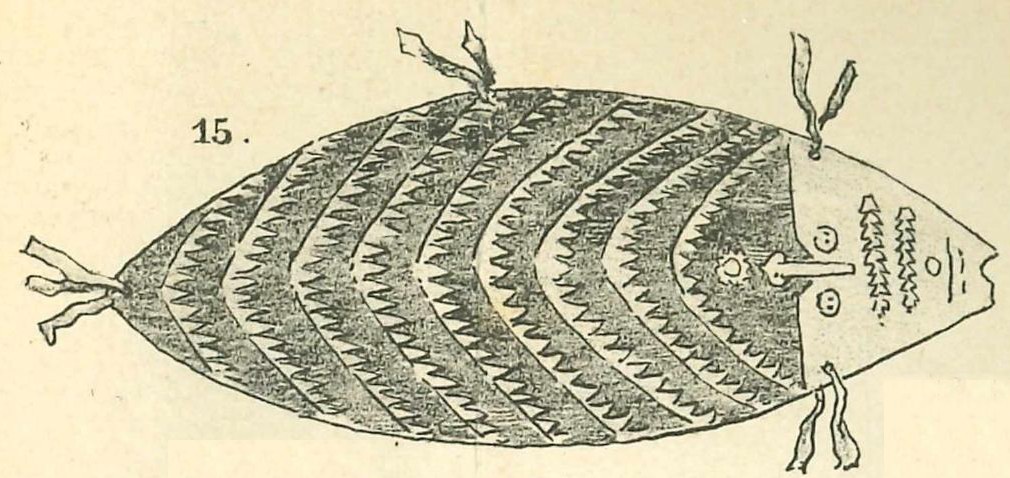
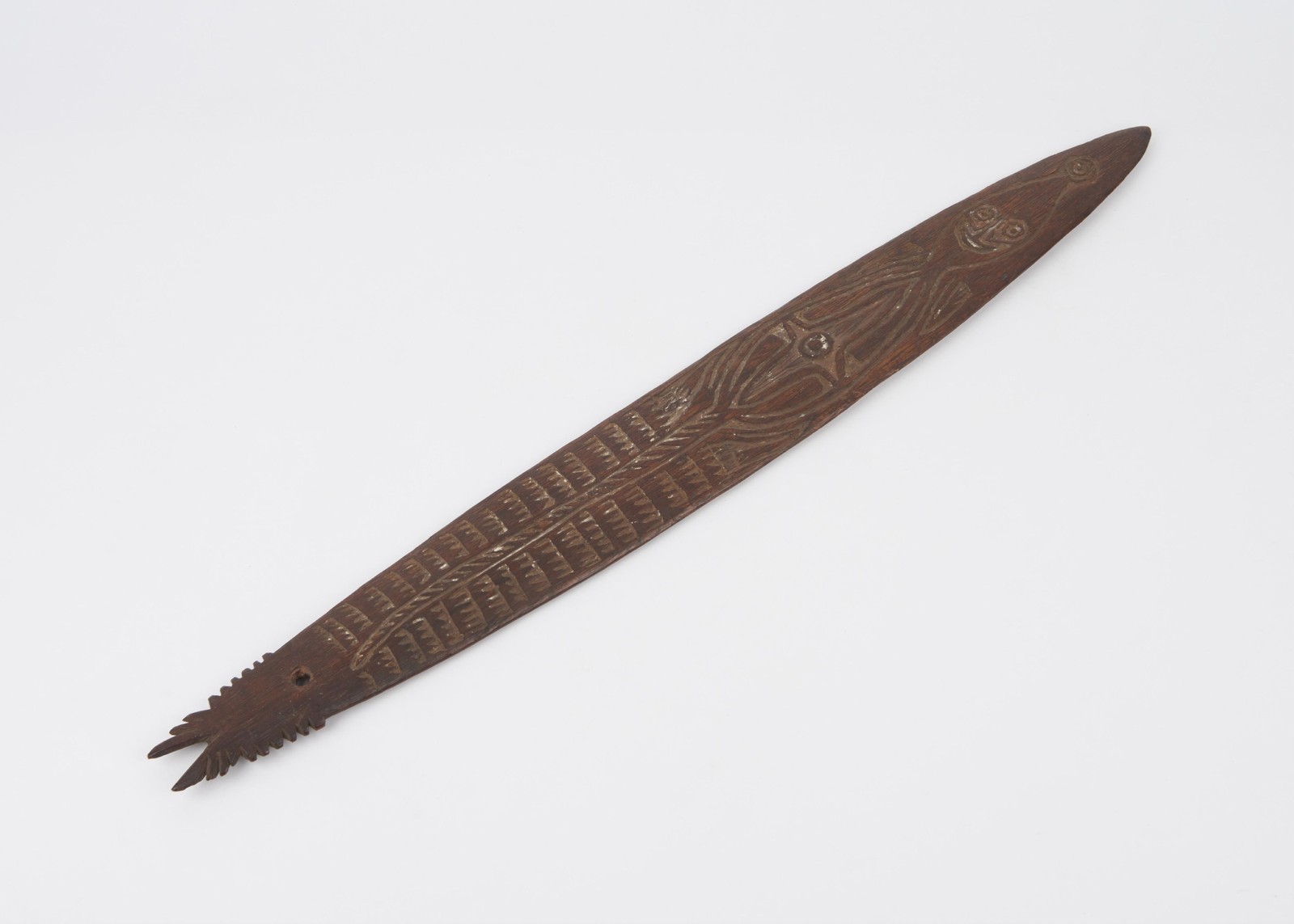
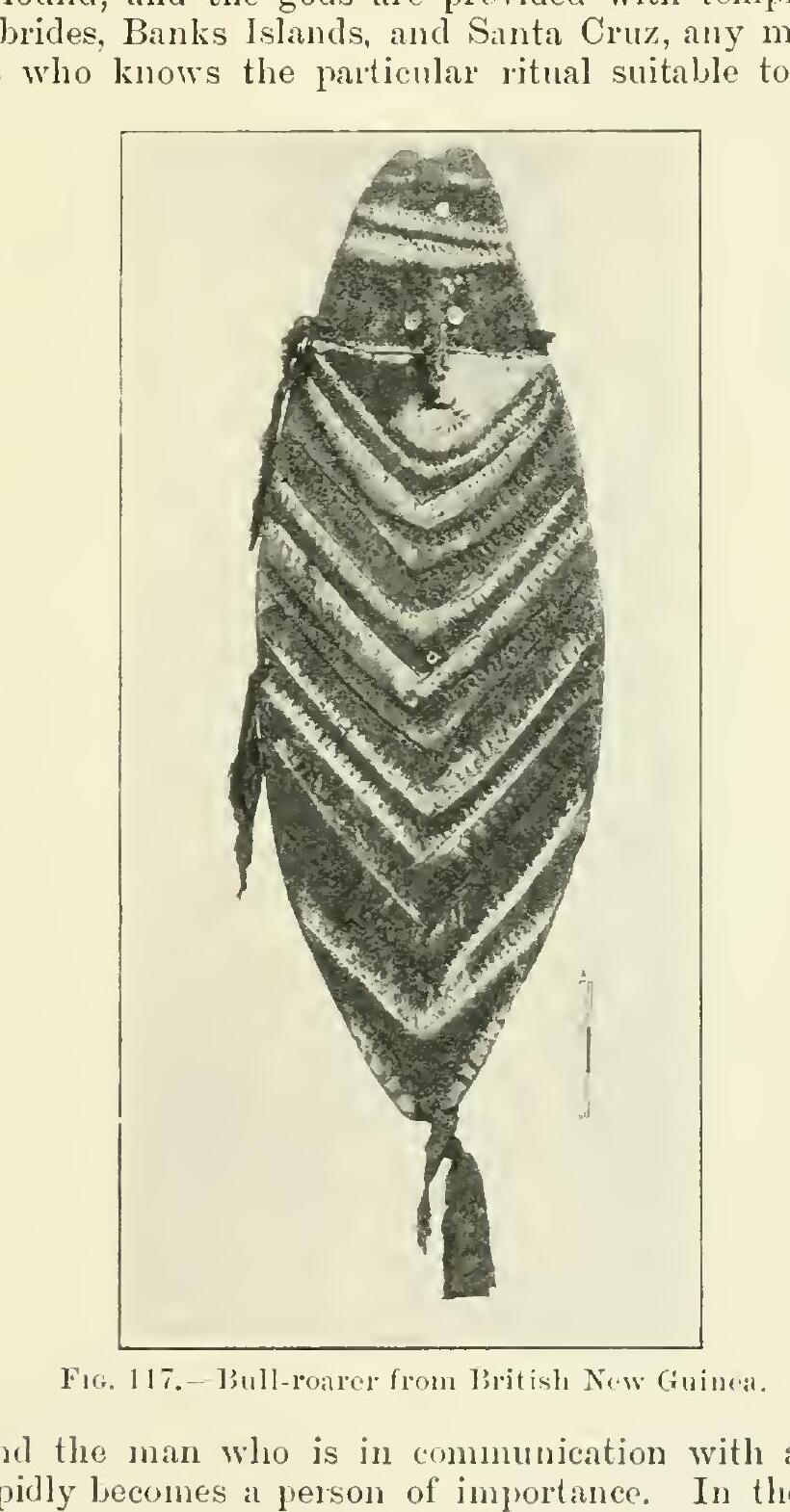
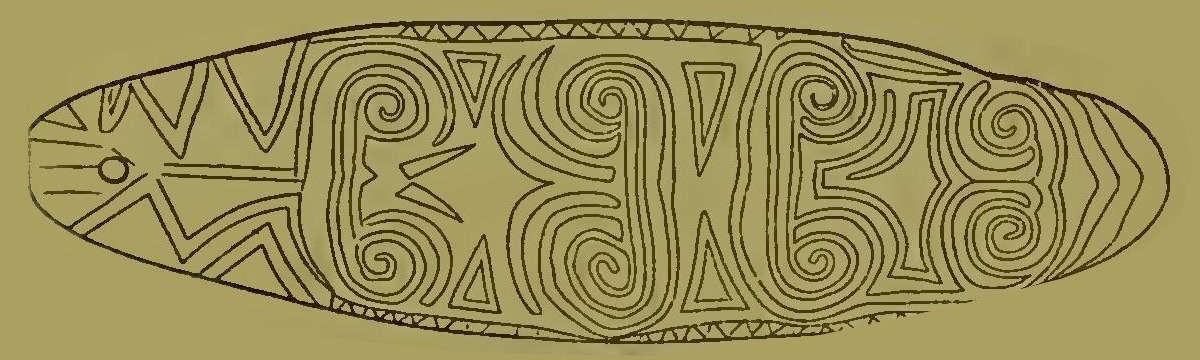
tiparu (Toaripi): the bullroarer, counterpart of the Orokolo hevehe.
“Motumotu” was never the people's own name for themselves. Motu sailors on hiri trading voyages called the village at the mouth of the Lakekamu River Motumotu; the residents thought of themselves as belonging to two places, coastal Mirihea and inland Uritai. Among these easternmost Elema the bullroarer was called tiparu, and a young man could first set eyes on it only after leaving the eramo, the bachelors' house. When its voice sounded, every woman, child, and young man fled — the caption to Edge-Partington's album figure of a tiparu says the women left the village altogether, lest they hear it and die — while two old men sat inside a house, sounding the instrument as they conversed with the spirits. James Chalmers, the missionary who documented the tiparu, also set down the Toaripi account of their own beginnings: Semese, a spirit of the heavens, made the land and the sea, and his sons were Hiovaki and Miai. In the same book Chalmers recorded what the Toaripi thought of the python — the best of all snakes, "most aonega" (wisest), a creature that kills by winding round its prey.
Erst nachdem beim Toaripi-Stamm die Jünglinge das Eramo, das Junggesellenhaus, verlassen haben, dürfen sie das tiparu, das Schwirrholz, erblicken. Sobald sein Ton hörbar wird, fliehen sämmtliche Weiber, Kinder und junge Männer.
Only after the youths of the Toaripi tribe have left the eramo, the bachelors' house, may they set eyes on the tiparu, the bullroarer. As soon as its sound is heard, all the women, children, and young men flee.
J. D. E. Schmeltz, Das Schwirrholz (1896), p. 107, after James Chalmers's 1890 report on the Toaripi.
Particulars
- Object
- Oval wooden bullroarer (tiparu); the Toaripi example figured by Edge-Partington bears carved black-and-white ornament, arched tooth-strips, eye spots, and fin-like pieces at the edge, so that the whole looks not unlike a fish.
- Function
- Initiation bullroarer of the men's eramo.
Source
K. A. Gourlay, Sound-Producing Instruments in Traditional Society (New Guinea Research Bulletin 60; Canberra and Port Moresby, 1975), Table 1, entry 99; J. D. E. Schmeltz, 'Das Schwirrholz: Versuch einer Monographie,' Verhandlungen des Vereins für naturwissenschaftliche Unterhaltung zu Hamburg 9 (1896): 92-128, at pp. 107-108, after Chalmers 1890