No. WINDSOR1994-001
Livitu soul-passing bullroarer
Papua New Guinea · New Ireland, New Ireland Province · Oceania · Sahul
Sacred / spirit
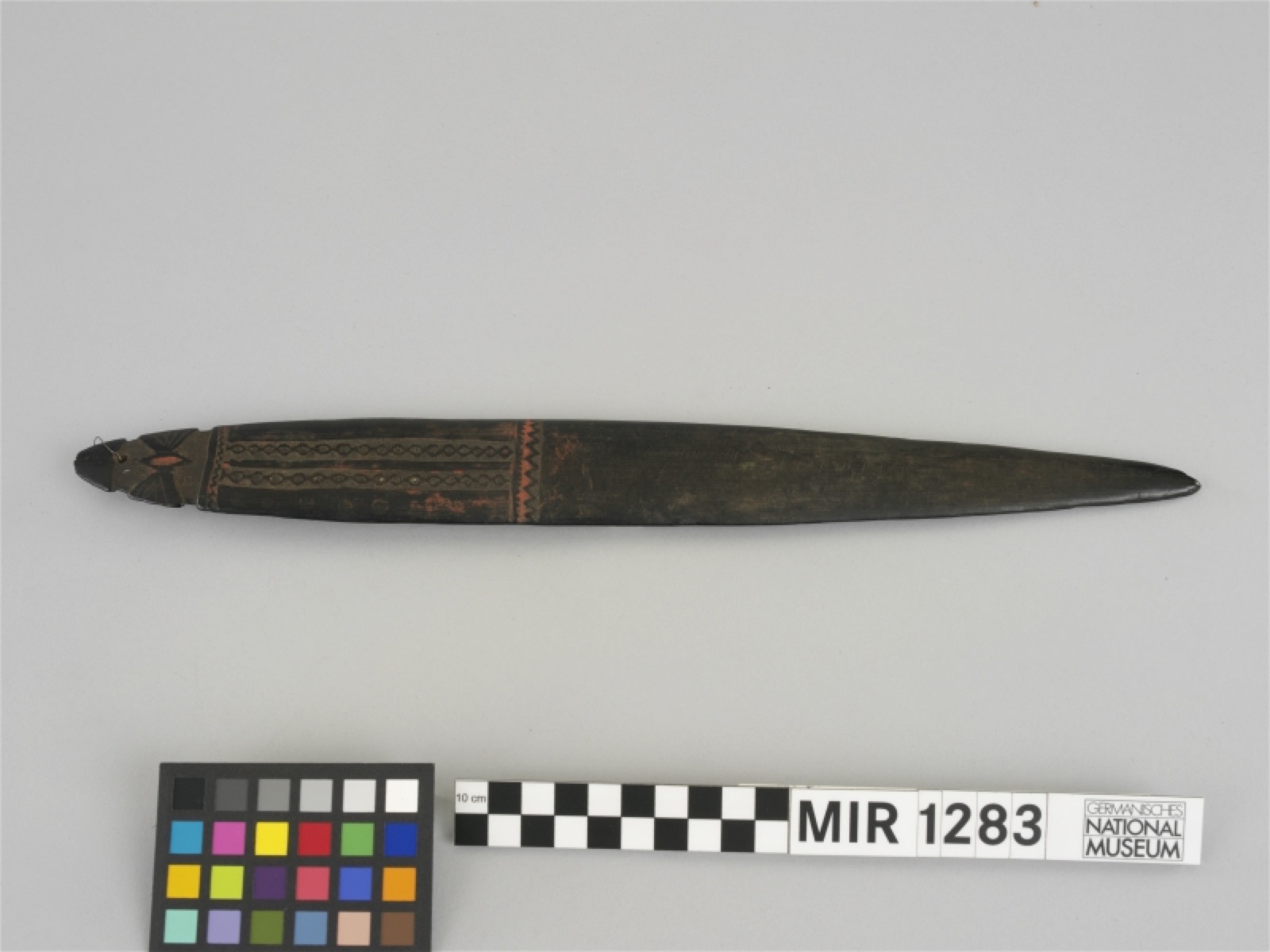
Source term: bull roarer
In the Livitu villages of New Ireland, the friction drum was meant to be heard only when someone died: a solid block of polished wood, oiled with leaves and rubbed with the palm until it wailed. With it went a bullroarer, a wooden blade on a long string, whirled to make “a ghastly fluttering sound to signify the soul passing out of the body.” The villagers broke the taboo to play the drum for the BBC recordist John Thornley, who had been told it was extinct.
a ghastly fluttering sound to signify the soul passing out of the body
John Thornley, in Windsor 1994
Particulars
- Object
- A wooden blade on a long string, whirled to accompany the mortuary friction drum.
- Function
- Whirled with the friction drum, which should be heard only when someone dies, its fluttering sound signifying the soul passing out of the body.
Source
John Windsor, “Style: Now that’s what he calls music,” The Independent, 23 July 1994