REIGLE1995-001 - ethnographic attestation
Sorang sapana, silent old voice
Papua New Guinea - Sorang village, Rai Coast, Madang Province - Oceania - Sahul
Function not recorded
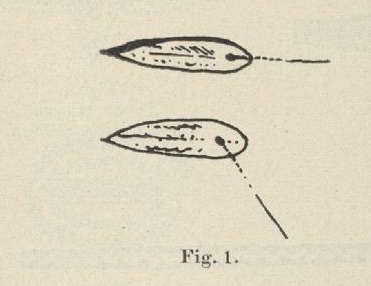
sapana
kaap: ‘tambaran’ in Nekeni — the class of sacred sound-making things the sapana belongs to; tawing: the Rufous Night Heron, which names kaap tawing, the stamping tambaran found at Sorang alone.
Sorang is one of seven villages that speak Nekeni, and its sacred sounds have names. Karisi is a very small coconut-shell ocarina: when the initiates leave their enclosure, one man walks ahead of them playing it to warn everyone else away. Kaap tawing belongs to Sorang alone — the men stamp the ground together until the earth trembles, and it feels like an earthquake; it is named for the Rufous Night Heron, the bird that lives by water. All of these are tambaran and all of them are sacred: women and young children may use the public names, but they must not know how the sounds are made. Among them is the sapana, large and wooden and shaped like a bull-roarer. In earlier times, Sorang men say, it was played as one. Now it is kept for decoration.
Sapana looks like a bull-roarer; it is quite large, and made from wood. I was told that, in earlier times, it was actually played as a bull-roarer, but now it's used only for decoration.
Reigle, 'Sound of the Spirits, Song of the Myna' (1995), p. 124.
- Object
- A large wooden blade shaped like a bull-roarer.
- Source
- Robert Reigle, 'Sound of the Spirits, Song of the Myna,' in New Guinea Ethnomusicology Conference Proceedings, ed. Robert Reigle, Occasional Papers in Pacific Ethnomusicology 4 (Auckland: University of Auckland, 1995), printed p. 124: 'Sapana looks like a bull-roarer; it is quite large, and made from wood
- Source location
- p. 124
- Source confidence
- medium Sorang village, Rai Coast District, Madang Province; Reigle names Sorang but gives no coordinates.
- Forbidden to women