No. PNG134
Agarabi
Papua New Guinea · Eastern Highlands · Oceania · Sahul
Restricted
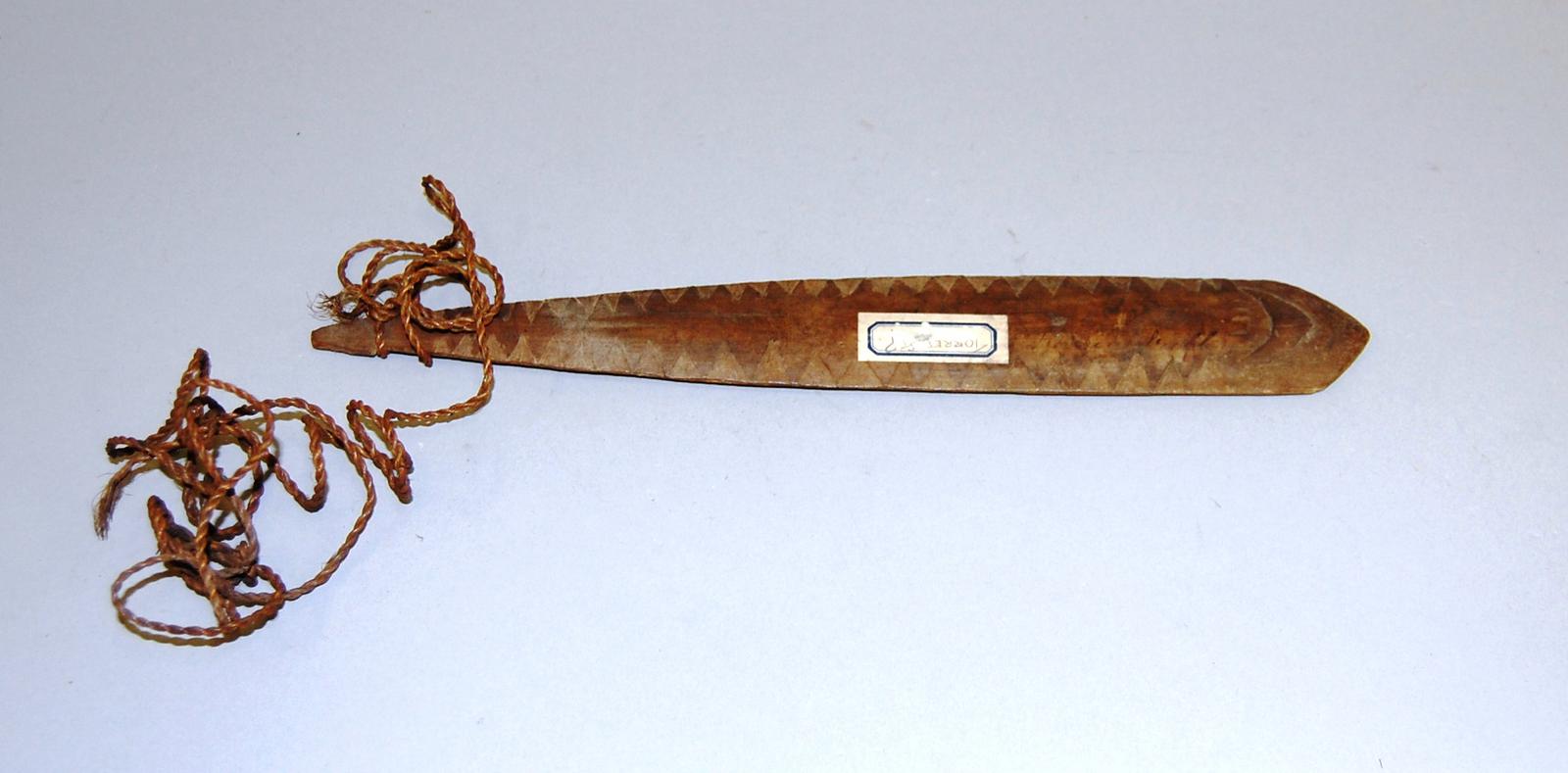
Among the Agarabi of the Kainantu district in the Eastern Highlands of Papua New Guinea, the bullroarer was a man's sacred instrument. Terence Hays's 1986 survey of the region's secret wind instruments places the Agarabi bullroarer in the initiation context and records that its roar was publicly declared to be "the voice of the ancestors" — the dead made audible to women and children who were forbidden even to see what made the sound. Across the Eastern Highlands the swung blade and the paired sacred flutes alike carried the cries of spirits, and only at the western edge of the bullroarer's range did the object ever fall to the status of a children's toy.
the Agarabi, with their "voice of the ancestors"
Hays 1986, "Sacred Flutes, Fertility, and Growth in the Papua New Guinea Highlands," Anthropos 81:440 (quoting Chenoweth 1976:43)
Particulars
- Function
- Sounded in initiation as "the voice of the ancestors."
Source
Terence E. Hays, "Sacred Flutes, Fertility, and Growth in the Papua New Guinea Highlands," Anthropos 81 (1986): 435-453, pp. 436, 440, citing Vida Chenoweth, Musical Instruments of Papua New Guinea (Ukarumpa: SIL, 1976), p. 43