The Bullroarer Atlas

PNG32 - ethnographic attestation

Serang

Papua New Guinea - Madang - Oceania - Sahul

Function not recorded

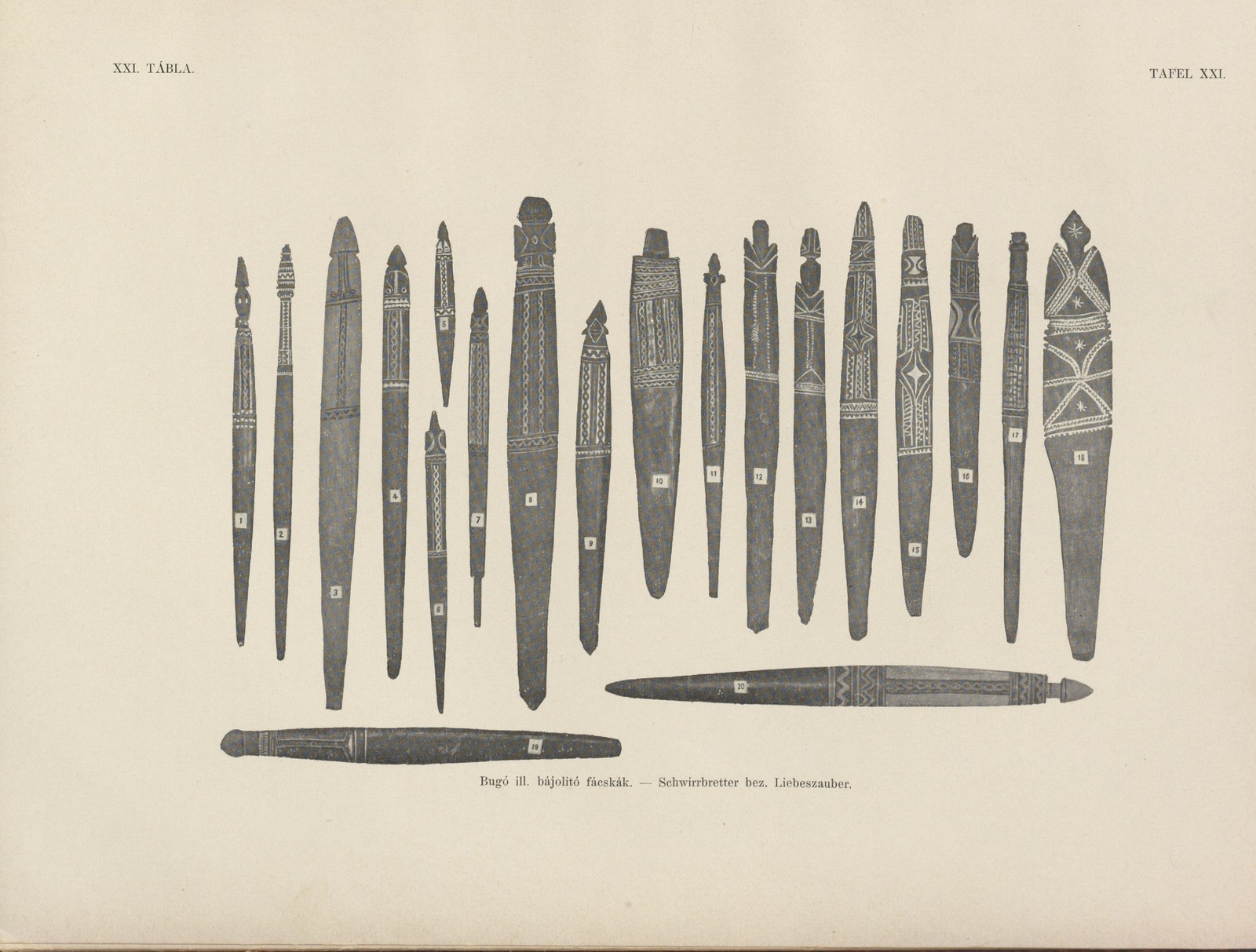
Twenty carved Astrolabe Bay Schwirrbretter and love-charm slats collected by Lajos Bíró and engraved for his 1901 catalogue of the Hungarian...
Representative image. Twenty carved Astrolabe Bay Schwirrbretter and love-charm slats collected by Lajos Bíró and engraved for his 1901 catalogue of the Hungarian National Museum's collection; Madang-coast material standing in for the Serang form, not that community's own object. L. Bíró, Beschreibender Catalog der ethnographischen Sammlung (Astrolabe Bay), Ung. Nationalmuseum (1901), Tafel XXI — UB Frankfurt, DSDK Public domain Image source

Source term: bullroarer / sacred flute / slit-gong flags

Serang is a coastal village in Madang Province whose people speak Takia, an Austronesian language that has been structurally remade on the grammar of the neighboring Papuan language Waskia. It enters the record only through K. A. Gourlay's 1975 survey of esoteric instruments and their role in male-female relations across New Guinea, whose table records a bullroarer here alongside a sacred flute and a slit-gong. The table marks the instrument's presence; how it was used at Serang went unrecorded.

Object
bullroarer occurrence; sacred flute occurrence; slit-gong occurrence
Function
Gourlay source-catalog row with bullroarer occurrence; function not stated.
Map confidence
medium - representative on-land anchor at Serang (regional coordinate fell just offshore of the rendered coastline); not an exact findspot
Source location
Table 1, row 32

View source Open this point on the interactive map