No. MUS2026-071
Bian, twirled so women hide
Indonesia · Northwest Asmat, South Papua · Oceania · Sahul
Restricted
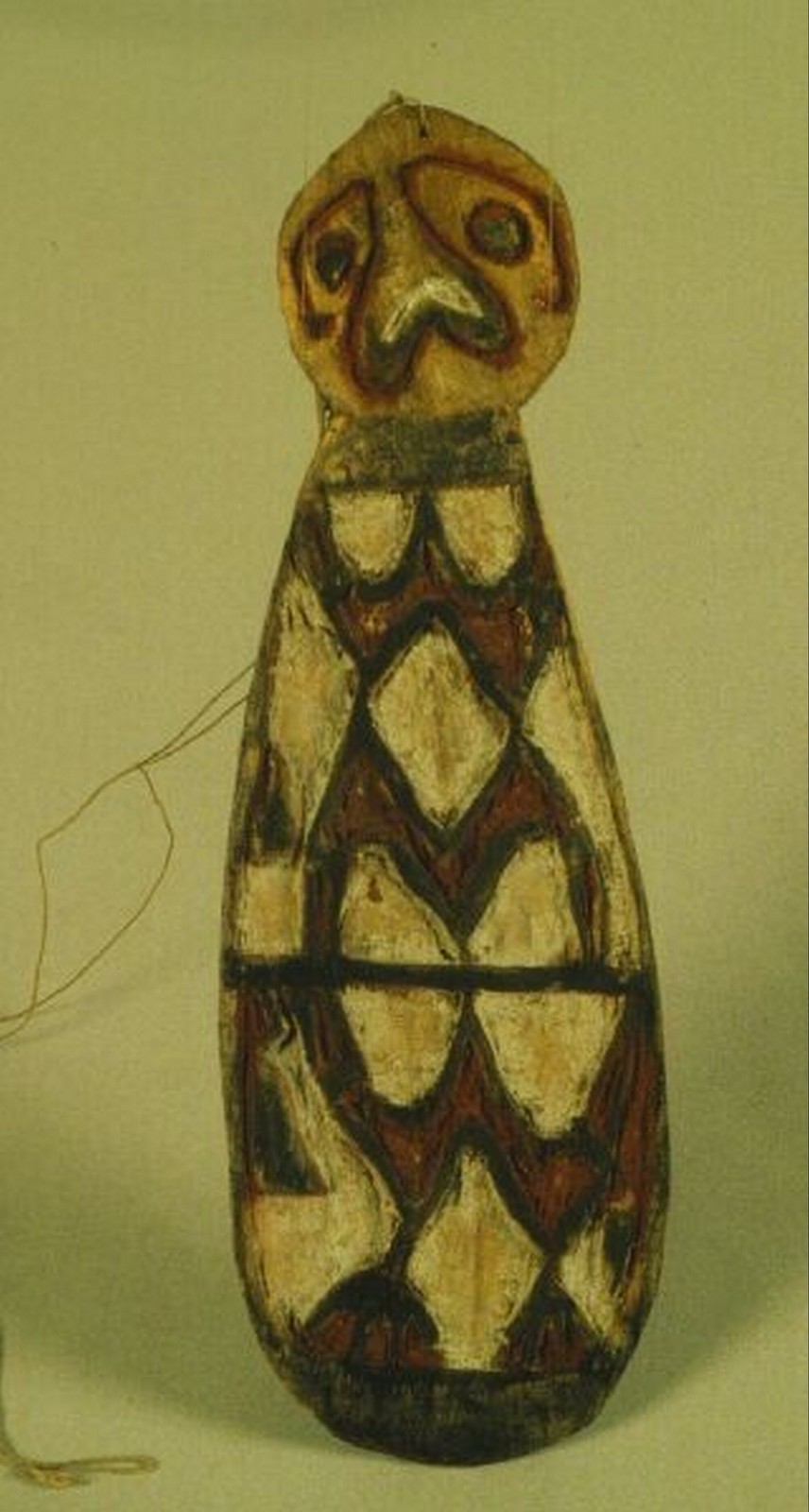
bian
Source term: bull-roarer
bian: Asmat word for the bullroarer, twirled during the Emak Cem initiation so that women flee and hide, its whirring taken for the voices of spirits (Asmat, south Papua). Pouwer 2010:145.
Among the Asmat of the south Papuan coast, boys live for months in the Emak Cem ceremonial house while carvers make a spirit canoe for the dead. In the account given to Fleischhacker and Schneebaum in 1976, a sick boy goes toward the men’s house and living quarters behind men twirling bullroarers, so women run and hide. The rite also brings forth Yisbermerat, a snake spirit and teacher of its proper songs. Impersonated by a man, he cuts wavy scars into the boys’ shoulders, backs and buttocks with a mussel shell. The following morning the initiates and their younger sisters lie alternately in a row to receive chest scars. Banana-stalk blows are intended to promote boys’ growth and the girls’ fertility and mother’s milk. A separate account published in 1995 ends with spirit voices, including bullroarers, sounding until the canoe is sent toward safan, the dead’s underworld abode; the men on the riverbank weep. This blade, from northwest Asmat, is held by the Wereldmuseum in the Netherlands.
Boys who fall ill go to the men's house and the living quarters, preceded by men who twirl bullroarers (bian), so the women will run and hide.
Pouwer 2010, Gender, ritual and social formation in West Papua:145
Particulars
- Object
- Bull-roarer of the Asmat, Wereldmuseum / NMVW (acc. WM-72118).
- Function
- Asmat bian bull-roarer belongs to initiation contexts; men twirl it so women hide and it impersonates spirit voices.