No. PNG95
Wapo-Era
Papua New Guinea · Gulf · Oceania · Sahul
Function not recorded
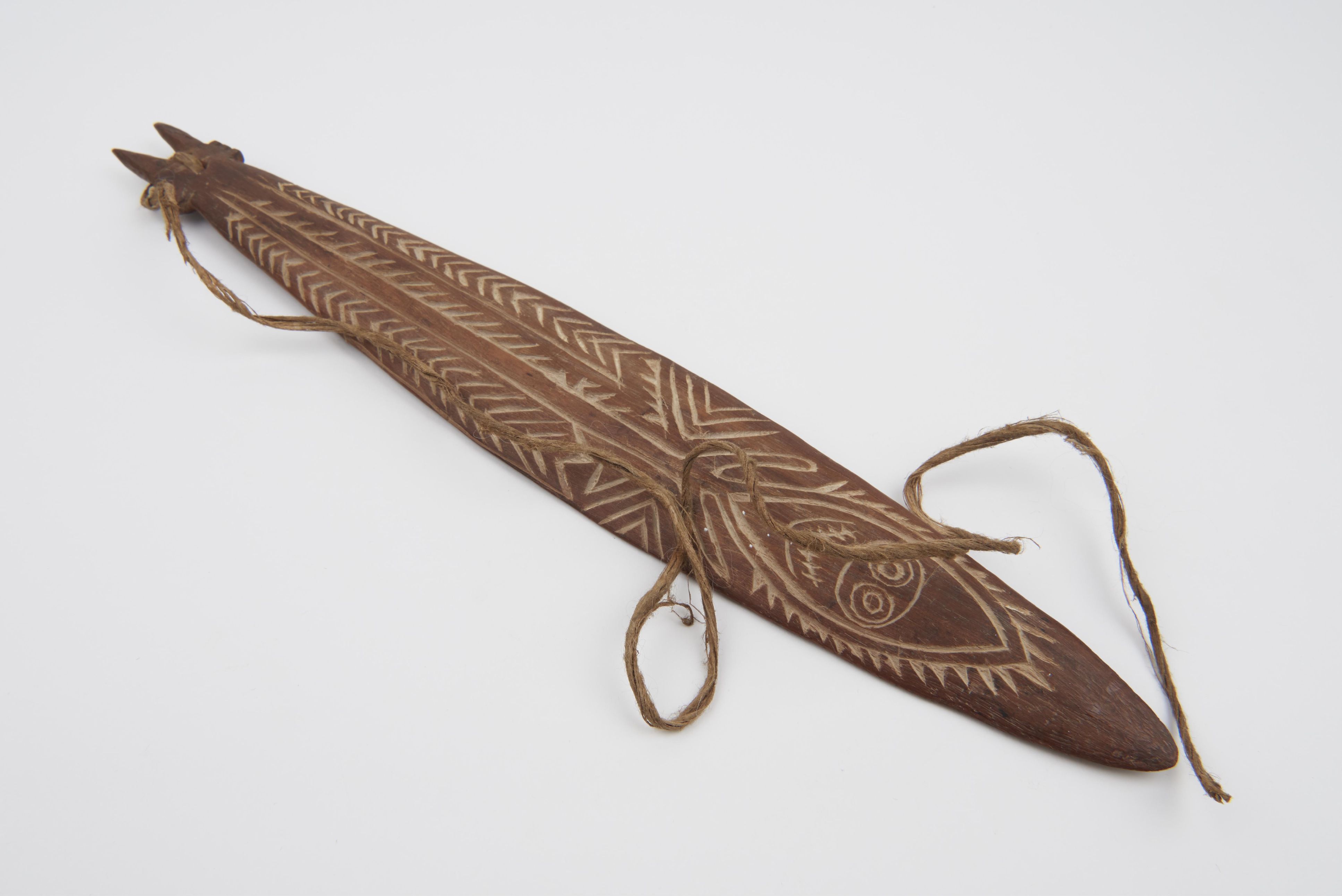
kaiaimunu (also kaiemunu): the large cane-and-basketry monster effigy of the Purari Delta and Era River men's houses.
Its whir was the voice of the kaiaimunu, the great cane-and-basketry monster crouched in the back of the men's house. Along the Era River east of Goaribari, the bullroarers were kept inside the wicker beast itself, so that when the men swung them the sound rose as the monster's growl — the devouring spirit that swallowed boys and gave them back as men. No woman and no uninitiated boy could look upon the roarer, or on the creature whose throat it was.
Source
K. A. Gourlay, Sound-Producing Instruments in Traditional Society: A Study of Esoteric Instruments and Their Role in Male-Female Relations (New Guinea Research Bulletin 60; Canberra and Port Moresby, 1975), Table 1, entry 95