No. MUS2026-153
Kubu blade, waking the yam ground
Papua New Guinea · Kubu, Western Province · Oceania
Sacred / spirit
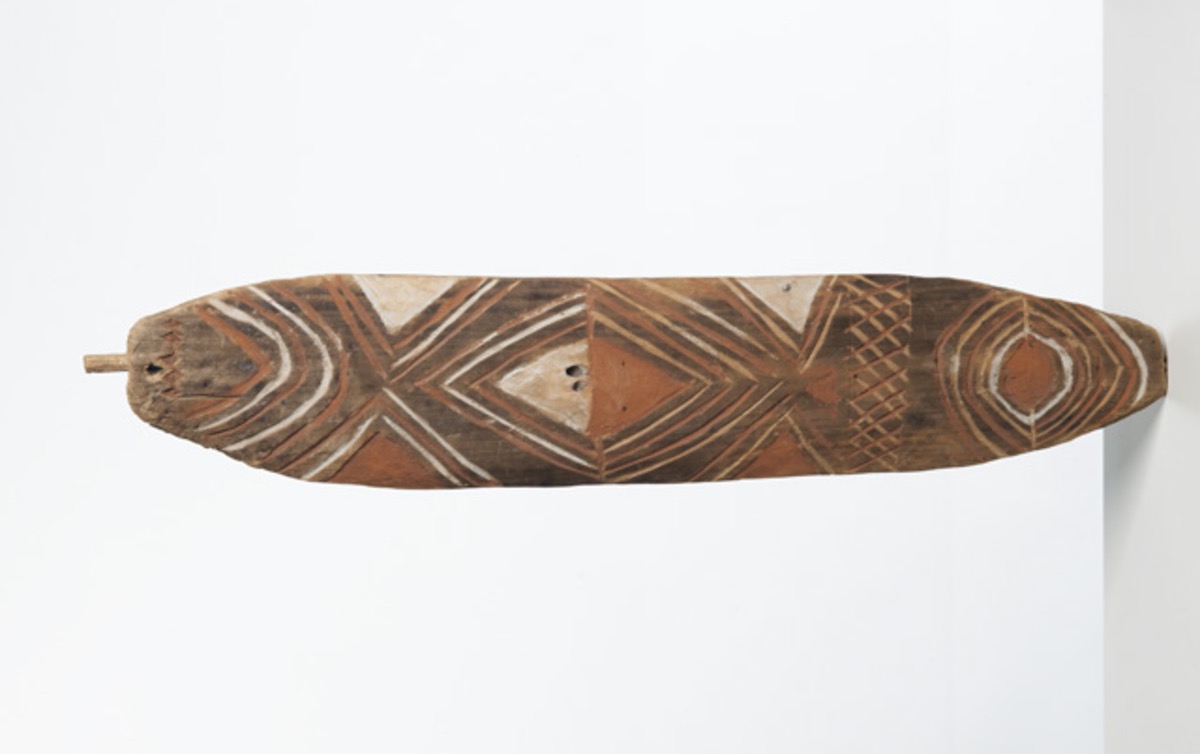
Source term: bullroarer
The yams at Budji would not grow well until Máigidúbu, the snake-man, came to a woman in a dream and taught her to whirl a bullroarer to “wake up the ground.” She told her husband and all the Budji people. After sounding the boards, they left them on the eastern edge of the garden so the sun would not scorch the yams. Men danced with bows drawn, singing the names of yam varieties and calling on them to grow. So Gaméa of Mawáta told it. In other Kiwai tales Máigidúbu keeps gardens of his own, sometimes working them at night in human shape. Landtman brought this ceremonial blade from Kubu: over ninety centimetres of board painted red, black, white and yellow, dressed with berries and feathers.
You come, my girl, I no snake, you no fright along me.
Gunnar Landtman, The Folk-Tales of the Kiwai Papuans (Helsingfors, 1917), tale 414, p. 456
Particulars
- Object
- 90.5 x 28.5 x 4 cm wooden bullroarer, painted red, black, white, and yellow and ornamented with berries and feathers; materials also include seed, gum, and rattan.
- Function
- Ceremonial.