No. MUS2026-348
Two Marind-anim rhombes, blade and disc
Indonesia · Irian Jaya collection context · Oceania · New Guinea
Sacred / spirit

Source term: Rhombe
A long dark blade, 43.5 centimetres, narrowing to a small carved head — and among the Marind-anim the bullroarer is the voice of Sosom, a giant whose footprints point backwards. The missionary Boelaars watched a sosom celebration at Wendu in 1952. The déma came to the ground in an enormous headgear of thin reeds covered with white down, his face behind a mask, croton leaves down his back, escorted by men dancing and swinging bullroarers while pipes shrilled from the bush. The novices had been made to sit under the platform with their backs to the entrance. It lurched, as if a gigantic monster had leapt onto it, and a hideous black something came down on them: the tail. Then silence, the fence taken away, fathers and uncles hauling the boys out by the arms to meet him. Older tellings have Sosom swallow each novice and disgorge another behind. At the last the déma knelt, his decorations were lifted off, and he was an ordinary man.
Sosom is still in the bullroarer he presented to man, it being his voice
J. Verschueren, quoted in J. van Baal, Dema: Description and Analysis of Marind-anim Culture (The Hague, 1966), p. 486
Particulars
- Object
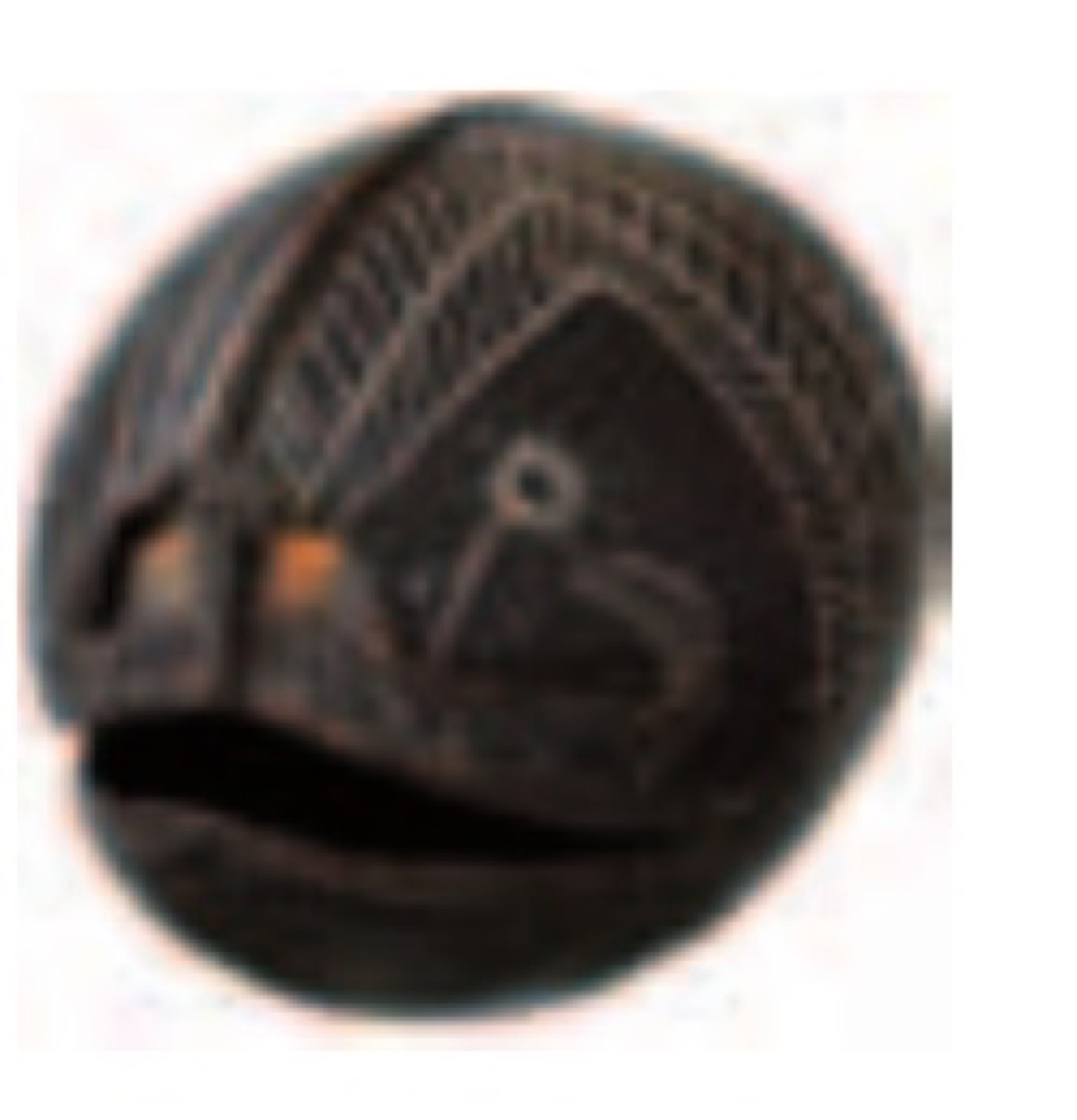
- A narrow carved wooden blade, 43.5 cm, terminating in a small head or figure. Beside it in Neuchâtel sits a round hollow-bodied rhombe only nine centimetres across — neither fish nor lancet, the shape Wirz's informants had in mind when they said the tang and the bullroarer are one and the same thing.
- Function
- Among the Marind-anim the bullroarer is Sosom's voice, swung at the sosom celebration, from which women and children withdraw.