The Bullroarer Atlas

PNG63 - ethnographic attestation

Zia

Papua New Guinea - Morobe - Oceania - Sahul

Sacred / spirit

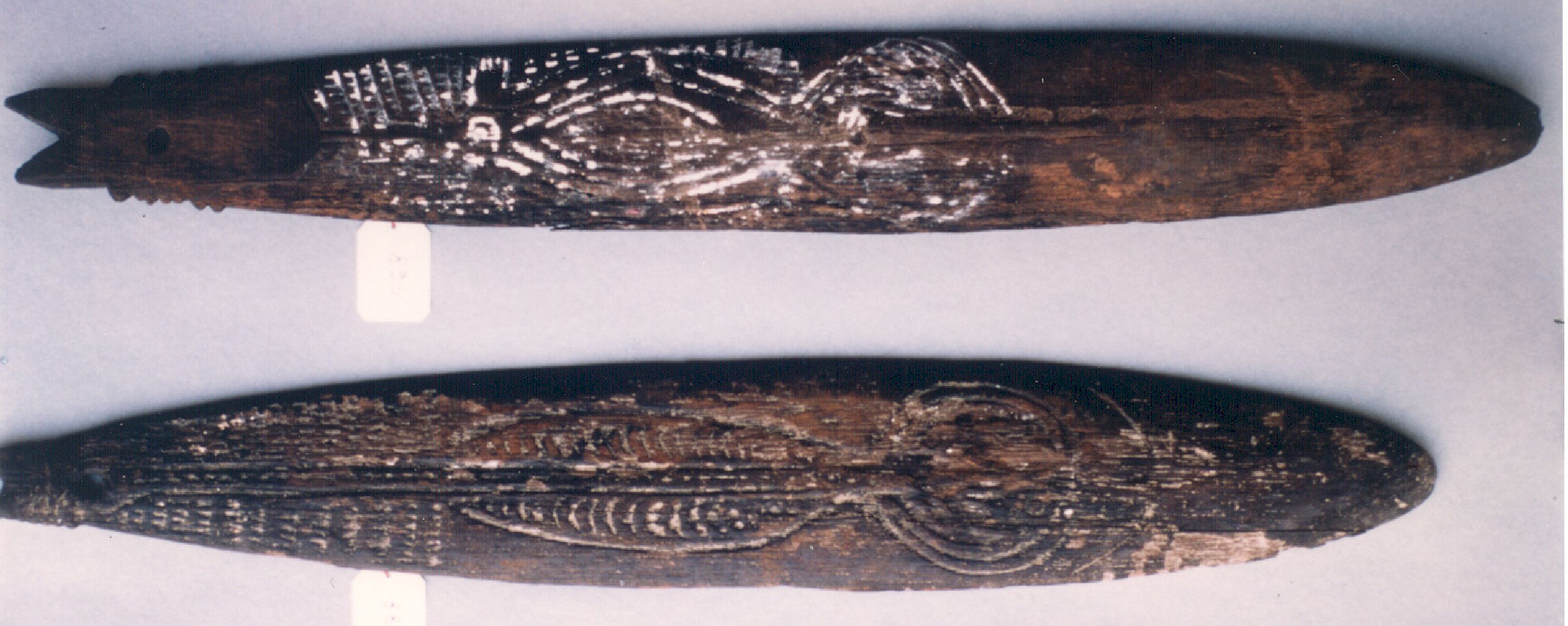
Another photograph from the Hospice Saint-Roch group — two dark bull-roarer blades side by side, the upper fork-tailed with white-filled...
Representative image. Another photograph from the Hospice Saint-Roch group — two dark bull-roarer blades side by side, the upper fork-tailed with white-filled cross-hatching and a curvilinear figure, the lower larger and covered in fainter unpainted carving; shown for the general New Guinea type, not the Zia object or culture documented here. Museum of the Hospice Saint-Roch (acc. #CM:0875449) Image source

Source term: bullroarer / sacred flute / slit-gong flags

Among the Zia of the lower Waria Valley in Morobe, whose territory follows the river down to the Solomon Sea, the bullroarer is recorded as both present and in ritual use. The notice comes from E.W.P. Chinnery, the patrol officer who discovered the source of the Waria before training under A.C. Haddon at Cambridge and becoming government anthropologist of the Mandated Territory of New Guinea; his report on the natives of the Waria, Williams and Bialolo watersheds is the entry's sole source. It records the instrument's presence and use and nothing more.

There he discovered the source of the Waria River.

Geoffrey Gray, "E.W.P. Chinnery: A Self-Made Anthropologist," in Scholars at War (ANU Press), ch. 17
Object
bullroarer occurrence; bullroarer use
Function
Gourlay source-catalog row with bullroarer use in PNG/Melanesia.
Map confidence
medium - alias_area
Source location
Table 1, row 63

View source Open this point on the interactive map