No. BOELAARS1953-001
Keisa's decoy Ezam
Indonesia · Kumbe River, about 50 km south of Muting, Merauke, South Papua · Oceania · New Guinea
Restricted
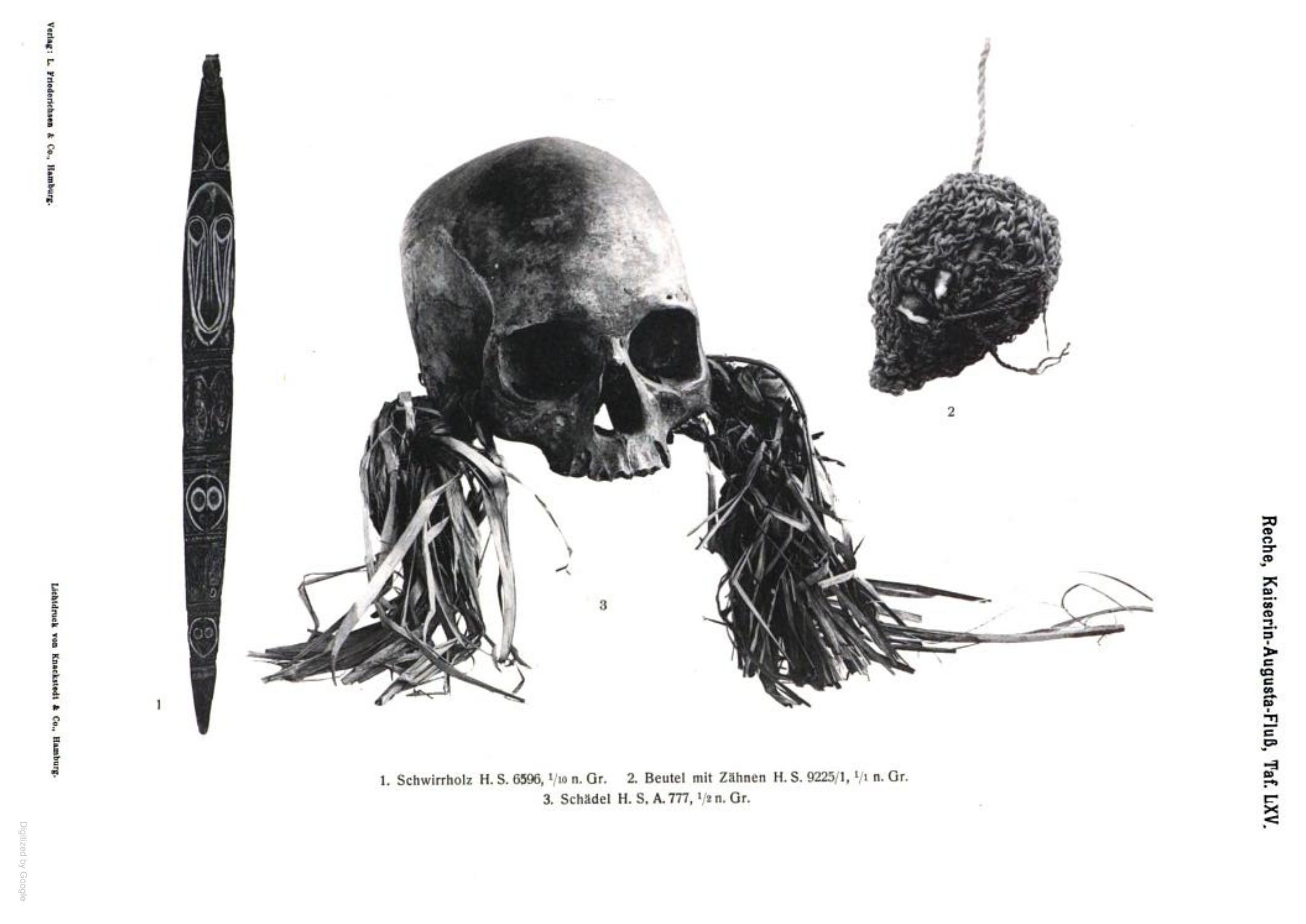
Ezam; Uzum
Source term: bromhouten (bullroarers); Ezam
Ezam and Uzum: husband and wife, the paired spirits of the Marind Ezam cult, whose names the bullroarers carry. Babé: the being whose coming the cult celebrates in the Mandum story Keisa claimed as its own.
When the bishop's party reached Keisa on the Kumbe River in 1951, the village offered to perform its Ezam-Uzum rite. Toward evening a painted, shouting crowd of men and women danced in from the back of the village. Two men carried animal figures on their heads and laid them on a bench before the teacher's house; an old man waved a branch and led the songs to the drum. That, they insisted, was the whole rite. Then one of the visitors brought out bullroarers from Mandum on the upper Bian. A dead silence fell, almost everyone sat down at once, and several of the women dared not look. Two months later the Keisa men confessed the ruse and handed over their own bullroarers. Their carvings differed, they said, but the instruments were the same and so was the story of Babé: wherever people believed in Ezam, they had these blades.
Het pakje, dat van deze brief vergezeld ging, bevatte inderdaad enkele bromhouten.
The package that came with this letter did indeed contain several bullroarers.
J. Boelaars, Nieuw-Guinea, uw mensen zijn wonderbaar (1953), p. 74
Particulars
- Object
- Several carved wooden bullroarers, the village's Ezam, closely resembling those of Mandum but with different incised figures.
- Function
- The secret instruments of Keisa's Ezam-Uzum cult, hidden from visitors behind a staged procession of two animal figures; when Mandum bullroarers were shown, the crowd fell silent and several women dared not look. Two months later the villagers disclosed the rite and surrendered their bullroarers.
Source
J. Boelaars, Nieuw-Guinea, uw mensen zijn wonderbaar (1953), pp. 74-75